
By Senior Editor, China Africa News
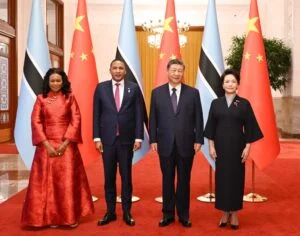
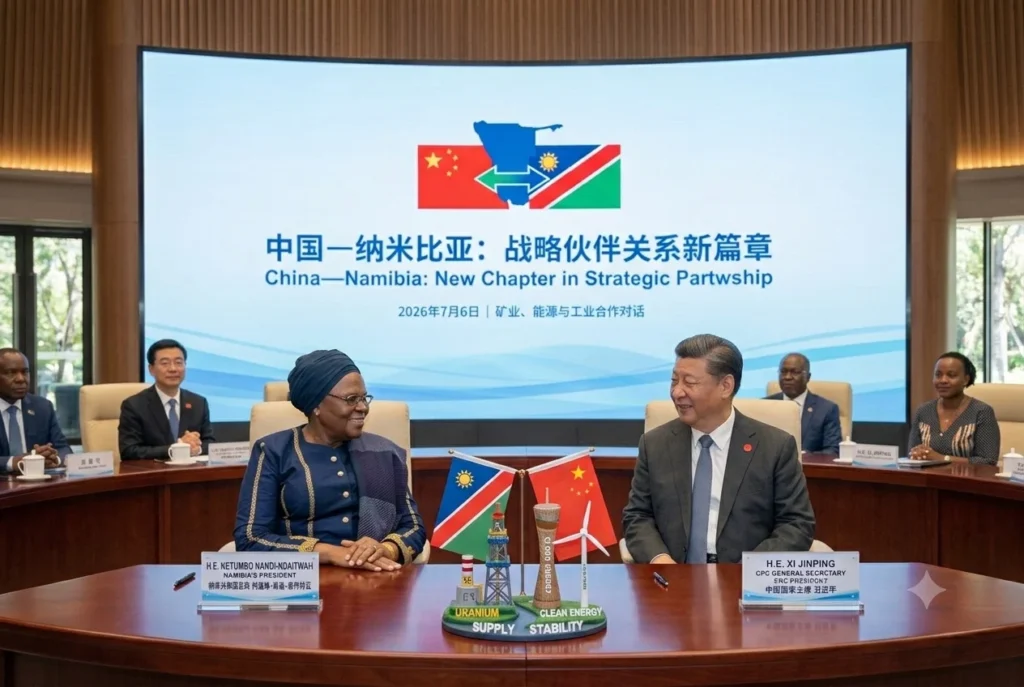
Windhoek/Beijing, June 6, 2026 — Namibia’s President has already arrived in China for a high-level state visit that is being closely watched as a potential turning point in China–Namibia relations. The week-long visit, which runs from July 5 to July 11, brings together two countries looking to deepen cooperation in energy, mining, infrastructure, and industrial development at a time of shifting global economic alignments.
The visit places Namibia in a growing group of African states engaging China not only as a trade partner but as a long-term industrial and resource development ally. With the President already on Chinese soil and meetings underway in southern China before the Beijing leg of the trip, the agenda is expected to move quickly from symbolic diplomacy into concrete economic discussions.
At the center of the talks is Namibia’s resource endowment and China’s industrial demand. Namibia holds some of the world’s most significant uranium reserves, alongside critical minerals such as lithium, rare earth elements, and copper. China, which is aggressively expanding its clean energy and nuclear power capacity, is expected to prioritize long-term supply stability for these resources.
In return, Namibia is seeking deeper industrial investment rather than simple raw exports. Key expectations from the visit include expanded Chinese participation in mineral processing inside Namibia, renewable energy infrastructure development, and transport logistics upgrades that could better connect mining regions to ports and export routes.
Discussions are also expected to cover oil and gas exploration projects off Namibia’s coast, where Chinese firms have already shown interest in joint ventures. These negotiations are likely to focus on exploration financing, technology transfer, and production-sharing agreements that would define how revenue and operational control are structured.
Beyond extractives, both sides are expected to explore broader industrial cooperation, including manufacturing zones, agricultural modernization, and skills development programs. Namibia is pushing to position itself as a regional logistics and industrial hub for southern Africa, and Chinese investment is seen as a key enabler of that ambition.
On the Chinese side, the visit fits into a broader strategy of strengthening supply chain security and expanding industrial partnerships in Africa. By deepening ties with Namibia, Beijing secures access to strategic minerals while also reinforcing its presence in the Southern African Development Community (SADC) region.
While no final agreements have been publicly confirmed yet, the visit is expected to produce a package of cooperation frameworks covering mining investment, energy collaboration, infrastructure financing, and potentially new Belt and Road-linked projects. These agreements are likely to set the tone for China–Namibia relations over the coming decade.
What makes this visit particularly significant is its timing: it comes as global competition for critical minerals intensifies, and as African states increasingly seek partnerships that go beyond extraction toward local value addition and industrial development.
If successful, the outcome of this visit could reposition Namibia not just as a resource supplier, but as a strategic node in China’s global supply chain architecture while giving Namibia the capital, infrastructure, and technology support needed to accelerate its own industrial growth.