

By Cremilda Macuácua, China Africa News
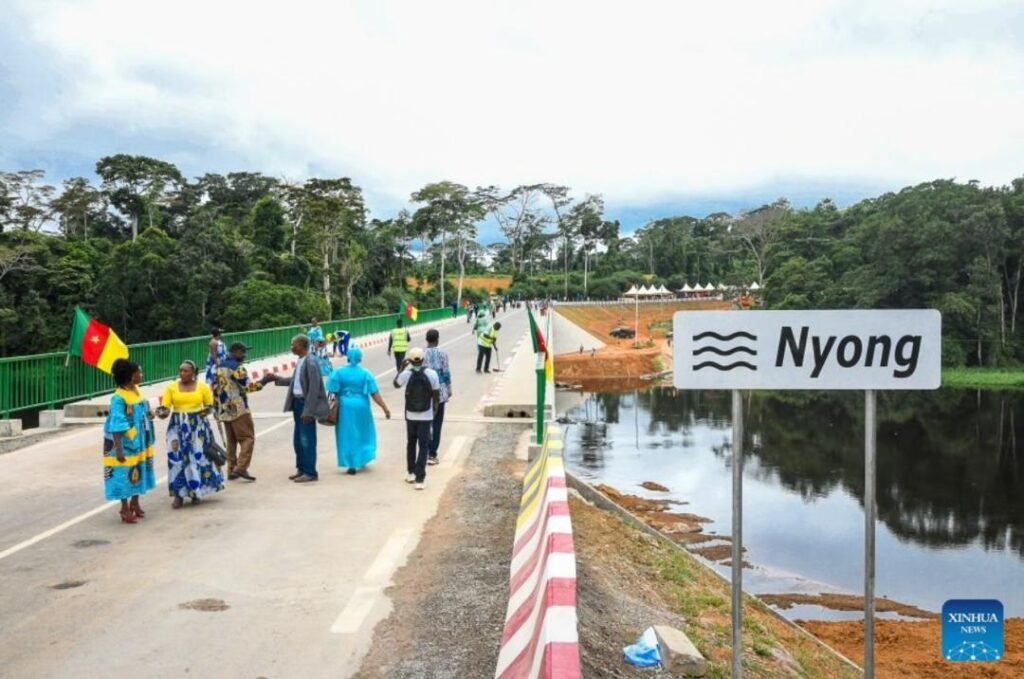
MALOMBO, Cameroon, August 7, 2026 — Cameroon has inaugurated the Nyong River Bridge at Malombo, a major infrastructure project expected to improve transportation, boost local trade and strengthen connections between communities in the country’s Centre Region.
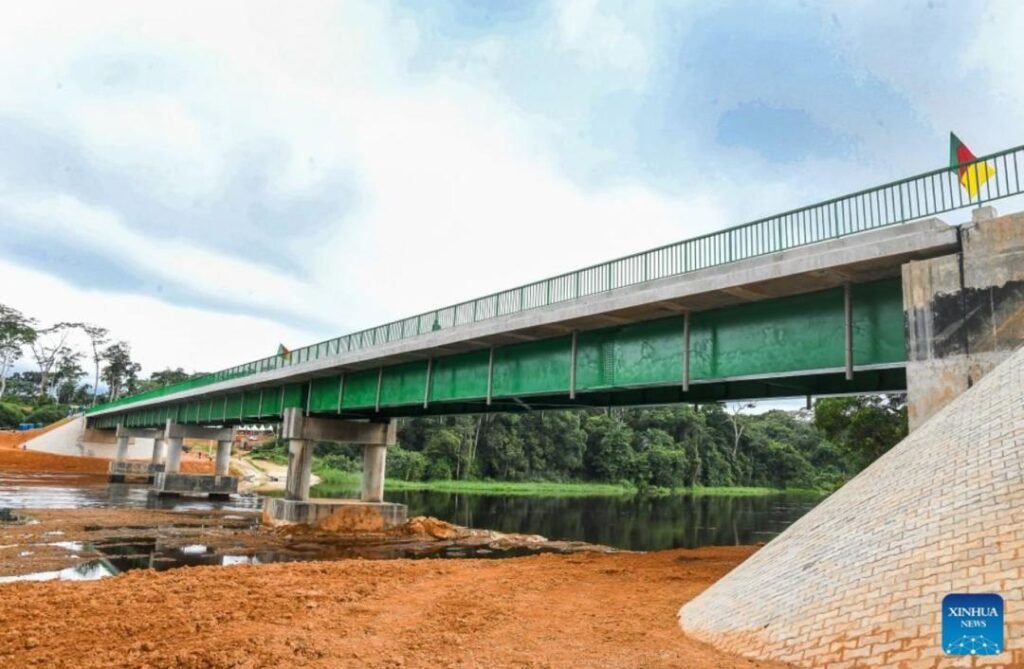
The bridge was officially opened on August 5 by Minister of Public Works Emmanuel Nganou Djoumessi, marking the completion of a project built by China First Highway Engineering Co., Ltd. (CFHEC). Stretching 160 meters across the Nyong River and supported by 960 meters of access roads, the new crossing replaces the unreliable canoe transport that residents had depended on for decades.
For many people living in the area, the bridge is more than a new piece of infrastructure. It represents easier access to schools, healthcare, markets and public services, while reducing travel times and making river crossings safer throughout the year.
Speaking at the inauguration, Minister Djoumessi said the bridge reflects Cameroon’s commitment to improving national infrastructure and expanding economic opportunities in rural communities. Better road networks, he noted, are essential for connecting farmers, traders and businesses to larger markets and supporting long-term development.
Representing the contractor, Yang Song, General Manager of CFHEC’s International Operations Division, described the project as a symbol of the growing partnership between Cameroon and China. He said the company remains committed to delivering quality infrastructure that contributes to the country’s development goals.
Financed through Cameroon’s Public Investment Budget at a cost of approximately 8.6 billion CFA francs, the project includes two traffic lanes, pedestrian walkways and upgraded access roads, creating a safer and more efficient transport route for residents and commercial traffic alike.
The bridge also reflects the broader infrastructure cooperation between Cameroon and China, which has expanded in recent years through investments in roads, bridges, ports and other public works. These projects have become an important pillar of Cameroon’s efforts to modernize its transport network and support long-term economic growth.
For the communities along the Nyong River, however, the bridge’s greatest impact will be felt in everyday life. Farmers will be able to transport their produce more efficiently, traders can reach customers more quickly, and families will have a safer, more reliable way to cross a river that for years presented a daily obstacle.
As vehicles begin to pass over the new bridge, it stands not only as an engineering achievement but also as a symbol of how strategic infrastructure investment and international cooperation can improve lives, connect communities and lay the foundation for sustainable development