

By Cremilda Macuácua, China Africa News
ABUJA, Nigeria, September 9,2026 — China has maintained its position as Nigeria’s leading source of imports, according to newly released figures from Nigeria’s National Bureau of Statistics, underscoring the depth of the commercial relationship between the two countries.
Nigeria’s overall merchandise trade expanded significantly in the second quarter of 2026, reaching about ₦41.4 trillion, as both exports and imports increased from the previous quarter. The country recorded a substantial trade surplus during the period, reflecting the continued strength of its export earnings.
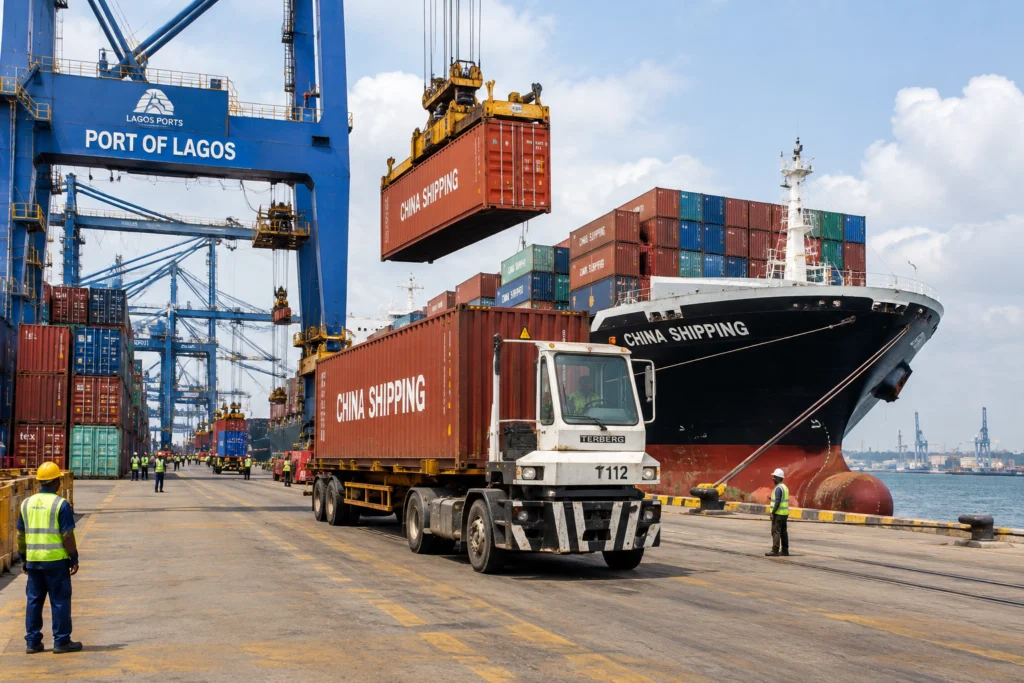
But it was on the import side that China once again stood out. More than two-fifths of all goods imported into Nigeria during the quarter came from China, putting Beijing well ahead of other major suppliers, including the United States and India.
The figures reinforce China’s importance to Nigeria’s domestic economy. Chinese products have become a significant part of the country’s import market, spanning manufactured goods, machinery, vehicles and other products that feed into both consumer demand and commercial activity.
The broader trade figures, however, tell a more nuanced story. India was Nigeria’s leading overall trading partner during the quarter, largely because of the value of Nigerian exports to the Indian market. Nigeria’s principal export earnings continued to come from petroleum and other commodities, highlighting the different roles China and India play in the country’s international trade.
For Nigeria, the latest figures present both an economic opportunity and a longstanding policy challenge. Strong demand for Chinese goods demonstrates the scale of the Nigerian market, but the imbalance between imports from China and Nigerian exports to China raises questions about how bilateral trade can contribute more directly to domestic industrialization.
That question is becoming increasingly important as African economies seek to move beyond a traditional pattern of exporting raw materials while importing finished products. For Nigeria, deeper engagement with China could offer opportunities in manufacturing, technology, infrastructure and investment, provided that stronger trade ties are accompanied by greater domestic productive capacity.
For Beijing, Nigeria remains one of Africa’s most important commercial markets, given its large population, natural resources and strategic position in West Africa. For Abuja, China is an important source of goods and an increasingly significant economic partner.
The latest figures therefore point to a relationship that is already substantial, but still evolving. China’s dominance of Nigeria’s import market is clear; the larger question is whether the next stage of the relationship can generate more balanced trade, greater Nigerian exports and deeper industrial cooperation.
The numbers tell only part of the story. What matters now is how Nigeria and China translate the scale of their commercial relationship into investment, production and long-term economic value.