
By Senior Editor, China Africa News
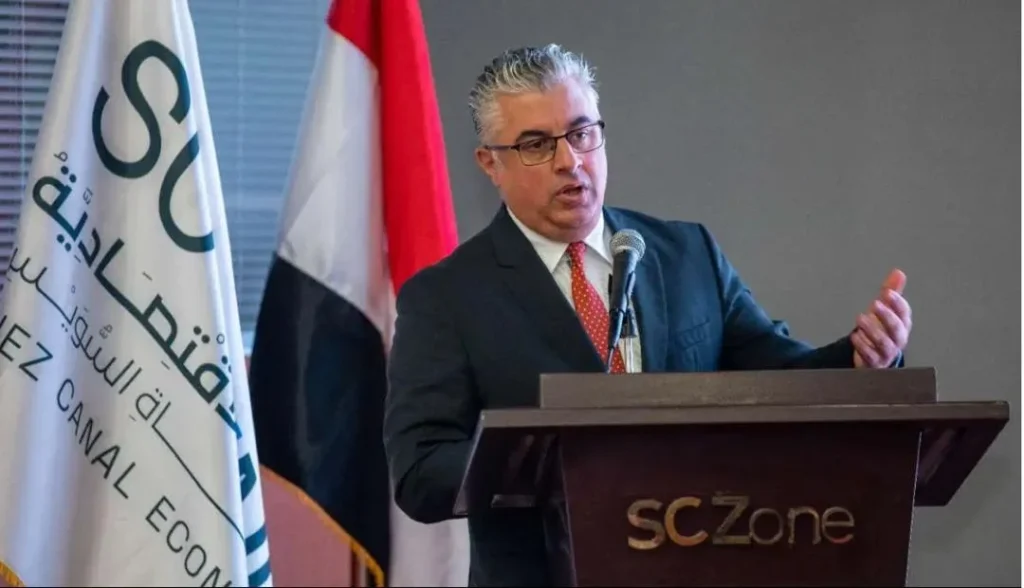
Cairo-China did not merely show up in Cairo this week it made a statement. At the Jiangsu–Egypt Economic and Trade Cooperation Conference in the Egyptian capital, officials revealed a figure that jolted even seasoned observers of the region: the Suez Canal Economic Zone has pulled in US $11.6 billion in investment over just three and a half years, and half of that money came from China.
For a country trying to reposition itself as a manufacturing and logistics powerhouse, the number is not just impressive it is transformative. But what has truly unsettled analysts is the scale and speed of China’s rise inside one of the world’s most strategic trade corridors.
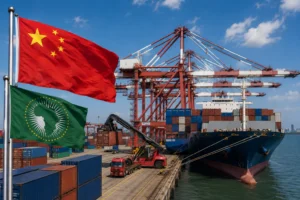
Beijing is no longer content with financing ports or building roads. In the SCZone, it is carving out massive industrial footholds: multi-billion-dollar manufacturing complexes, sprawling factory clusters, and production lines designed for global export rather than local consumption.
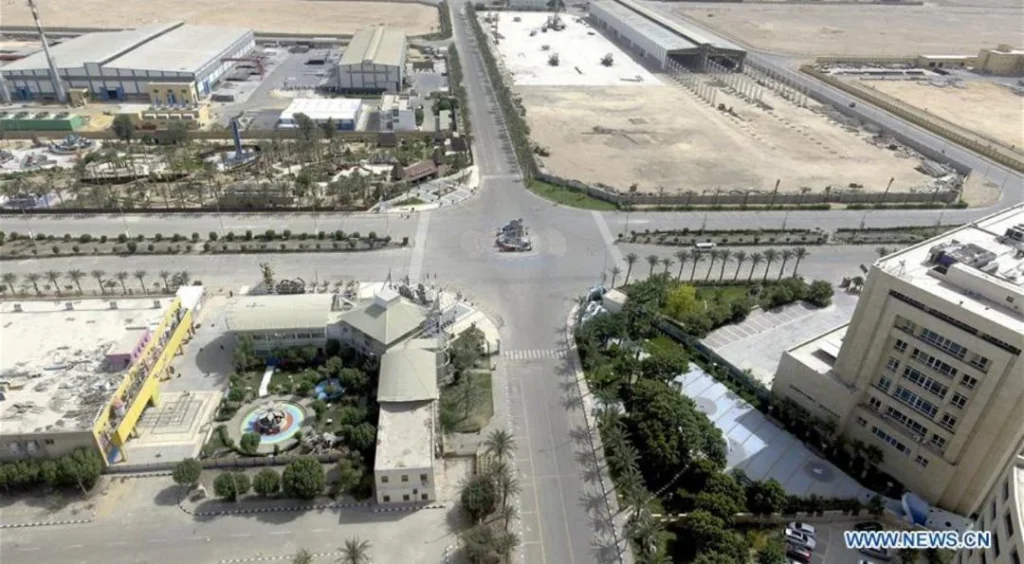
One of the clearest signs of this shift is the US $1.65 billion industrial complex planned by Xinfeng Egypt in the Ain Sokhna area a facility so large it will host nine factories, a waste-treatment center, and its own research and training hub. It will produce everything from auto parts to home appliances, feeding global markets through the Suez Canal’s arteries.
And that is only the flagship. Under the China–Egypt TEDA Suez partnership, more than 200 Chinese-backed projects now dot the SCZone’s industrial landscape a quiet but unmistakable signal that Egypt has become one of China’s most important manufacturing bases in Africa and the Middle East.
What unsettles some Western analysts is how seamlessly Beijing has folded itself into Egypt’s long-term economic architecture. With its integrated ports, tax incentives and its unmatched geography linking Asia, Europe and Africa, the SCZone offers China a platform few countries can match. And China is seizing it not by promising, but by building. The new textile factories, the logistics parks, the heavy industrial clusters: each project is a brick in what looks increasingly like a Chinese-anchored industrial corridor on the shores of the Red Sea.
For Egypt, the appeal is obvious. Jobs, exports,technology, and a chance to rebrand itself as a manufacturing center rather than just a transit point. For China, the advantages are even sharper: supply-chain resilience, proximity to European and African markets, and a strategic presence at one of the world’s most critical shipping chokepoints.
The stakes are enormous. If the SCZone continues on its current trajectory, it could become the blueprint for China’s next phase of global economic expansion one built not on loans and construction contracts, but on industrial dominance. And for Africa, it could mark the beginning of a continent-wide shift: from resource extraction to large-scale manufacturing tied directly into global value chains.
In Cairo, the announcement sounded like a milestone. In geopolitical terms, it may be something far larger a quiet turning point in the economic balance of the region, and perhaps the strongest sign yet that China’s long game around the Suez Canal has only just begun.