
By Senior Reporter, China Africa News
Nairobi / Kampala / Cape Town, November 2025-There is a growing, deliberate spread of Chinese language education across Africa and it’s reshaping how China and the continent relate, both culturally and strategically.
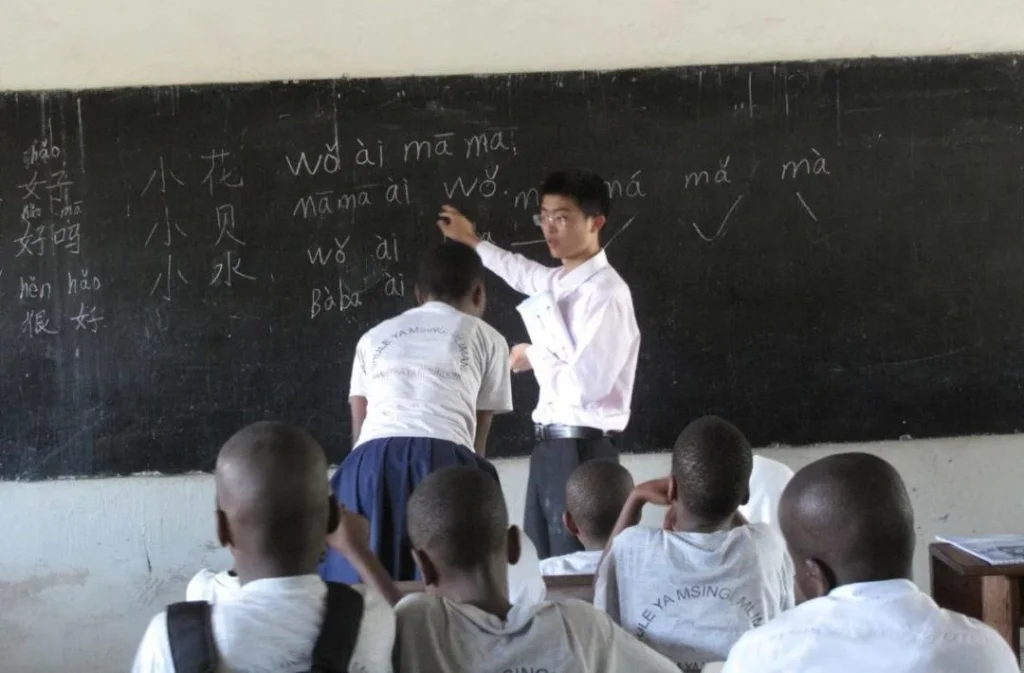
Over the past two decades, Mandarin has moved from niche university courses into formal educational systems in a number of African countries. China has helped establish dozens of Confucius Institutes and “classrooms” across Africa: according to a Chinese white paper, there are now 61 Institutes and 48 Confucius Classrooms on the continent. In parallel, more than 30 African universities now host Chinese-language departments or majors.
In Uganda, for example, the Confucius Institute at Makerere University now celebrating a decade of existence has become a hub for both language teaching and cultural exchange.
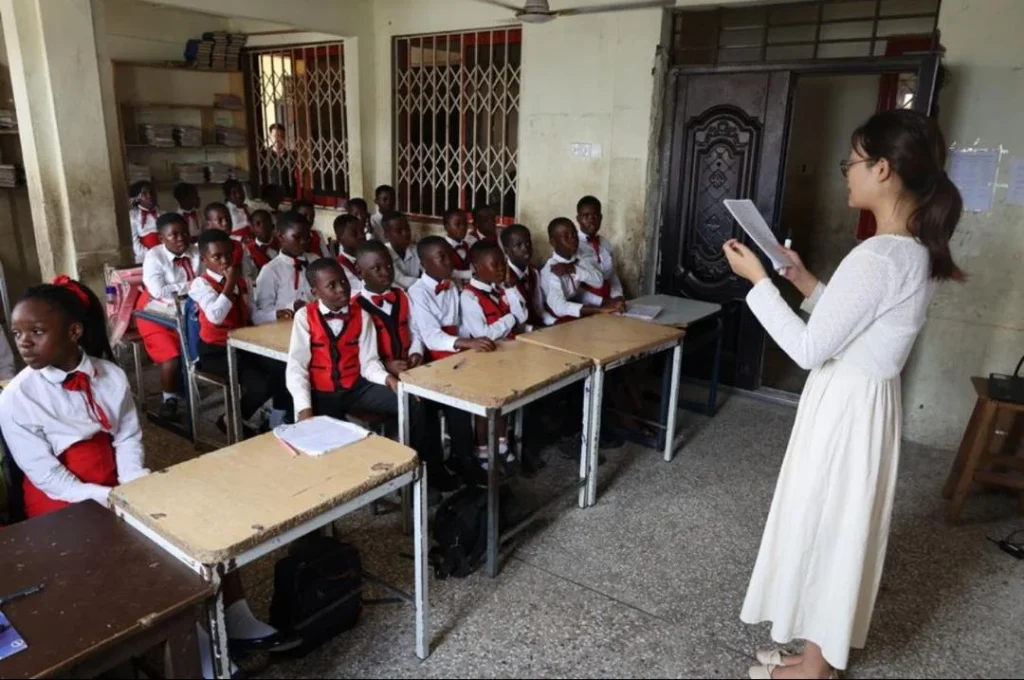
The institute has supported the deployment of Chinese-language assistants to secondary schools, and is training hundreds of new teachers. Meanwhile, the establishment of a regional East African Confucius Institutes Alliance in 2024, covering 10 countries, points to a strategic shift: these institutes are now coordinating on teacher training, resource sharing, and culture programs.
Across the continent, this linguistic push carries real geopolitical weight. For China, teaching Mandarin is not merely about cultural diplomacy it is a projection of soft power and a way to anchor long-term influence.
By building language capacity in Africa, Beijing is effectively building a bridge: Africans who speak Chinese are more likely to study in China, to work in SinoAfrican firms, and to engage with Chinese institutions on a deeper level.
That said, the model is not without its challenges. Many Confucius Institutes in Africa rely heavily on teachers sent from China, and there are persistent questions about whether the educational infrastructure is being sufficiently “localized.”
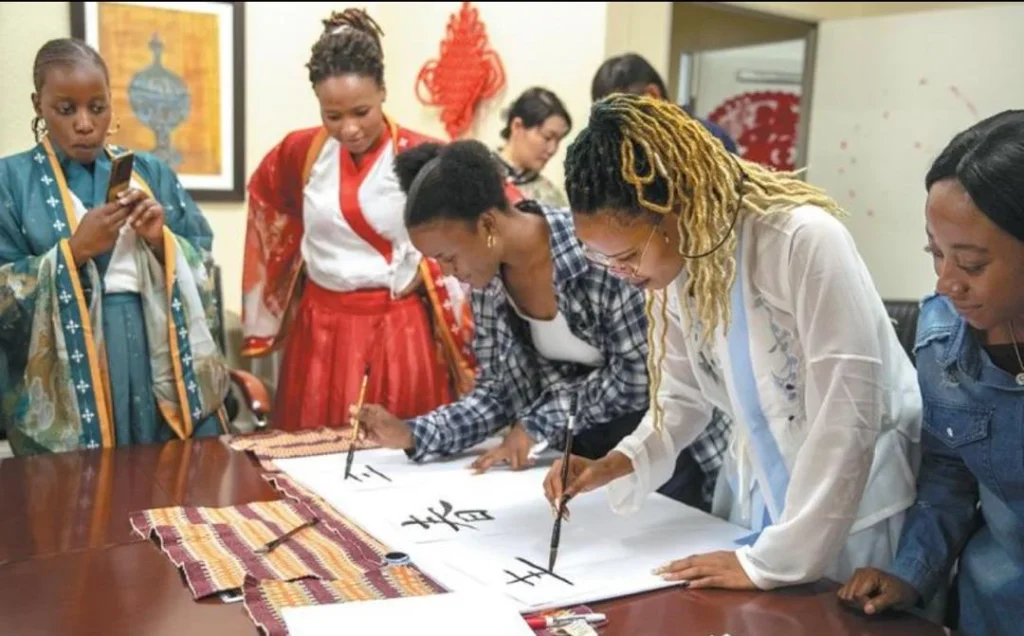
According to some studies, African universities have limited input in how these institutes operate, and students sometimes see them more as a way to go to China than to gain practical skills. In other words, the dependence on Chinese resources raises concerns about sustainability and genuine local ownership.
For the future of China–Africa cooperation, the expansion of Mandarin education could be deeply consequential. On one hand, it builds a shared platform of language and culture that smooths business, education, and diplomacy. On the other, it may deepen long-term dependencies: African elites and professionals fluent in Chinese could increasingly serve as cultural and economic intermediaries, amplifying China’s voice in African development.
As Chinese-backed educational institutions continue to expand, how African countries navigate this relationship will matter. Will they leverage Mandarinspeaking talent to diversify their economies, or risk becoming too aligned with a foreign cultural and political model? The outcomes could help define the next phase of China–Africa cooperation one in which language is not a side note, but a foundation.