
By Senior Editor,China Africa News
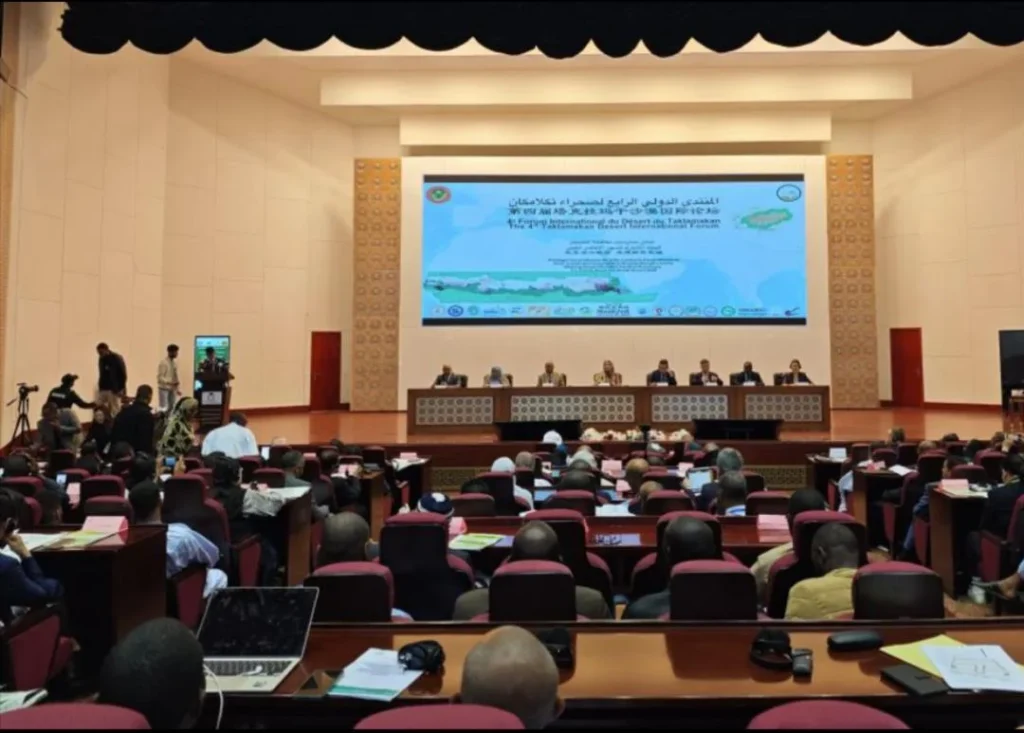
Nouakchott- In the sun-baked streets of Nouakchott, Mauritania, scientists, policymakers and environmental advocates from China and across Africa came together this December at the Fourth Taklamakan Desert International Forum to confront a challenge that has physical and social consequences stretching far beyond any single nation.
Desertification and land degradation are realities that shape livelihoods, food security and even regional stability across vast stretches of the Sahel. At this forum, the ancient and the modern, the scientific and the communal, found a shared language of urgency and cooperation.
China’s long battle against desert encroachment, especially around the vast Taklamakan Desert, was a central theme of the discussions, offering not just experience but potential pathways for action in Africa’s arid and semi-arid regions.
Duan Weili, vice president of the Xinjiang Institute of Ecology and Geography, outlined how China’s integrated approach blending scientific management, on-the-ground restoration and efforts to improve local livelihoods has resulted in “zero growth” of land degradation at home. By building ecological barriers and restoring vegetation around shifting sands, China has accumulated more than 70 years of hands-on experience that could inform similar efforts in Africa’s drylands.
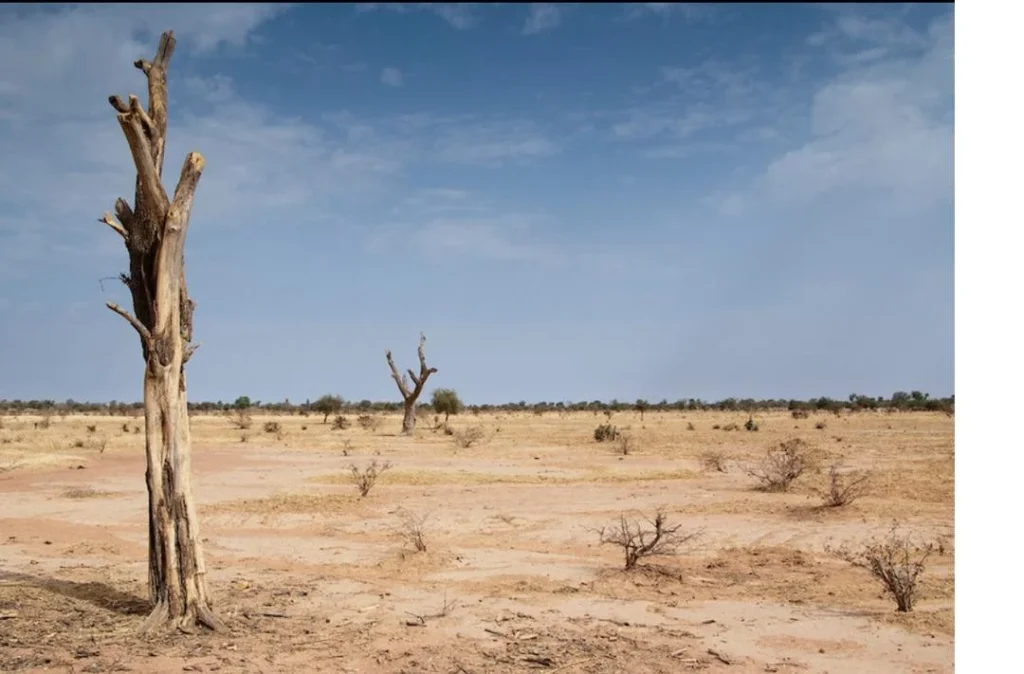
There was a palpable sense among participants that the Sahara and the Taklamakan, though continents apart, face comparable ecological pressures. Sidna Ahmed Ely, director general of Mauritania’s National Agency of the Great Green Wall, emphasized these parallels, noting that they make the forum an important platform for meaningful dialogue between two of the world’s great desert ecosystems.
In recent years, Mauritania and Chinese research institutions have already collaborated on pilot projects focused on dune stabilization, vegetation restoration and soil improvement. This cooperation, Ely said, points toward a future in which knowledge and technology transfer contribute to sustainable, locally adapted solutions across the Sahel.
Officials at the forum also made clear that desertification is not just an environmental issue but a matter of global governance and shared responsibility. Representatives from the Chinese Embassy in Mauritania stressed that China’s strategies are not only suited to its own conditions but designed to be replicable and scalable with the right partnerships.
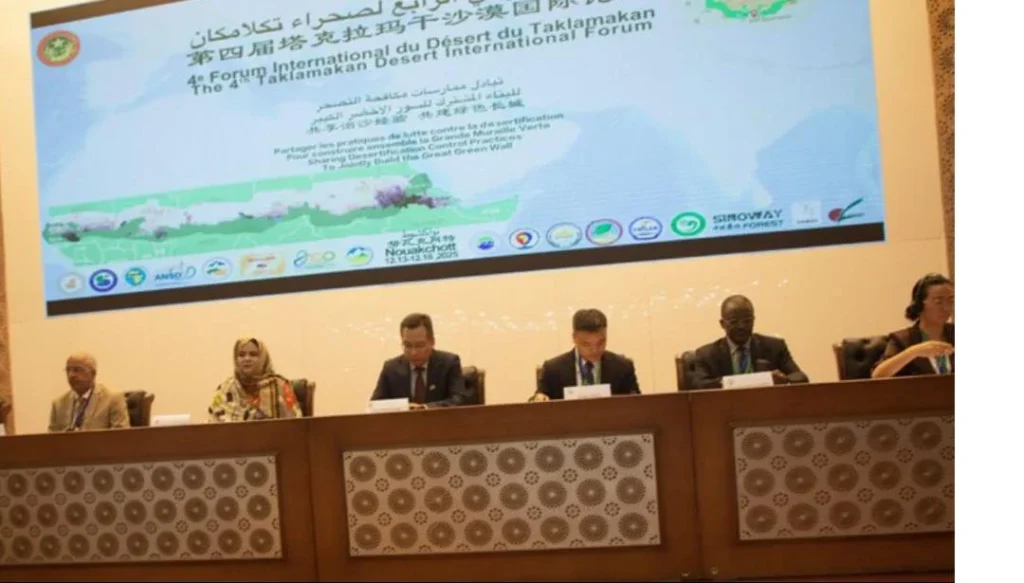
Scientists, Policymakers and Environmental Advocates at the Fourth Taklamakan Desert International Forum in Nouakchott.
African ministers speaking at the event underscored how climate change and land degradation affect everything from food production to socio-economic stability, and how cooperative work with China exemplifies broader South-South collaboration to tackle these shared problems.
What emerged from the talks was a picture of environmental challenge as both a threat and an opportunity one where scientific innovation, cross-continental cooperation and local empowerment intersect. The Great Green Wall initiative, Africa’s ambitious effort to heal its own drylands, stands to benefit from enhanced scientific cooperation, joint research platforms and the exchange of practical technologies.
In the face of a warming climate and expanding deserts, this growing partnership between China and African states reflects not just ecological necessity but a deeper commitment to shared resilience and sustainable development.