
By Senior Editor, China Africa News
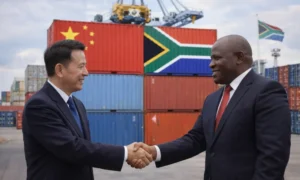
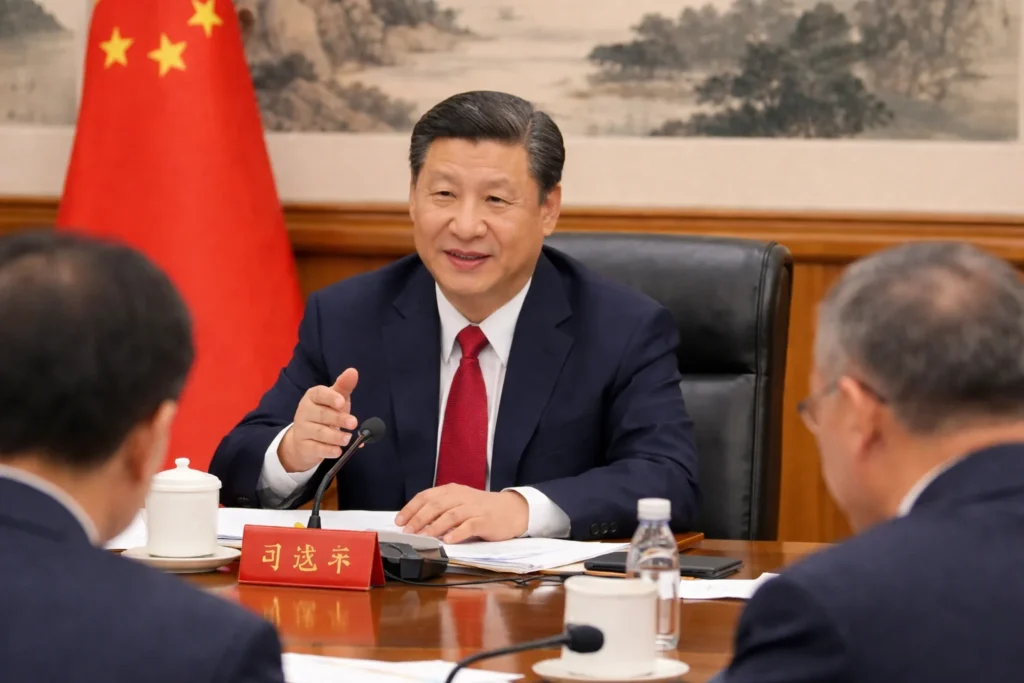
Addis Ababa/Beijing,February 16, 2026 — President Xi Jinping has announced that beginning 1 May 2026, China will eliminate tariffs on imports from 53 African countries, effectively extending zero-tariff access to nearly the entire continent. The only exception is Eswatini, which maintains diplomatic relations with Taiwan.
On the surface, it is a trade policy announcement. But in substance, it signals something much larger.
For years, the United States has engaged Africa through the African Growth and Opportunity Act (AGOA), a framework that provides duty-free access to the U.S. market for eligible African countries. While AGOA has opened doors, it has also come with eligibility requirements tied to governance benchmarks and periodic reviews. Countries can be suspended. Renewals depend on U.S. congressional decisions. For exporters, that uncertainty can create hesitation.
China’s approach, by contrast, is being presented as sweeping and continent-wide, without the same publicly emphasized political conditions. By removing tariffs across almost all African nations at once, Beijing is positioning itself as a stable and predictable trade partner at a time when global trade relationships are increasingly complex.
The implications are significant. African exporters from agricultural producers to mineral suppliers and emerging manufacturers could gain broader access to the world’s second-largest economy. Increased export flows would likely deepen Africa’s trade integration with China, which is already the continent’s largest trading partner.
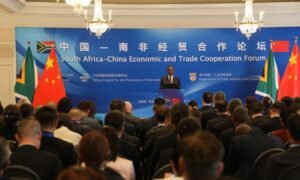
Beyond economics, the strategic undertone is unmistakable. Trade often lays the foundation for stronger political ties, infrastructure cooperation, and long-term alignment. Through mechanisms such as the Forum on China-Africa Cooperation (FOCAC), China has steadily built a framework that blends investment, financing, and diplomatic engagement. This tariff removal strengthens that architecture.
At a moment when Washington is debating the future of AGOA and reviewing trade eligibility conditions, Beijing’s announcement sends a clear signal: China is ready to expand market access now. For African governments seeking diversification, certainty, and expanded export opportunities, that message may resonate strongly.
Whether this development ultimately shifts the balance of influence between China and the United States will depend on implementation, Africa’s export capacity, and how Washington responds. But one thing is clear by opening its market to nearly the entire continent; China is not only advancing trade. It is reinforcing its presence, deepening its partnerships, and positioning itself ever closer to Africa’s economic future.