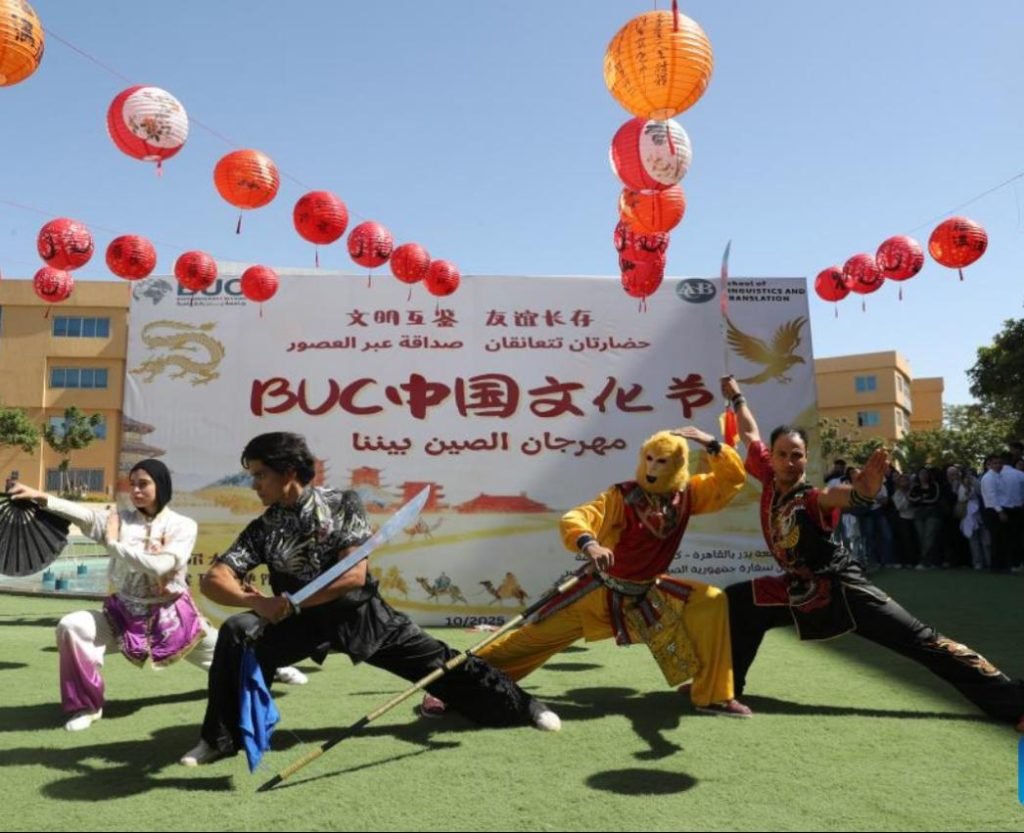

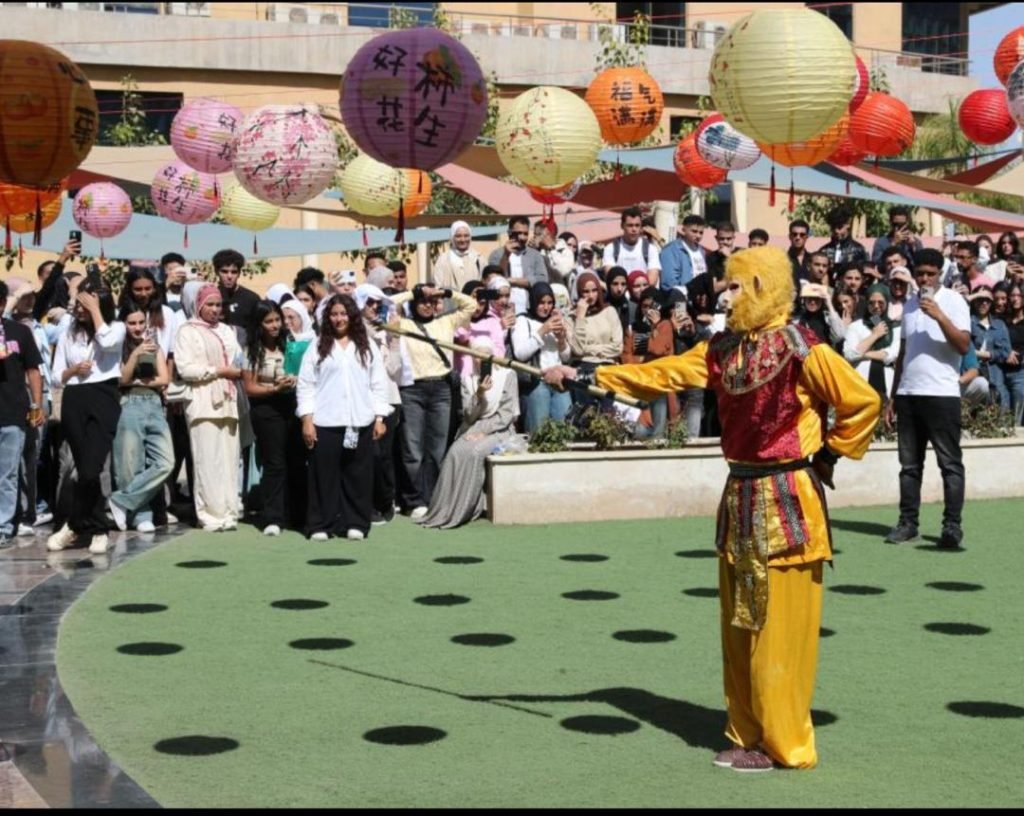
The quad at Badr University in Cairo filled with colour and movement on Monday, as the Chinese culture festival brought together students, faculty and heritage from two Countries. In the sea of flowing Hanfu robes and excited chatter, calligraphy brushes traced characters on parchment while the distinctive aroma of freshly brewed tea drifted through the air. The occasion was presented as a celebration of culture, yet for many it felt something more: a meeting point of ancient traditions, youthful curiosity and strengthening ties between Egypt and China.
One student, pausing mid‑stroke with a calligraphy brush, said she felt she was “speaking a new part of my identity” by writing her name in Chinese. Nearby, a friend stepped into embroidered robes from a Chinese ethnic minority and laughed: “When I put this on, I thought: today I am walking in someone else’s history but it feels like part of mine, too.”
Behind the costumes, the crafts, and the martial arts display lay a broader story: the growing cultural and civic bond between Egypt and China. According to the Chinese Embassy in Egypt, the popularity of Mandarin and Chinese cultural studies among young Egyptians is rising, helping more learners “understand, love and study Chinese cultures.” At the same time, Egyptian universities and institutes increasingly host Chinese language programmes, and cultural exchange initiatives are deepening the shared sense of heritage.
The festival featured Chinese calligraphy and paper‑cutting workshops, a Hanfu costume zone, booths with Chinese snacks like dumplings and steamed buns, and a tea‑art corner. The highlight of the day was a martial‑arts performance, conducted by Egyptian students, which drew enthusiastic applause and was followed by an interactive session where spectators tried basic moves on stage.
Officials attending the event highlighted its significance in the broader Egypt‑China relationship. The university’s president remarked that the two nations were “not just partners but friends moving forward together.” A former Egyptian ambassador to China called such festivals “a bridge linking two ancient civilizations,” reinforcing the idea that this event was part of a wider movement of cultural connection.
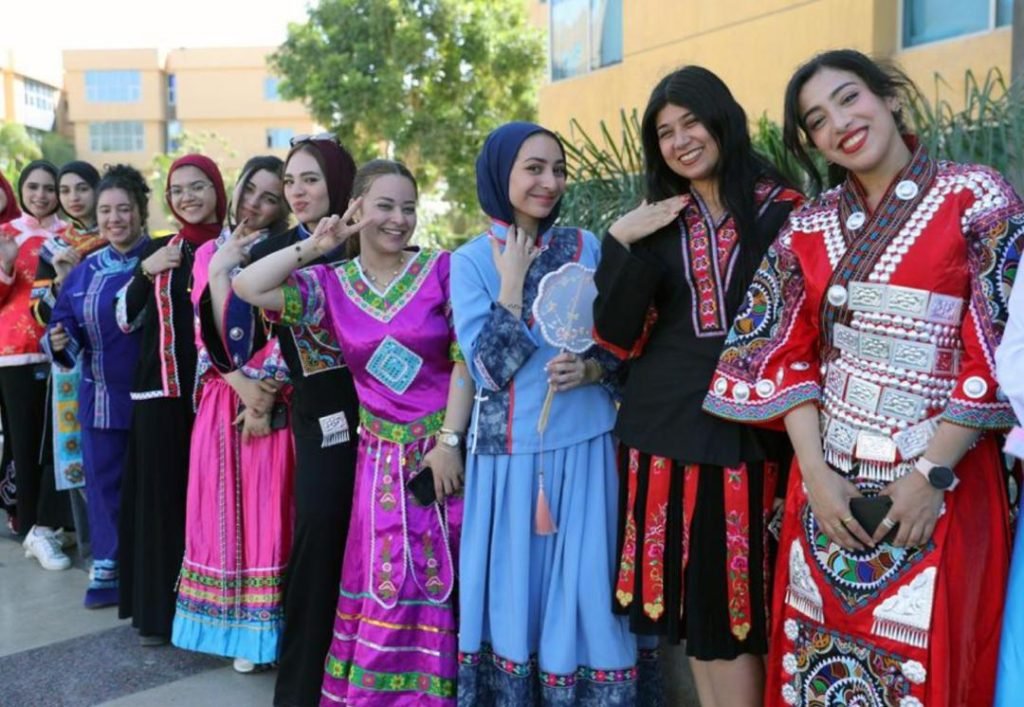
For many participants, the experience had a tangible effect. One student, at the tea‑art corner, reflected: “When I drink this tea, I feel closer to China and I feel how open I suddenly am.” At the same time, the symbolic significance of playing the part of another culture’s tradition came into focus the robes, the brush, the stance were not mere performance but points of learning and exchange.
As the afternoon gave way to evening, the festival concluded not just as an event, but as a moment of quiet significance: a gathering that affirmed culture is not merely to be observed, but lived and shared. In an era of fragmentation, the festival at Badr University quietly offered a different message: when traditions cross borders, new friendships are formed.
By Senior Editor China Africa News