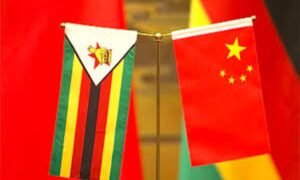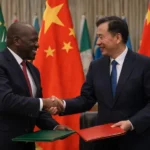
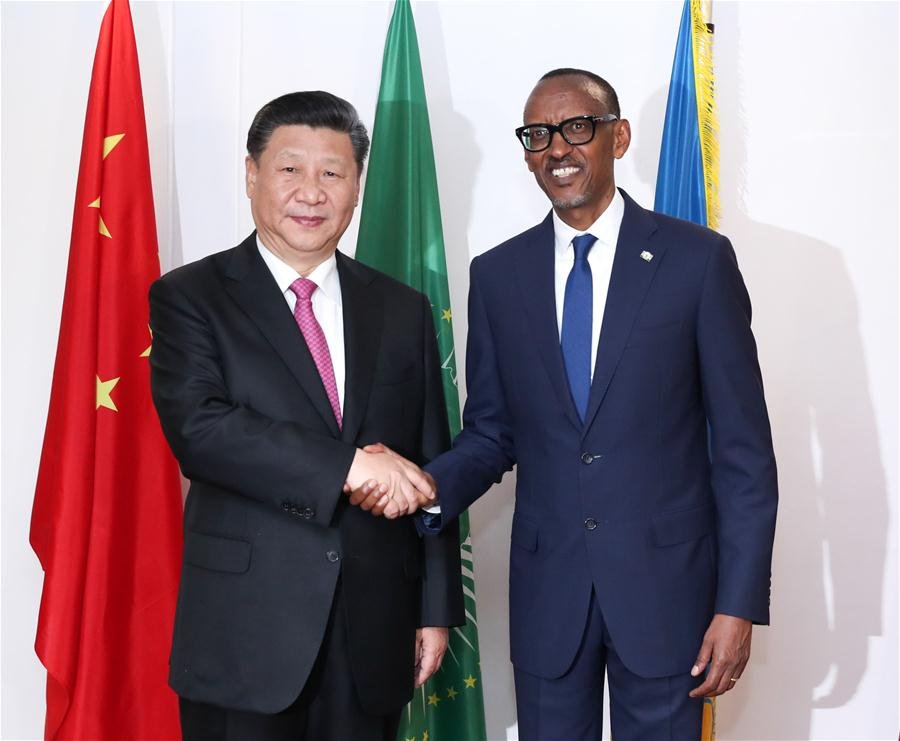

Beijing- It’s been one year since Rwanda and China upgraded their bilateral relations to a Comprehensive Strategic Partnership under the 9th Forum on China-Africa Cooperation (FOCAC 9), sealing multiple agreements across agriculture, trade, media, and digital technology. As we assess what has been accomplished, what remains aspirational, and what this cooperation signals, two things are especially striking the potential transformation for Rwanda, but also what this axis reveals about China’s evolving role in Africa.
Remember the Giseke Dam and Irrigation Project: a US$45 million investment, targeting 2,640 hectares in Gisagara District, Southern Province, intended to boost agricultural productivity, enhance water use efficiency, and bring resilience amid climate stress. That is perhaps the clearest marker of progress. It anchors the rhetoric of FOCAC into something tangible canals, dams, farmers, fields.
Similarly, participation of Rwanda’s producers in the China International Import Expo (CIIE) and the China International Supply Chain Expo (CISCE) last year has allowed Rwanda to show its “Made in Rwanda” goods coffee, chili, avocado oil, honey, handicrafts to Chinese buyers. These are early but necessary steps to deepen trade links and build export capacity.
But, despite these advances, trade imbalances persist. Rwanda imports far more from China than it exports. The promises of digital and media cooperation content production, shared broadcasting, technology transfer are still nascent. Implementation in these softer sectors lags infrastructure and agriculture, which tend to attract more immediate funding and visibility. Perhaps one of the most discussed features of China’s engagement in Africa is its public insistence that its cooperation comes with no political strings attached. This means, according to Beijing:
- No interference in how African nations choose their development path.
- No imposition of China’s political will or policies.
- No conditionalities tied to governance or human rights reforms.
- Mutual benefit over external agendas.
This posture contrasts sharply with many Western development partners, whose aid and loans often come with explicit or implicit conditions: policy reforms, human rights benchmarks, anti-corruption measures, liberalization clauses, etc.
President Paul Kagame has explicitly praised this aspect of China Africa cooperation: “Now the cooperation [with China] presents more value . This relationship doesn’t come with a lot of strings attached like we have had with many other parts of the world.”
From the West, “we get more in terms of lectures and not so much in terms of value,” President Kagame told representatives from 162 countries in Doha, Qatar, in December 2024 at a global gathering to discuss ideas ranging from global diplomacy to future-shaping innovations.
For Rwanda, this “no strings” framework grants greater flexibility. Kigali can pursue large infrastructure or irrigation projects without needing to satisfy external political preconditions. It allows decisions to align more closely with national priorities, food security, employment, rural development rather than adapting to donor imposed governance or regulatory reforms.
It also means faster decision-making. Without lengthy negotiations over conditionals, projects may proceed with fewer delays. The speed of moving from agreement to project like Giseke illustrates this advantage. For China, the benefits are multifold: Strategic Influence and —Partnerships: Ethiopia, Rwanda, many others become anchors of China’s role in Africa. The soft power from showing up with infrastructure, cooperation, and tangible development wins goodwill. Economic Markets and Supply Chains: As Rwanda and other African countries scale up their agricultural exports, and as connectivity (road, digital, port) improves, China’s companies can benefit from sourcing raw materials to exporting manufactured goods and services.
Alternative Diplomatic Space: With narratives of global inequality, colonial legacies, and Western conditional aid, China positions itself as a partner that respects national sovereignty which is appealing to many leaders in Africa. Geopolitical Leverage: In international for a, partnerships built on trade, investment, and diplomatic alignment (often based on non-interference) can translate into votes, blocks of influence, or alignment in global issues.
Africa is not monolithic; but Rwanda’s experience is illustrative. The coming years may show whether the “no-strings” model fosters sustainable development across the continent or whether loosened political oversight creates risks.
For Africa broadly, the evolving model offers an alternative development path one that claims sovereignty and partnership over dependency and conditionality. But alternatives are not risk-free. The question is whether the mutual interest, combined with strong internal governance, can deliver more balanced, resilient development for the many, not just a few.