
By Senior Editor
BEIJING, October 22, 2026 — China and Djibouti have called for freedom of navigation in the Red Sea and the Bab el-Mandeb Strait, underscoring the importance of maritime security to international trade as escalating regional tensions threaten shipping routes connecting Asia, Africa and Europe.
The appeal followed a meeting on October 21 between Chinese Foreign Minister Wang Yi and Djibouti’s Minister of Foreign Affairs and International Cooperation, Abdoulkader Houssein Omar, in Beijing. In a joint statement, the two countries stressed that commercial vessels must be allowed to exercise their navigation rights in accordance with international law.
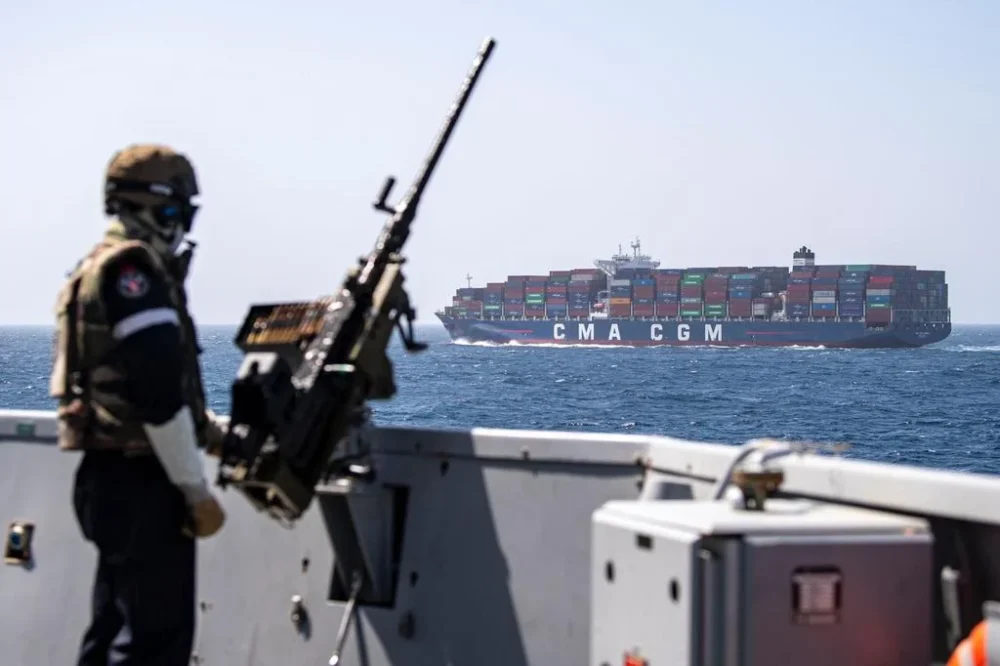
The statement comes amid worsening security concerns around Yemen, where Houthi forces have disrupted shipping in the Red Sea. The instability has raised concerns about the safety of vessels passing through the Bab el-Mandeb Strait, a strategic maritime chokepoint at the southern entrance to the Red Sea.
A vital corridor for African trade
For Djibouti, the security of the Red Sea is directly linked to economic stability. Located near the Bab el-Mandeb Strait, the country serves as a major maritime gateway for the Horn of Africa, particularly landlocked Ethiopia, which relies heavily on Djiboutian ports for international trade.
Disruptions to shipping can increase transport and insurance costs, delay deliveries and place additional pressure on import-dependent economies. Potential consequences extend to food and energy supplies, regional investment and the movement of goods across African markets.
China also has significant interests in keeping the route open. As a major trading nation with extensive commercial connections across Africa, Beijing depends on secure maritime corridors to support supply chains and trade with international partners.
The two governments warned that rising tensions pose serious risks to trade, investment, energy security and food security, particularly for countries in the Horn of Africa. They called for dialogue, diplomacy and respect for international law to prevent further escalation.
China–Africa cooperation and regional stability
The meeting also highlighted the broader relationship between China and Djibouti, which marks 47 years of diplomatic relations in 2026. Both countries reaffirmed their commitment to expanding practical cooperation, including through the Forum on China–Africa Cooperation (FOCAC) and the China–Arab States Cooperation Forum.
China opened its first overseas military support base in Djibouti in 2017, reflecting the strategic importance of the country to Beijing’s overseas interests and maritime operations. Djibouti also hosts military facilities operated by several other international powers.
Beyond security, stable shipping routes are essential to advancing China–Africa economic cooperation. Infrastructure investment, industrial development and expanding commercial exchanges depend on reliable transport networks that connect African producers and consumers to global markets.
The two countries also emphasized respect for the sovereignty and territorial integrity of Red Sea coastal states, cautioning against actions by outside powers that could increase regional security risks.
A shared interest in de-escalation
Despite their call for maritime security, the statement did not announce a new joint naval operation or a specific enforcement mechanism. Instead, it emphasized international cooperation, diplomatic engagement and the responsibility of regional countries to help maintain safe passage.
For Africa, the stakes extend beyond maritime security. Sustained disruption could undermine economic resilience and complicate efforts to expand intra-African trade and international investment.
As China and African countries deepen their economic engagement, cooperation on regional stability is becoming increasingly important. Ensuring that strategic shipping corridors remain safe and accessible will be essential to protecting commercial interests, strengthening connectivity and supporting long-term development across the continent.
The message from Beijing is clear: safeguarding the Red Sea is not only a regional security concern, but also a shared international economic priority.