
By senior Editor, China Africa News
Dakar-China and Senegal have signed a memorandum of understanding that brings Dakar into the orbit of lunar exploration alongside Beijing. On 5 September 2024, at the opening of the Second International Conference on Deep Space Exploration held in Tunxi, Anhui Province, the China National Space Administration (CNSA) and the Agence Sénégalaise d’Études Spatiales (ASES) formalised cooperation under the International Lunar Research Station (ILRS) initiative.
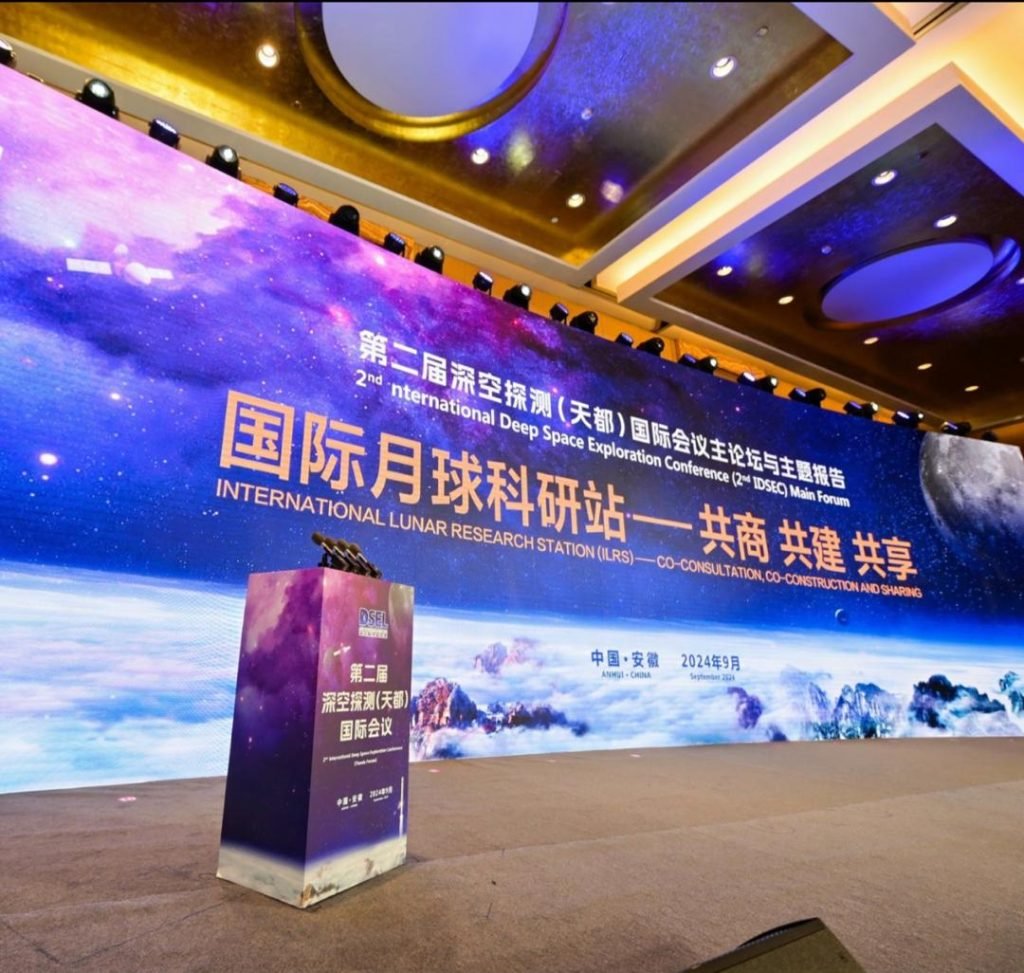
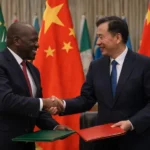
The agreement, signed by ASES Director-General Maram Kairé and CNSA Chief Engineer Li Guoping, came amid a gathering of more than 40 countries’ experts and over 300 scholars in China, underscoring the growing global rally around China’s lunar ambitions. Kairé remarked at the ceremony that “space is not a luxury for us, it is a tool of development,” signalling how Senegal views the new partnership as a vehicle for national growth rather than a mere prestige project.
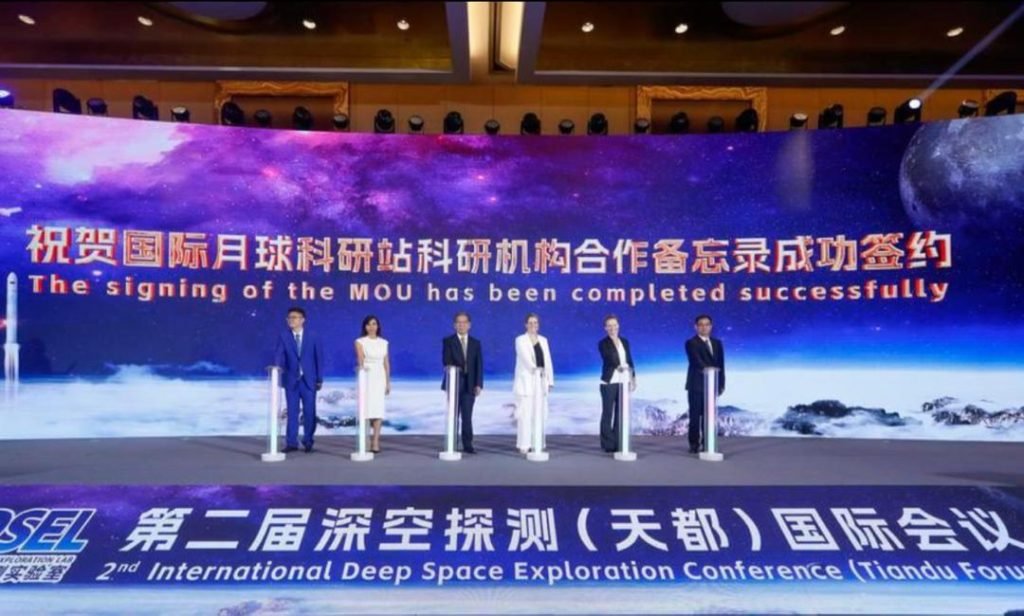
For Senegal, this marks a clear evolution from a satellite-focused program into deeper space cooperation. Just weeks earlier, in August 2024, Senegal launched its first nanosatellite, Gaindesat-1A, and with the new accord aims to use the ILRS framework to build capacity in ground infrastructure, satellite systems, and ultimately lunar-related research. Through the partnership, Senegal stands to gain training for engineers and scientists, access to advanced technologies, and a role in the global lunar agenda all aligned with the country’s development priorities in agriculture, environment and resource monitoring.
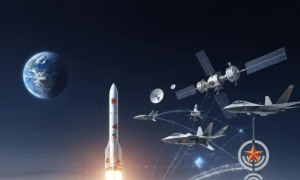
From China’s perspective, the ceremony in Tunxi represented yet another expansion of its space diplomacy. By adding Senegal, alongside other countries and institutions at the conference, the CNSA sends a signal that the ILRS is open to emerging nations and that lunar research cooperation is becoming a broader international platform. The ILRS, conceived as a multi-component system comprising lunar-surface modules, lunar-orbit platforms and Earth-based support, envisions robotic operations on the Moon’s south pole by about 2035 and a human-capable station thereafter.
In practical terms, the Senegal-China agreement opens doors: joint research projects, reciprocal access to satellite data and lunar-science platforms, development of Senegal’s space ecosystem, including its second satellite Gaindesat-1B, and integration into a larger network of global partners sharing data and infrastructure. At the same time, it places Senegal on a long-term trajectory of lunar cooperation and positions it among states actively engaged in shaping Africa’s role in space.
Yet, the signature is only the first step. The true measure will be in Senegal’s ability to convert the MoU into functioning programmes building human and technical capacity, establishing ground-stations, deploying successive satellites, and participating meaningfully in lunar science and exploration. For both sides, this is a strategic alliance that blends development, diplomacy and deep-space ambition.