
By Sylivanus M.Karemera, China Africa News
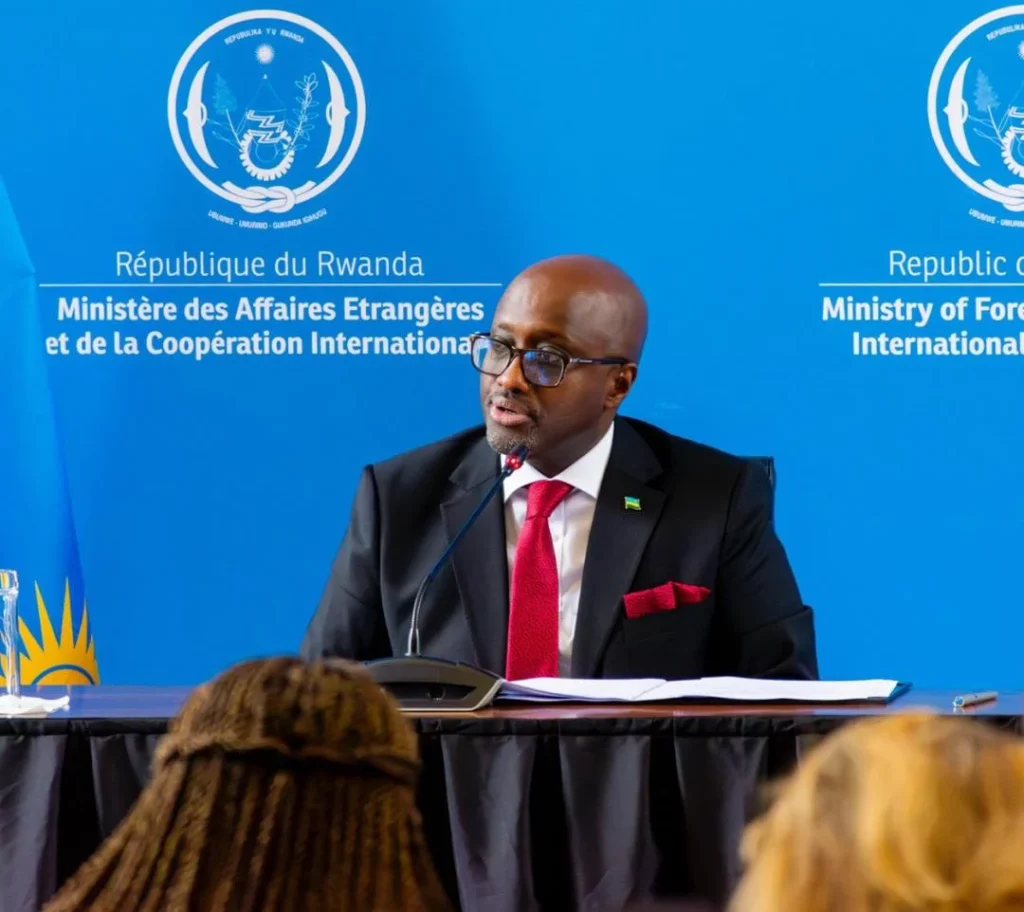
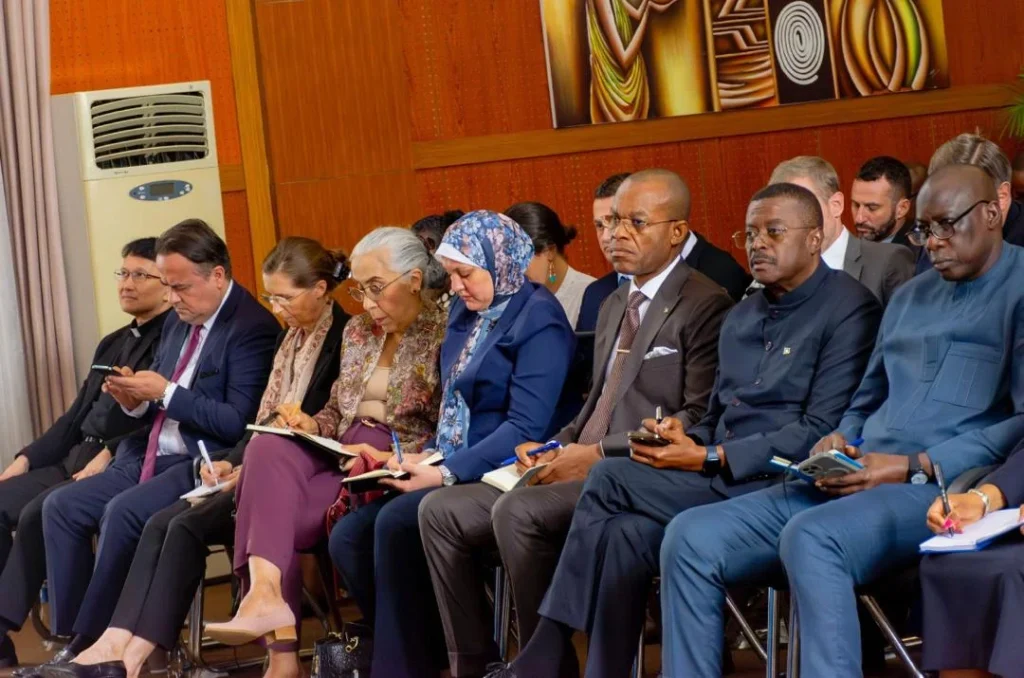
Kigali-Rwanda has strongly challenged narratives that cast Kigali as a destabilizing force in the Great Lakes conflict a position Foreign Affairs Minister Olivier Nduhungirehe made crystal clear during a diplomatic briefing with resident ambassadors in Kigali.
In words that blended urgency with diplomatic appeal, he outlined Kigali’s perspective that peace hinges not merely on inter‑state agreements but on confronting the core conflict between the Democratic Republic of the Congo and the M23 rebel movement through sustained, inclusive negotiation.
Nduhungirehe once again welcomed both the U.S.‑brokered Washington peace accords and the Doha process facilitated by Qatar because, in his framing, neither track alone is sufficient, the Washington accord advances bilateral cooperation on security and economic integration, but Doha is where the fighting itself must be halted.
The Washington accords, reaffirmed recently in Washington, D.C., brought the presidents of Rwanda and the DRC together under a U.S. framework aimed at normalizing relations, enhancing security cooperation and attracting investment to the region’s fragile economy.
They set out mechanisms for troop withdrawals, joint monitoring and economic integration, signaling a major diplomatic milestone after years of mistrust. Yet M23 was not a party to that accord, and crucially, its battlefield advances have continued, capturing key territory in eastern DRC despite the agreement’s ambitions.
What government officials underscored in Kigali and what analysts also note is that the Doha peace track must not be overshadowed by the Washington framework because it directly engages the warring parties in eastern Congo.
In November, the DRC government and M23 signed a “framework for peace” in Doha, establishing principles for a comprehensive peace agreement and laying out protocols for ceasefire implementation, humanitarian access, and reintegration of combatants. This Doha framework, backed by Qatar, the United States, and the African Union, represents the only multilateral process that tackles the conflict’s substance, not just diplomatic relations between capitals.
Yet Doha’s promise is at risk of fading because implementation has lagged. Frameworks and declarations are important, but without full buy‑in and political will from Kinshasa to move beyond ceasefire declarations into binding agreements, the fighting on the ground persists. This stalling has real consequences: rebel advances into strategic towns like Uvira and spikes in civilian casualties and displacement show how quickly the situation can deteriorate when negotiation momentum stalls and guns answer politics.
In Washington, U.S. officials have publicly expressed frustration at the disconnect between diplomatic progress and battlefield realities. U.S. Ambassador to the United Nations Mike Waltz accused Rwanda of actions that undermine the peace process, asserting that Kigali’s alleged backing of M23 rebels threatens regional stability and jeopardizes the very accord Washington championed. He warned that without accountability for those undermining peace, the progress envisaged by the accords could unravel.
Rwanda’s response, articulated by Ambassador Martin Ngoga at the U.N., does not shy away from the complexity of the crisis. Ngoga emphasized that political will from all parties, including Kinshasa, is indispensable to peace and that conflicts like those in Eastern Congo cannot be resolved through military means alone. He reiterated Kigali’s support for both the Washington process and the Doha framework, insisting that durable peace must be anchored in political settlement, respect for communities, and impartial implementation of ceasefires.
At the heart of this analytical tension is a simple but profound insight: the Washington accord can set parameters for inter‑state cooperation, but it does not, by itself, stop the bullets or ensure the guns are laid down. That burden falls to the Doha process, where M23 and the government of the DRC are supposed to negotiate end‑game commitments and confidence‑building measures that hold on the ground.
But if Kinshasa drags its feet in Doha insisting on maximalist positions, delaying protocols, or finessing its commitments the conflict risks grinding on, with frameworks serving as annotations in peace talks rather than instruments of peace itself.
In Kigali, Nduhungirehe’s appeal was as much a strategic argument as a diplomatic one: no peace architecture will succeed without tangible progress in Doha. Neither the United States’ good offices in Washington nor economic incentives tied to regional integration will satisfy a population battered by years of conflict if the shootings, deaths, and displacements do not stop. That underlying reality that wars persist when political dialogue stalls was implicit in his message to diplomats, even as external actors push for broader implementation of diplomatic accords.
The region now stands at a crossroads where political will, not just diplomatic language, determines peace or protraction. If Doha’s negotiations are energized and leads to enforceable cessation and accountability, the Washington framework may finally anchor a broader peace.
But if talks falter, if the DRC government hesitates or demands conditions that delay substantive Doha outcomes, the cycle of violence will likely intensify, bottling war into the future of the Great Lakes rather than releasing it.