
By Senior Editor, China Africa News
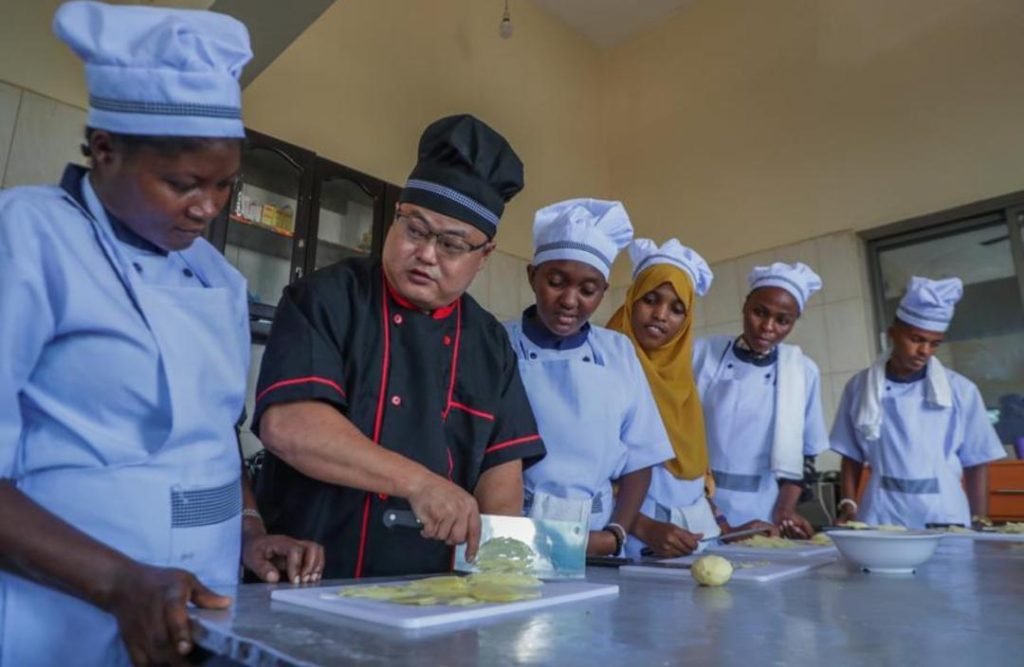
Dar es Salaam, Tanzania, February 1, 2026 — In a lively kitchen classroom at the Kilimanjaro Institute of Technology and Management in Dar es Salaam, the air is rich with the aroma of spices and the focused energy of young learners eager to master new culinary skills. Twenty hospitality students have embarked on an unusual but inspiring journey that goes far beyond simple recipes they are discovering the heart and philosophy of Chinese cuisine.
Guided by Chef Wang Bo from China’s Sichuan Province, the class moves between sizzling woks and wooden boards, where knife skills and traditional techniques are taught alongside stories about food and culture. Here, the task of slicing vegetables into fine “silver needle” strips is more than a technical exercise it’s a moment of connection with a different way of thinking about food.
“I didn’t just learn how to cook,” said one participant. “I learned why food matters — how it balances flavour, health and history.” For students like her, the focus on technique is paired with an introduction to regional culinary traditions: the bold heat of Sichuan, the depth of northeastern stews, and the delicate touch of Cantonese dishes.
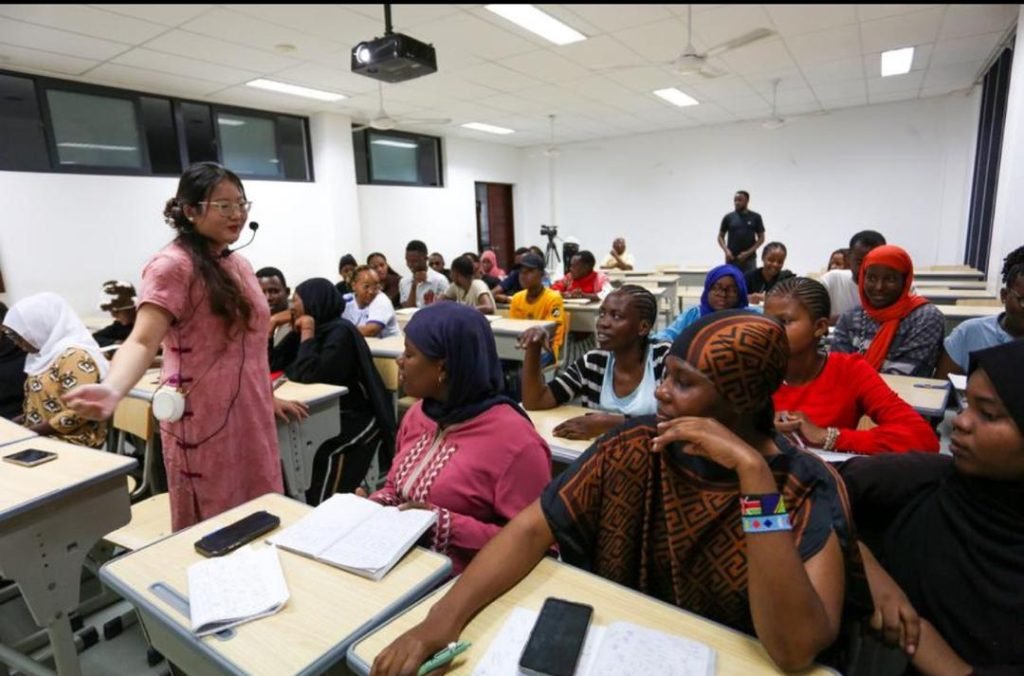
Organisers say the programme was created not just to expand culinary skills, but also to open doors. Developed in partnership with The Best Company, a Chinese cultural exchange enterprise, the course reflects a broader interest in strengthening human connections and professional opportunities between Tanzania and China.
Beyond mastering dumplings and steamed buns, students are encouraged to understand cultural symbols and stories embedded in dishes for instance, how dumplings or jiaozi signify togetherness and good fortune in Chinese tradition. Simple practices like learning to use chopsticks become gestures of respect and willingness to embrace another culture.
Local instructors also see practical advantages. As Tanzania’s hospitality sector grows and prepares for more international visitors, including those from China, graduates with authentic Chinese cooking skills can stand out in a competitive job market. They may find themselves working in Chinese restaurants or hotels across the region or even starting their own ventures.
While technology and tourism link nations at macro levels, students in this kitchen are discovering that food itself can be a bridge, uniting people through shared experiences, flavours and stories. Across clattering utensils and shared laughter, they are learning that every dish served is also a conversation one that connects cultures as naturally as any spoken language.