
By Cremilda Macuacua, China Africa News
KIGALI, February 19, 2026 – Regional trade within the East African Community has grown from US$6.42 billion in 2016 to US$15.25 billion in 2024 an average annual increase of about 11–12%. Despite this expansion, intra-EAC trade accounts for only 12.2% of total exports, up modestly from 11.5% in 2016, highlighting the bloc’s continued reliance on external markets and the vast untapped potential within the region.
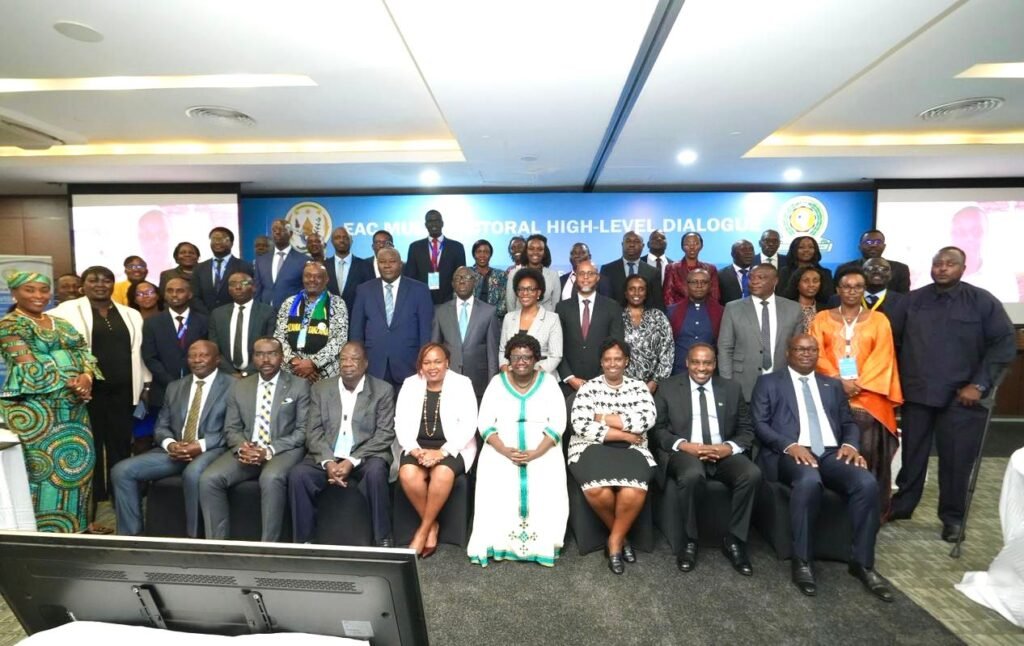
It is against this backdrop that the EAC convened a two-day High-Level Multisectoral Dialogue in Kigali to tackle persistent trade barriers and accelerate regional integration. While legal and institutional frameworks under the Customs Union and Common Market are largely in place, officials acknowledged that implementation gaps rather than policy design now pose the main obstacle. Intra-regional trade has remained at roughly 15% of total trade for more than a decade, far below its estimated potential of 30–50%.

Speaking at the opening, Rwanda’s Minister of Trade and Industry, Prudence Sebahizi, reaffirmed his country’s commitment to deepening integration and strengthening collaboration with the private sector. Rwanda’s State Minister for EAC Affairs, Yusta Kayitesi, warned that Non-Tariff Barriers (NTBs) including discriminatory domestic taxes, duplicative inspections, and inconsistent application of Rules of Origin continue to inflate costs, disrupt supply chains, and weaken confidence in the EAC as a rules-based market.
EAC Secretary General Veronica Nduva underscored both progress and shortcomings. While trade volumes have more than doubled over eight years, she noted that intra-EAC trade still represents only about one-eighth of total exports, signaling limited structural transformation within regional markets.

The dialogue also comes amid concerns over financial sustainability within the bloc. Some Partner States have accumulated arrears in their statutory contributions, placing pressure on the Secretariat’s operations and slowing the execution of regional programs. Observers note that consistent financing is critical to implementing reforms, strengthening enforcement mechanisms, and operationalising initiatives such as One-Stop Border Posts and digital customs systems.
As deliberations conclude, officials are expected to produce a clear set of priority actions for consideration by the Council and Summit aimed at moving the Community from policy commitments to measurable, time-bound implementation and unlocking the full potential of the EAC single market.