
By Senior Reporter, China Africa News
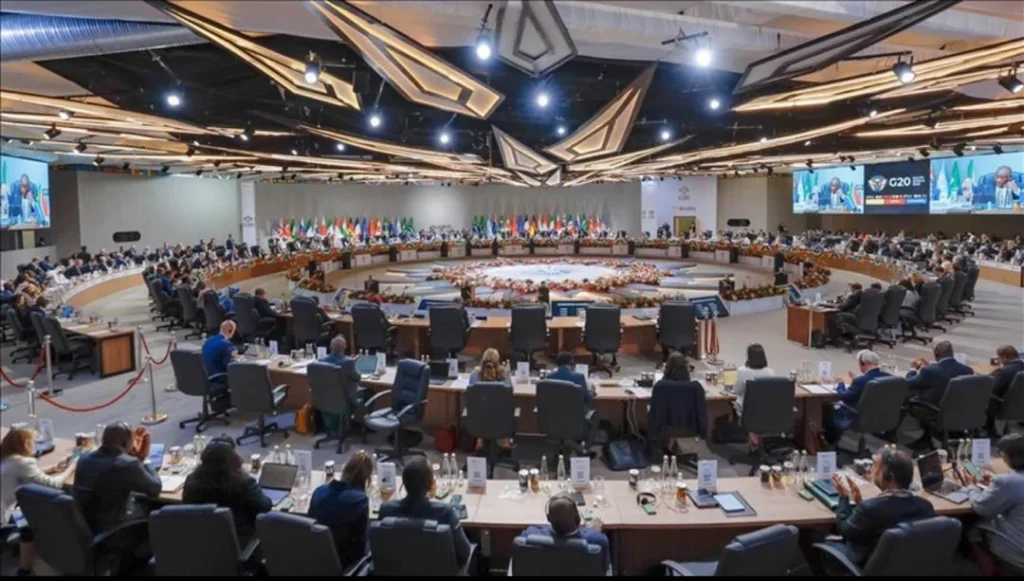
Johannesburg-When the G20 convened in Johannesburg on 22–23 November 2025, it carried powerful symbolism the first time the leaders’ summit was hosted on African soil.
Yet that symbolism was sharply undercut by the glaring absence of the United States. President Donald Trump had explicitly ordered that no U.S. government official attend, invoking his controversial claims about alleged abuses against white Afrikaner farmers in South Africa.
Trump portrayed his boycott as a moral stand. He insisted that Afrikaners were being “killed and slaughtered” and that their land was being “illegally confiscated.” He labeled the Johannesburg summit “a total disgrace” unless South Africa reversed these purported policies.
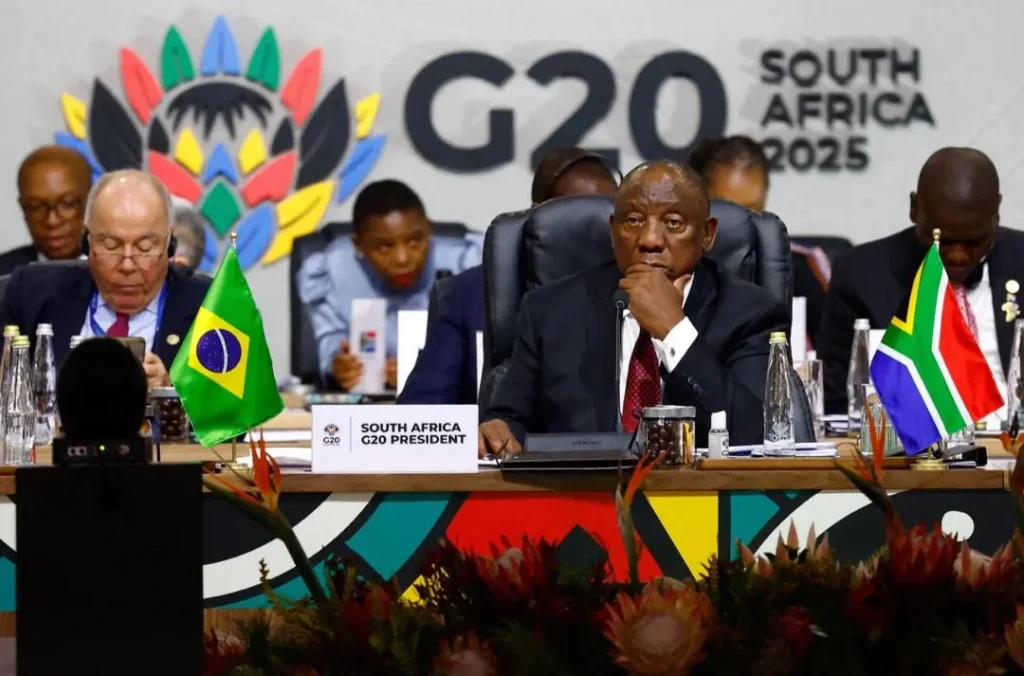
But in Pretoria, the response was resolute and unified. President Cyril Ramaphosa rejected the allegations and warned that “boycott politics never work,” calling America’s absence “their loss.” The ruling African National Congress dismissed Trump’s claims as an anachronistic, imperialist misreading of South African history, weaponizing racial narratives for geopolitical gain.
Behind Trump’s rhetoric, analysts saw a carefully calculated gamble. Some described his decision as “petty politics,” a soft-power maneuver that nevertheless risks pushing South Africa and the broader Global South steadily closer to rivals like China and Russia.
Others argued the practical damage could be limited: though the leaders’ summit draws headlines, much of the G20’s substantive work already occurred in earlier ministerial-level meetings. Still, the boycott sent a signal: when Washington opts out, other powers will step in.
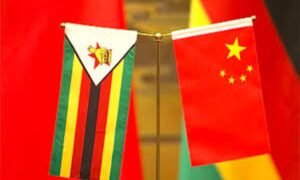
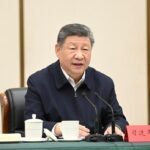
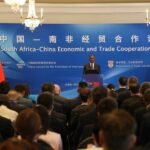
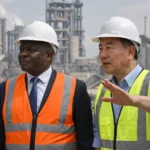
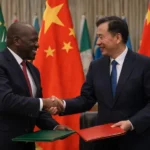
And step in they did. China, in particular, seized the moment. Premier Li Qiang met with Ramaphosa to propose deeper cooperation in critical sectors: green energy, infrastructure, mining, and innovation.
Together, they launched a shared Initiative on Cooperation Supporting Modernization in Africa, positioning Beijing’s vision of industrialization and long-term development firmly in sync with Africa’s aspirations.
The optics weren’t subtle Chinese automakers like Jetour, BAIC, and Chery provided large vehicle fleets to shuttle leaders around summit venues, visible proof of Beijing’s expanding footprint in the continent’s economy.
At root, the Johannesburg G20 was more than a diplomatic gathering; for China and South Africa, it was a geopolitical turning point. Their joint initiative underscored China’s broader strategy in the Global South: deepen institutional ties, push for global governance reform (at the IMF, World Bank, WTO), and build real economic architecture not just transactional deals.
By staying away, the U.S. may have ceded more than just a summit seat.
- First, it weakened its leadership in a foundational multilateral forum.
- Second, it paid a reputational cost: a major summit in the Global South, boycotted by America, opened the door to interpretations of disengagement and decline.
- And perhaps most strikingly, the traditional G20 power handover was fractured. Ramaphosa closed the summit with none of the usual pomp: no presidential handover, no gavel passed a symbolic rupture that underscored the depth of the diplomatic rift.
Whether this moment becomes a turning point for U.S. influence depends largely on how Beijing uses it. With its mix of development cooperation and institutional ambition, China appears determined to make Johannesburg not just a summit but a milestone in a rebalanced global order.