
By Staff Writter,China Africa News
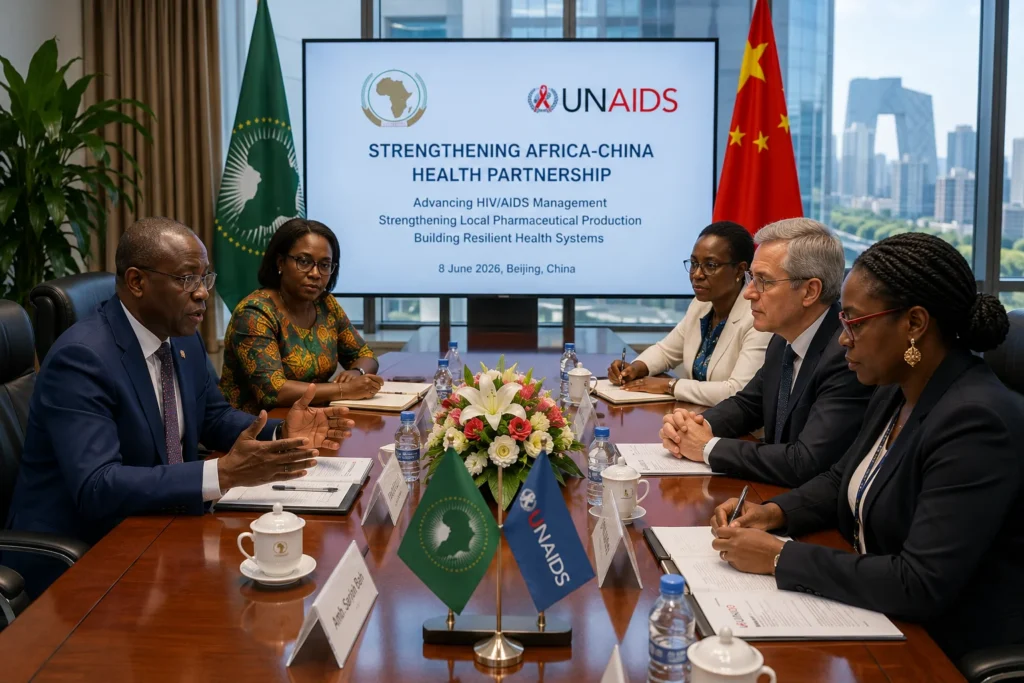
Beijing, China June 8, 2026 — Efforts to strengthen Africa’s health security and reduce dependence on external medical supplies received a significant boost following high-level discussions between the African Union’s Permanent Representative to China, Ambassador Sarjoh Bah, and a delegation from UNAIDS focused on South-South cooperation and sustainable healthcare solutions.
The meeting centered on advancing long-term HIV/AIDS management across Africa while exploring broader strategies to improve access to essential medicines through expanded local pharmaceutical production. Participants emphasized that building manufacturing capacity on the continent is critical to ensuring reliable access to life-saving health commodities and enhancing Africa’s ability to respond to public health challenges.
A key theme of the discussions was the growing importance of Africa-China collaboration in the health sector. Both sides highlighted opportunities to deepen partnerships in pharmaceutical manufacturing, regulatory cooperation, technology transfer, and investment aimed at strengthening Africa’s healthcare infrastructure.
The dialogue also underscored the strategic role of the African Medicines Agency (AMA) in supporting regulatory harmonisation across the continent. Participants noted that stronger regional integration and coordinated procurement mechanisms could significantly improve medicine availability, enhance commodity security, and reduce vulnerabilities associated with fluctuations in external donor funding.
Ambassador Bah stressed the need for a united continental approach to health system development, calling for closer coordination among African institutions, regional economic communities, and international partners. He emphasized that sustainable pharmaceutical supply chains and resilient healthcare systems will require stronger collaboration, innovative financing models, and long-term investment in local production capabilities.
The meeting reaffirmed a shared commitment to advancing the African Union’s Agenda 2063 and the Forum on China-Africa Cooperation (FOCAC) Beijing Action Plan. Participants agreed that strategic partnerships between African stakeholders and Chinese counterparts can play a transformative role in accelerating healthcare innovation, expanding access to medicines, and supporting sustainable development goals across the continent.
The UNAIDS delegation included Eva Kiwango, Director and Representative of the UNAIDS China Office; Jaime Atienza Azcona, Director of the UNAIDS Global Centre’s Equitable Financing Department; and Gloria Peter Bille, Senior Advisor for Policy Prevention and Regional Coordination with the East and Southern Africa Regional Support Team.
The engagement reflects growing momentum behind South-South cooperation initiatives aimed at strengthening Africa’s health sovereignty, improving treatment access, and creating more self-reliant healthcare systems capable of meeting the continent’s evolving needs