
By Staff Writer
NAIROBI, 11 August,2026 — At a processing plant outside Kenya’s capital, the path from an African farm to a Chinese dining table is becoming shorter.
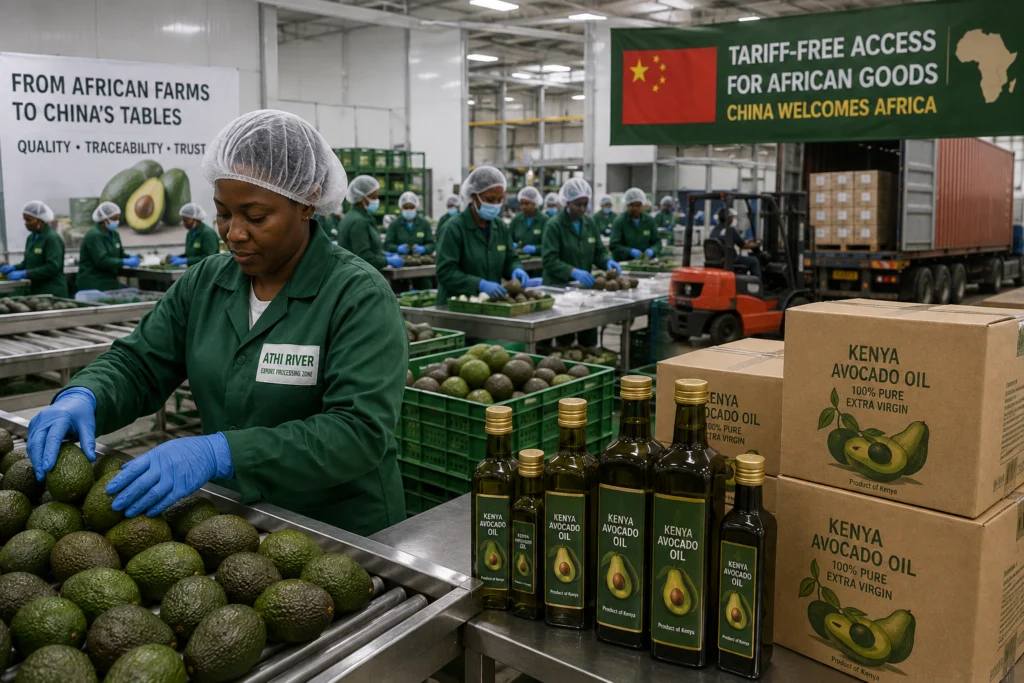
Fresh avocados arrive at the Athi River Export Processing Zone, where workers sort, ripen and cold-press the fruit into avocado oil. The finished product is prepared for a market thousands of miles away, where demand for African agricultural goods is growing.
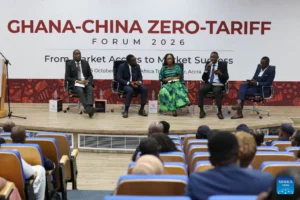
The change is being driven in part by a decision that Beijing put into effect on May 1: China eliminated tariffs on products from 53 African countries with which it has diplomatic relations.
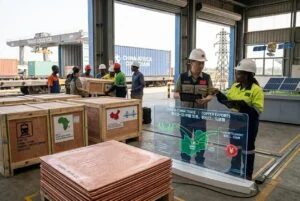
More than 100 days into the policy, the first signs of its impact are emerging. Chinese imports from Africa totaled 193.8 billion yuan, or about $28.7 billion, in May and June, a 23.5 percent increase from the same period a year earlier, according to Chinese customs data cited by Xinhua.
Some agricultural imports have grown particularly quickly. Avocado imports rose 130 percent, while apple imports increased 89.6 percent and oranges 27.9 percent.
The numbers are still early, and the long-term economic consequences are difficult to measure. But across several African economies, exporters are already testing what a larger and less expensive route into China could mean.
From Apples to Blueberries
The policy became tangible almost immediately.
Just after midnight on May 1, a 24-ton shipment of fresh South African apples passed through Shenzhen Bay Port. It was the first shipment reported to benefit from the new tariff treatment.
Since then, Kenyan avocados, South African wine and Zimbabwean blueberries have entered the Chinese market, giving exporters in industries that have long struggled with logistics and market access a new outlet.
For Zimbabwe, the opportunity has been especially significant. In July, the country sent its first-ever shipment of blueberries to China.
The opening of such a market does more than create another destination for agricultural produce. It can force changes throughout the supply chain — in refrigeration, packaging, certification and production.
That is the possibility facing African exporters now.
“Access to China opens room for increased production, stronger cold-chain infrastructure, better packaging, more certification capacity and expanded employment along the value chain,” Allan Majuru, chief executive of Zimbabwe’s national trade promotion body, said in comments cited by Xinhua.
For wine producers in South Africa, the policy is also reviving interest from Chinese buyers. Diemersdal Wine Estate, a Cape Town-area producer with a history dating to the late 17th century, has been selling wine to China for nearly two decades.
The company says lower tariffs could make its products more competitive and encourage additional shipments before the end of the year.
Rwanda’s Chili Experiment
Perhaps nowhere is the potential shift more visible than in Rwanda, where a small chili processor is using the Chinese market to move beyond selling agricultural commodities in their simplest form.
Fisher Global, based in the Rwamagana Industrial Park in eastern Rwanda, began exporting dried chili to China in 2022.
In June, it sent its first 550-kilogram shipment of pickled chili to a food company in China’s Shandong Province.
The difference may appear modest — dried chili on one side, pickled chili on the other — but it represents a larger economic ambition.
Instead of exporting an agricultural product and leaving much of the processing and value creation elsewhere, African producers want to capture more of that value before the goods leave the continent.
Herman Uwizeyimana, Fisher Global’s general manager, said the tariff change had brought new Chinese buyers to the company, including businesses interested in chili for hot pot dishes and instant-noodle seasonings.
For Rwanda’s exporters, the opportunity is also a challenge. Chinese consumers have demanding expectations for quality, presentation and consistency. Meeting them requires investment in processing, packaging and certification.
Robert Rukundo, chairman of the Horticulture Exporters Association of Rwanda, said the removal of tariffs could make the market more competitive for small and medium-sized businesses.
The broader question is whether those businesses can use the opening to become more sophisticated producers rather than simply larger suppliers of raw commodities.
The Value Beyond the Tariff
That question extends far beyond Rwanda.
In Ethiopia, coffee exporters are betting on China’s expanding appetite for specialty coffee. Awo Coffee, a processor based near Addis Ababa, sends about 90 percent of its roasted products to China, according to the company.
In 2024, it exported 140 tons of green coffee beans and 20 tons of processed coffee products to the Chinese market.
Ethiopian coffee officials now expect China to become the country’s largest coffee destination within the next three years, as demand for specialty varieties grows.
The potential transformation is important because Africa’s longstanding trade relationship with the rest of the world has often been built around commodities leaving the continent in relatively unprocessed form: cocoa beans rather than chocolate, cashew nuts rather than packaged foods, coffee beans rather than roasted coffee.
The removal of Chinese tariffs could change some of those calculations.
Paul Frimpong, executive director of the Africa-China Center for Policy and Advisory in Ghana, argued that the real test of the policy should not be the number of containers arriving in Chinese ports during its first months.
The more consequential question, he said, is whether African companies use the opportunity to improve production, packaging and certification and process more goods locally.
That would mean that a tariff concession becomes something more than a trade incentive. It could become an industrial policy tool.
A Larger Economic Bet
China’s decision comes as African countries face a complicated global trading environment.
Exporters are confronting higher barriers in some major markets even as governments across the continent seek to diversify their trading partners and build domestic industries.
Against that backdrop, China’s opening of its market to 53 African countries represents a significant shift.
It is also part of a much larger economic relationship.
Chinese exports of electromechanical products to Africa reached 534.11 billion yuan, or roughly $79 billion, during the first half of 2026, according to Chinese official data cited by Xinhua. Those exports rose 28.8 percent from a year earlier.
About three-quarters of China’s exports to Africa consist of capital and intermediate goods, according to the report — machinery, equipment and other productive inputs that can support manufacturing and agricultural modernization.
That creates a familiar but consequential proposition: African countries can supply more goods to China while importing the machinery and equipment needed to produce them.
Whether that becomes a virtuous cycle of industrialization or simply reinforces a commodity-exporting relationship will depend largely on what African governments and businesses do with the opportunity.
The tariff itself cannot build factories, refrigeration networks or quality-control laboratories.
It cannot guarantee that farmers receive a greater share of the final price.
And it cannot by itself solve the infrastructure and financing constraints that have limited African exports for decades.
But it can remove one obstacle.
The Next Test
For African exporters, the most important measure of China’s policy may therefore come years from now, rather than in the first hundred days.
If Kenyan avocados lead to more processing plants, if Zimbabwean blueberries lead to stronger cold-storage networks, if Rwandan chili is increasingly sold as a processed food rather than a raw commodity, and if Ethiopian coffee producers capture more value before export, the effects could extend well beyond the immediate increase in shipments.
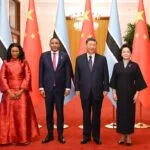
African Union Chairperson and Burundian President Evariste Ndayishimiye has described the opportunity in similarly broad terms, emphasizing higher incomes, jobs for young people and local processing so that more value remains on the continent.
For China, the policy expands access to African goods and deepens an already substantial trading relationship.
For Africa, the stakes are potentially greater.
The question is not simply whether China will buy more from the continent.
It is whether African producers can use China’s enormous consumer market to change what they sell, how they produce it and how much of the value they keep at home.
That is a much bigger wager than a tariff reduction.