

By Staff writer, China Africa News
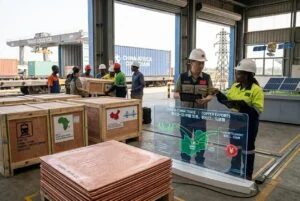
Harare, October 17, 2026 — Trade between Zimbabwe and China has increased significantly, reaching approximately US$4.4 billion in 2025, as Zimbabwe expands its mineral and agricultural exports to the Asian economic powerhouse.
According to The Herald, bilateral trade rose from approximately US$1.88 billion in 2021 to US$4.408 billion in 2025. Citing figures from China’s Ministry of Commerce, the publication highlighted Zimbabwe’s growing importance as a supplier of minerals and other commodities to the Chinese market.
The figures also show that Zimbabwe recorded a trade surplus with China, reflecting the value of its exports relative to imports from the Asian country.
In 2025, China’s imports from Zimbabwe reached approximately US$2.573 billion, representing an increase of 4.9 percent compared with the previous year. Meanwhile, Chinese exports to Zimbabwe totalled approximately US$1.835 billion.
The development underscores China’s importance as a trading partner for Zimbabwe, particularly in the mining sector.
Minerals Drive Export Growth
Zimbabwe’s mineral resources, especially lithium, have played a significant role in strengthening its trade relationship with China.
Zimbabwe has become China’s second-largest supplier of spodumene, a lithium-bearing mineral used in battery production, after Australia.
Chinese companies have invested in Zimbabwe’s lithium industry, including mining and processing operations designed to supply materials for China’s battery manufacturing sector.
Among the companies operating in Zimbabwe are Zhejiang Huayou Cobalt, which operates the Arcadia lithium project in Goromonzi, and Sinomine Resources Group, which operates Bikita Minerals in Masvingo Province.
These investments reflect China’s growing interest in securing supplies of minerals needed for electric vehicles, energy storage systems and other advanced technologies.
Zimbabwe is also seeking to move beyond exporting unprocessed minerals by encouraging local processing and value addition.
This approach could help the country retain a greater share of the economic benefits generated by its natural resources, while creating opportunities for employment and industrial development.
Agricultural Exports Create New Opportunities
Beyond mining, agricultural exports are contributing to the expansion of Zimbabwe–China trade.
Zimbabwe’s exports to China increased during the first seven months of 2026, supported by steel exports and growing horticultural shipments.
Expanded market access for Zimbabwean agricultural products has created opportunities for exporters of blueberries, citrus fruits, avocados and other fresh produce.
China’s zero-tariff policy for eligible imports from African countries, which took effect on May 1, 2026, has also created additional opportunities for African exporters.
For Zimbabwean farmers, access to China’s large consumer market could encourage increased production, investment in irrigation and improvements in export infrastructure.
However, expanding agricultural exports will require reliable transport, cold-storage facilities, quality control and compliance with Chinese phytosanitary requirements.
What the Growing Trade Relationship Means
The expanding trade relationship offers opportunities for both countries. China gains access to Zimbabwean minerals and agricultural products, while Zimbabwe benefits from a major export market and investment in mining and industrial processing.
The long-term benefits for Zimbabwe will depend partly on whether increased trade translates into more local employment, technology transfer and domestic manufacturing.
The government faces the challenge of ensuring that mineral wealth contributes to broader economic development rather than relying predominantly on the export of raw materials.
The growing trade relationship illustrates how China’s demand for minerals, combined with expanding agricultural market access, is reshaping Zimbabwe’s economic engagement with Asia.