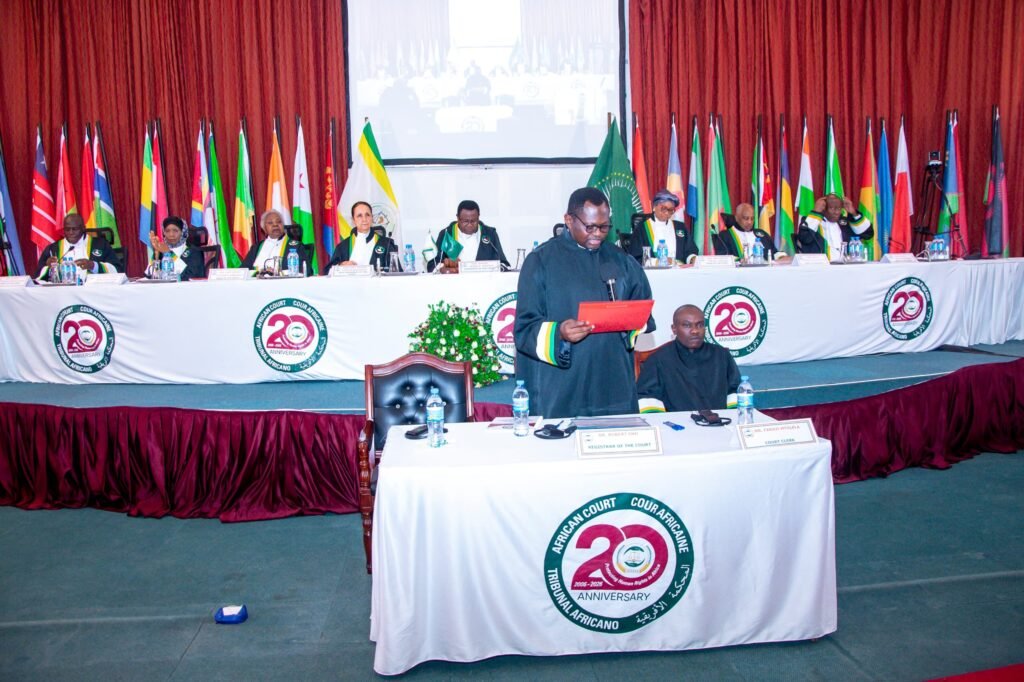

ARUSHA, TANZANIA | 22 NOVEMBER 2026
The anticipated 2027 opinion could establish a new legal framework for holding states accountable for climate-related harm and strengthening the protection of human rights across Africa.
The African Court on Human and Peoples’ Rights, an institution of the African Union (AU), is expected to issue a landmark legal opinion on climate change in 2027, in a development that could significantly reshape the continent’s approach to climate justice and state accountability.
The anticipated opinion could provide important legal clarity on the obligations of governments to prevent climate-related harm, protect populations from its devastating consequences and ensure that those responsible for environmental damage are held accountable.
The development follows a request submitted by the Pan African Lawyers Union (PALU), which is seeking the Court’s interpretation of states’ legal responsibilities in addressing climate change, including their obligations to prevent environmental harm, safeguard vulnerable populations and take meaningful action against global warming.
Beyond prevention and protection, the request raises a particularly significant question: whether states should bear legal responsibility for climate-related damage, including providing compensation to affected communities. It also seeks clarity on the protection of indigenous communities, which frequently experience disproportionate climate impacts despite contributing relatively little to global greenhouse gas emissions.
The urgency of the request is reflected in the realities facing millions of people across Africa, where climate change is increasingly threatening livelihoods, food security and access to essential resources.
Prolonged droughts, diminishing water supplies, declining agricultural productivity and widespread livestock deaths have become defining features of the climate crisis in many parts of the continent. For communities whose survival depends on natural resources, these changes are not distant environmental concerns but immediate threats to their livelihoods and dignity.
The desperation caused by prolonged drought is perhaps best captured by one resident, who describes water scarcity as a concern that cuts across all generations and social groups.
“It is neither the elderly, the young nor women. What is constantly on everyone’s mind is water, water, water.”
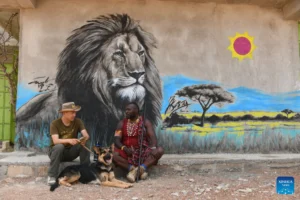
For pastoralist communities, the consequences have been particularly devastating, with prolonged drought wiping out entire herds and threatening livelihoods built over generations. One pastoralist recalls the scale of the losses:
“During that period, I lost 100 cattle. You would wake up and find 20 dead, sometimes 30. All you could do was collect them and take them away. There was nothing else you could do.”
Such experiences illustrate how climate change extends beyond environmental degradation to become a question of human rights, directly affecting access to food, water, healthcare, adequate housing and the fundamental right to life.
According to the United Nations, climate change is projected to cause approximately 250,000 additional deaths annually worldwide between 2030 and 2050. Malnutrition resulting from food insecurity is among the factors expected to contribute to this mortality.
Against this backdrop, the role of judicial institutions in protecting populations from climate-related harm is becoming increasingly important.
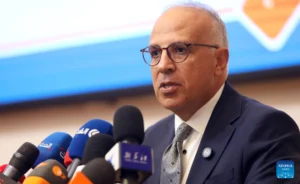
Speaking at a meeting of judges from three African regional courts in Arusha, Tanzania, the President of the East African Court of Justice, Justice Nestor Kayobera, warned that environmental degradation and climate change were increasingly undermining development, threatening livelihoods and eroding fundamental human rights.
Delivering a strong message on the responsibility of judicial institutions, he called for greater vigilance in following evolving legal developments and ensuring that existing legal frameworks contribute meaningfully to environmental protection and accountability.
“Climate change and the increasingly widespread environmental degradation are undermining development, threatening the quality of life and livelihoods, and consequently violating human dignity and human rights. Our courts must continue to closely monitor evolving legal debates and the application of laws that can contribute to environmental protection and ensure accountability.”
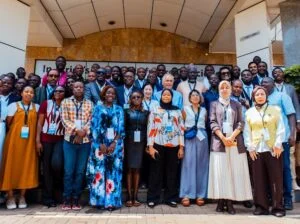
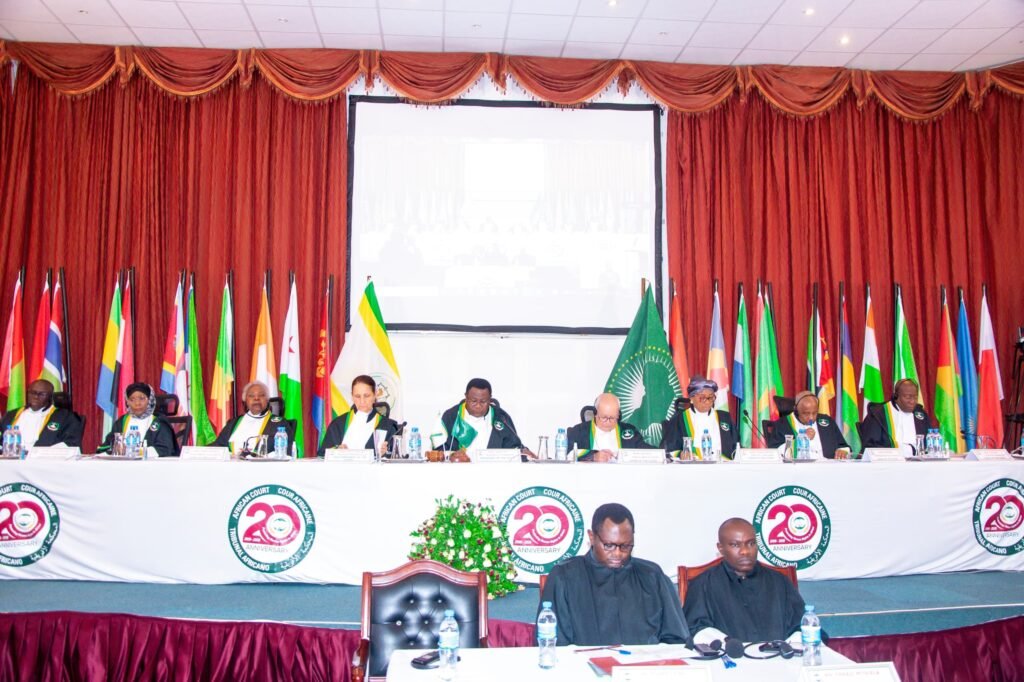
The meeting brought together representatives from the African Court on Human and Peoples’ Rights, the East African Court of Justice and the Court of Justice of the Economic Community of West African States (ECOWAS). It provided a platform for judicial leaders to exchange legal experiences and examine how regional courts can strengthen their role in addressing environmental challenges that increasingly transcend national boundaries.
Among the central issues discussed were states’ obligations to protect the environment, legal accountability for environmental damage extending beyond national borders and the need to safeguard communities living in particularly vulnerable conditions.
The cross-border dimension of environmental harm featured prominently in the discussions, with the President of the ECOWAS Court of Justice, Justice Charlyne Brumskine of Liberia, emphasising the need for judicial systems to adapt to emerging legal challenges associated with environmental protection.
Justice Brumskine argued that environmental degradation cannot be confined within national or regional boundaries, making it necessary to reconsider how states discharge their legal responsibilities towards affected populations and the environment.
She also highlighted the importance of sustainable development and stronger oversight of corporate activities, particularly where businesses operate in ways that could undermine environmental rights.
“The conduct of these discussions must also take into account emerging areas of law. Environmental degradation does not stop at national or regional boundaries, and this raises difficult questions about state obligations, sustainable development and the protection of communities in vulnerable environments. In West Africa, our courts have already made it clear that governments have a responsibility to protect environmental rights and regulate companies operating within their jurisdictions.”
Her remarks draw attention to a fundamental challenge facing African governments: balancing economic development with the obligation to protect the environment and the rights of affected communities.
They also reinforce the principle that environmental accountability should not be limited to governments alone. Companies and other private entities whose activities contribute to environmental degradation must also operate within legal frameworks that safeguard human rights and ensure responsible management of natural resources.
Beyond the discussions on climate justice, the African Court on Human and Peoples’ Rights used the meeting to strengthen cooperation with other regional judicial institutions. The discussions focused on exchanging legal expertise, sharing experiences and identifying ways to improve the implementation of court decisions aimed at protecting human rights across the continent.
Such cooperation is increasingly important given the transnational nature of environmental challenges. Pollution, ecosystem destruction and climate-related disasters can affect communities across several countries simultaneously, requiring coordinated legal responses and stronger regional mechanisms for accountability.
However, the significance of the legal opinion expected in 2027 will ultimately depend not only on the legal principles it establishes but also on how effectively those principles translate into action at national and regional levels.
For Africa, where millions of people depend on agriculture, livestock and natural resources for their livelihoods, the anticipated opinion could represent an important step towards recognising environmental protection as an integral part of human rights protection.
It could also strengthen the legal basis for demanding greater accountability from governments and other actors whose actions contribute to climate-related harm, particularly where vulnerable communities are left to bear the consequences.
Ultimately, the question before Africa’s judicial institutions is no longer simply how to protect the environment, but how to ensure that those whose lives and livelihoods are threatened by climate change can access justice, obtain meaningful protection and, where legally justified, receive remedies for the harm they have suffered.
If the anticipated opinion provides clear guidance on states’ obligations to prevent climate-related damage, protect affected populations and ensure accountability, it could mark a significant milestone in advancing climate justice and strengthening the right of people across Africa to live in a clean, safe and sustainable environment.
By Veronica Natalis