
At a summer school in Kigali, experts are exploring how AI could strengthen climate modeling and early warning systems, while warning that gaps in meteorological data remain a major obstacle.
By Staff Writer
KIGALI, Rwanda, Oct 20, 2026 — As extreme weather threatens communities and livelihoods across Africa, scientists are looking to artificial intelligence to improve the accuracy and speed of weather forecasting, a technology they hope will help countries better anticipate climate risks.
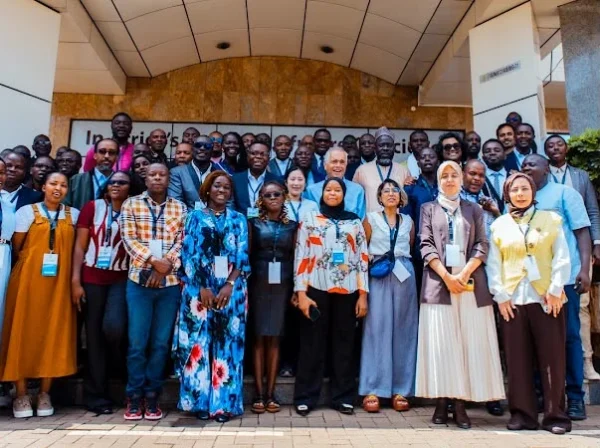
A five-day summer school that opened in Kigali on October 19 has brought together 44 participants from 21 countries to explore how artificial intelligence and machine learning can be applied to weather forecasting and climate modeling.
Organised by the African Centre of Meteorological Applications for Development (ACMAD), the World Meteorological Organization (WMO) and the African Institute for Mathematical Sciences (AIMS), in collaboration with partners, the program aims to strengthen African expertise in developing and applying AI-based forecasting tools.
But participants say the technology’s promise will depend in part on a more fundamental requirement: ensuring that countries have access to reliable meteorological data.
Dr Ousmane Ndiaye, the director general of ACMAD, said differences in the capacity of national meteorological services meant that some countries were better equipped than others to provide weather and climate information.
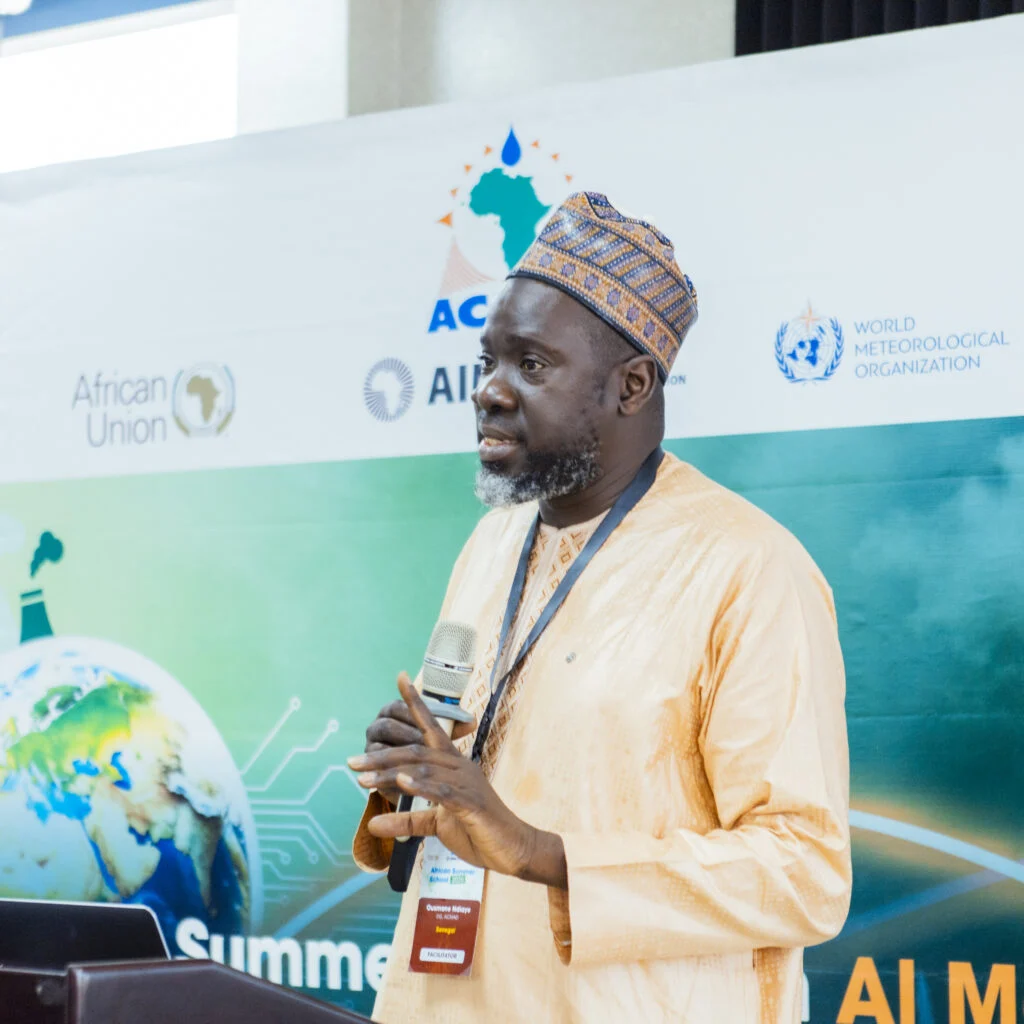
Countries affected by conflict and political instability can face additional difficulties, even as their vulnerability increases the need for reliable forecasts, he said.
“One of the big challenges in Africa is that meteorological services are not at the same level,” Dr Ndiaye said, arguing that essential weather and climate information should be available across the continent.
He described the principle guiding ACMAD’s work as “no one left behind.”
The issue is particularly important as African countries seek to strengthen early warning systems and prepare communities for extreme weather. Better forecasting can help governments and humanitarian agencies plan responses, while giving farmers, aviation operators and other sectors more information to guide decisions.
Artificial intelligence offers new ways to process large volumes of data, identify patterns and develop forecasts. But the technology’s effectiveness depends on the quality and availability of the information used to train and run models, as well as computing resources and scientific expertise.
For Athanase Hafashimana, a Rwandan data scientist at AIMS, AI presents an opportunity to accelerate work that traditionally relies on physical models and substantial computing power.
“Artificial intelligence is a big opportunity because what we traditionally do using physical models can be done in a shorter period of time,” he said, pointing to the importance of computing capacity and access to large datasets.
He said improved weather and seasonal forecasts could have practical applications in agriculture and aviation, among other sectors.
The summer school is examining AI-based forecasting, climate data processing and model evaluation. Participants are also exploring applications for monitoring extreme weather events and supporting early warning services.
The initiative brings together meteorological services, researchers and scientific experts with the aim of building an African-led community of practice in AI for weather and climate applications.
For countries facing climate risks, the potential benefits extend beyond advances in scientific modeling. More timely and useful forecasts could help communities prepare for dangerous weather, support disaster risk reduction and improve decisions in sectors sensitive to changing conditions.
Realizing that potential, however, will require sustained investment in weather observation networks, data collection, computing infrastructure and specialist training. Expanding access to these resources will be essential if the benefits of AI are to reach countries whose meteorological services have fewer resources.
The program runs through October 23, with participants taking part in expert-led sessions, practical exercises and collaborative projects designed to translate scientific advances into applications suited to African needs.
Its broader ambition is to ensure that advances in artificial intelligence contribute not only to more capable forecasting systems, but also to more equitable access to the weather and climate information that helps protect lives and livelihoods across the continent.