
By Senior Editor
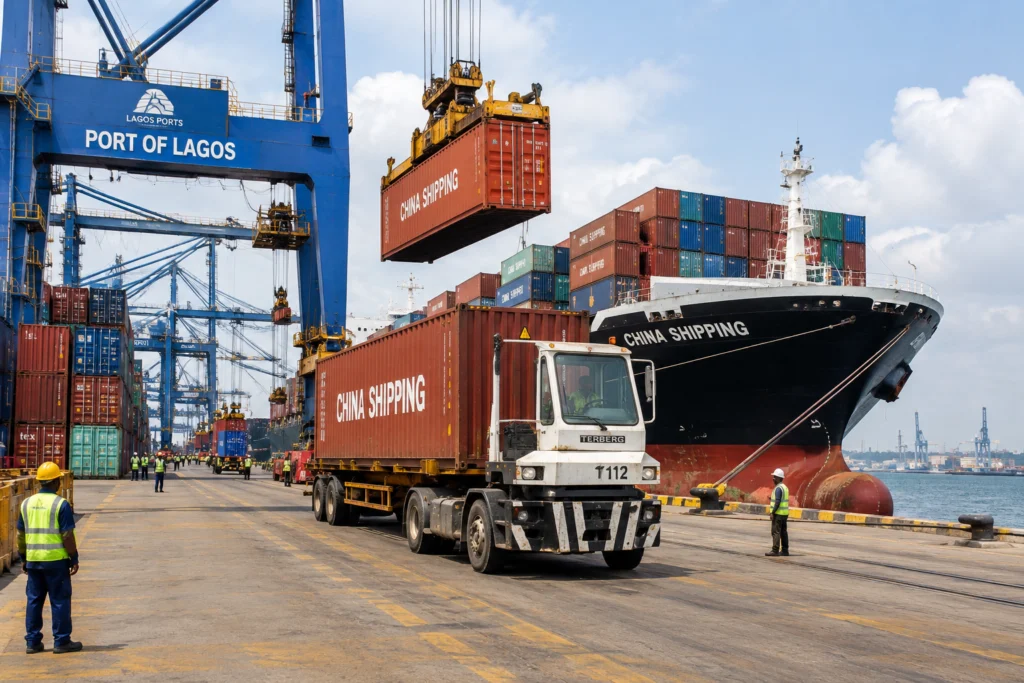
NAIROBI, November 27, 2026 — China’s expanding commercial footprint across Africa is gathering momentum, with Chinese exports to the continent reportedly reaching approximately $203 billion during the first nine months of 2026, intensifying concerns over an increasingly unequal trading relationship between the two economic partners.
The reported 24.5 per cent increase in exports has further widened Africa’s trade deficit with China, estimated at approximately $94 billion, highlighting the structural imbalances underpinning one of the world’s most consequential economic partnerships.
The development comes amid renewed trade tensions between Washington and Beijing, raising questions about whether shifting global trade patterns could further accelerate China’s commercial expansion into African markets.
For African consumers and businesses, Chinese imports have provided access to competitively priced machinery, electronics, industrial equipment and consumer products. Such imports have also supported infrastructure development and expanded commercial activity in several African economies.
Yet the growing imbalance presents a more complicated economic picture.
African manufacturers, many of whom operate under significant financing, energy and logistical constraints, face mounting competitive pressure from relatively inexpensive imported products. The result could be increased dependence on foreign manufactured goods at a time when governments across the continent are seeking to strengthen domestic production.
The challenge is particularly significant under the African Continental Free Trade Area, which seeks to expand intra-African commerce, stimulate industrialisation and reduce the continent’s dependence on external markets.
China’s growing export presence therefore presents African policymakers with a difficult economic calculation: how to benefit from affordable imports, foreign investment and technological cooperation without undermining domestic industrial development.
Ultimately, the future of China-Africa economic relations may depend less on the volume of trade than on its structure. A more balanced partnership would require greater African access to Chinese markets, expanded manufacturing cooperation, technology transfer and investment in productive capacity.
As Beijing strengthens its economic position across the continent, African governments face an increasingly urgent task: ensuring that expanding commercial ties translate into sustainable industrial growth rather than a deepening dependence on imported goods.