

By Senior Editor, China Africa News
Beijing, Aug, 4, 2026 — Chinese authorities have announced a series of strengthened disaster-prevention measures as weeks of heavy rainfall continue to trigger flooding and landslides across parts of the country, underscoring the growing challenge of protecting communities from increasingly frequent extreme weather events.
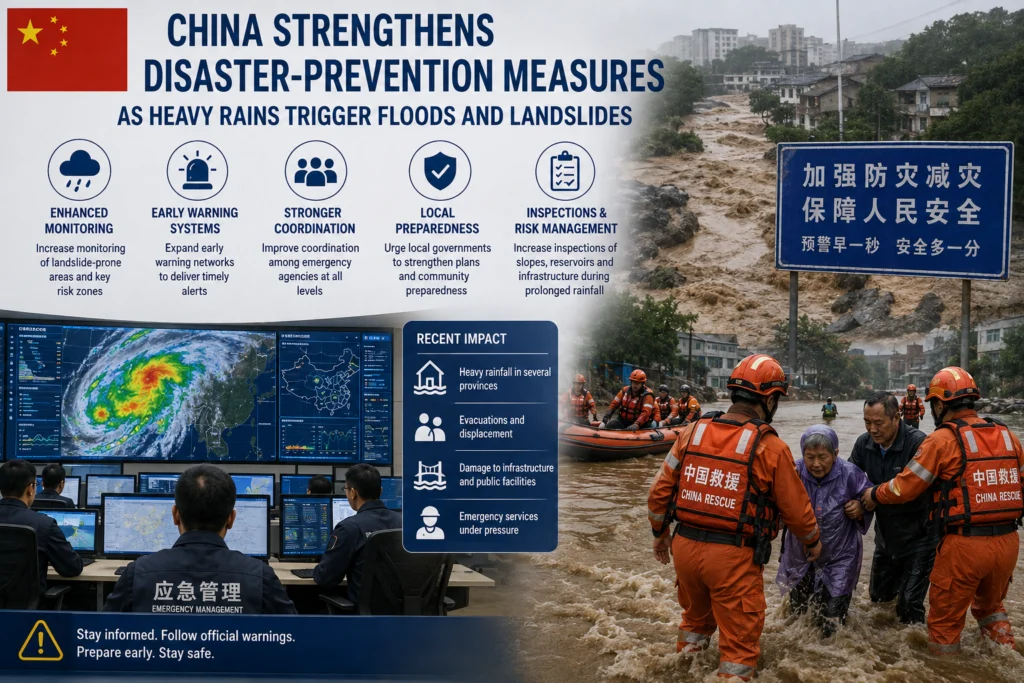
The latest measures, unveiled on Monday, call for enhanced monitoring of landslide-prone areas, expanded early warning systems, and closer coordination among emergency response agencies. Officials also urged local governments to improve preparedness in vulnerable regions where prolonged rainfall has heightened the risk of flash floods and geological disasters.
The announcement comes after a summer marked by persistent downpours that have disrupted daily life in several provinces, forcing evacuations, damaging infrastructure and putting emergency services under sustained pressure. While seasonal flooding is not uncommon in China, the intensity and duration of recent rainfall have renewed concerns about the country’s ability to manage weather-related disasters in a changing climate.
Authorities said the strengthened response is intended to improve the speed and accuracy of disaster warnings, giving residents in high-risk areas more time to evacuate before conditions become life-threatening. Local governments have also been instructed to increase inspections of unstable slopes, reservoirs and other critical infrastructure that could pose additional risks during prolonged periods of rain.
Disaster management experts have long argued that early warning systems are among the most effective tools for reducing the human and economic costs of natural hazards. Advances in satellite monitoring, weather forecasting and real-time data collection have significantly improved governments’ ability to anticipate floods and landslides, but translating those warnings into timely local action remains a challenge in many regions.
China has invested heavily in modernizing its emergency management capabilities over the past decade, expanding the use of digital monitoring technologies and strengthening coordination between meteorological agencies and local authorities. Monday’s announcement suggests officials are reinforcing those efforts as severe weather continues to threaten communities across the country.
Scientists warn that a warming climate is increasing the likelihood of more frequent and intense extreme weather events. As temperatures rise, the atmosphere can hold more moisture, leading to heavier rainfall and a greater risk of flooding, particularly in densely populated and mountainous regions.
Although authorities have not indicated when the current spell of severe weather will ease, emergency agencies are expected to remain on high alert as forecasts continue to predict more rainfall in several affected areas.
The latest measures represent a response to an ongoing weather emergency rather than an indication that the danger has passed. For millions living in vulnerable communities, the priority now is ensuring that warnings reach people in time, infrastructure withstands the pressure, and emergency services remain ready as the rainy season continues.