
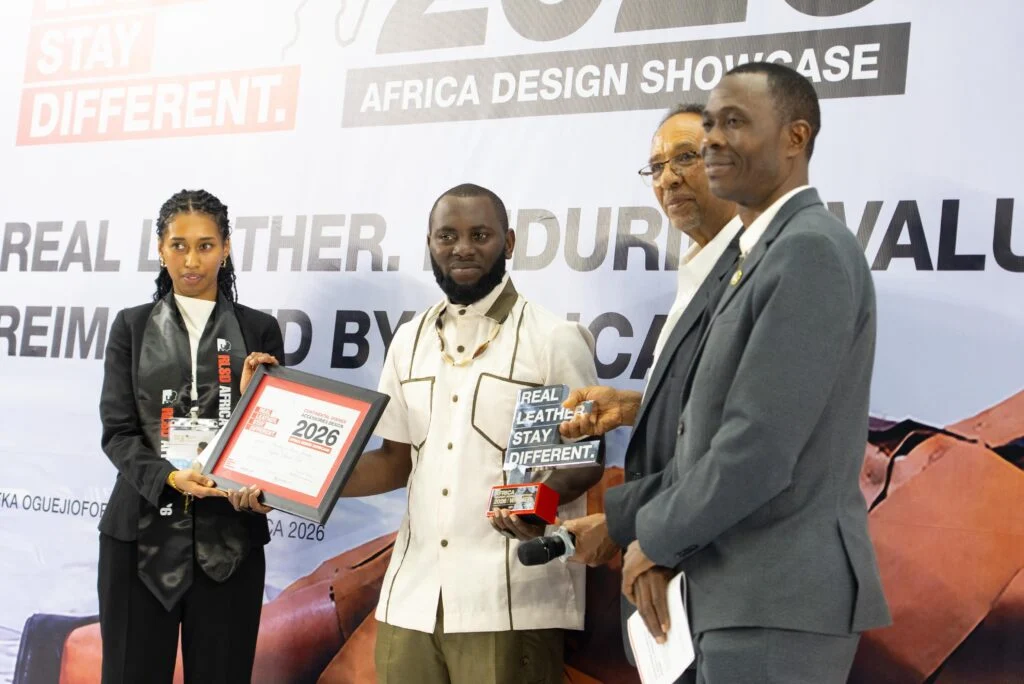

Fifteen designers from across the continent showcased their work at the 2026 Real Leather. Stay Different. Africa competition, where innovation, commercial ambition and a Rwandan designer’s double victory took centre stage.
By Sylivanus Karemera
November 15, 2026 | ADDIS ABABA, Ethiopia
African designers gathered in Ethiopia’s capital on Saturday to demonstrate how creativity could help reshape the continent’s leather industry, presenting collections that combined traditional influences, contemporary design and ambitions for a larger place in international markets.
The occasion was the grand finale of the 2026 Real Leather. Stay Different. (RLSD) Africa Talent Leather Design Showcase, which brought together 15 finalists from across the continent. Held alongside Africa Sourcing and Fashion Week, the November 14 event attracted designers, manufacturers, industry representatives, international buyers and development partners.
Among the evening’s most notable achievements was that of Rwanda’s Umuhuza Hirwa Jeanluc, whose leather accessories creation, INGABO, won both the Accessories Category Award and the People’s Choice Award.
The double recognition placed Jeanluc among the competition’s leading performers, earning his design recognition from both the judging panel and the public. It also highlighted the growing visibility of Rwandan creative talent within Africa’s emerging fashion and leather industries.
But the competition’s broader significance extended beyond individual awards. It offered a glimpse of an industry seeking to move beyond the export of raw materials towards the development of finished products, stronger manufacturing capabilities and greater participation in global fashion markets.
A Continental Showcase of Creative Talent
The fourth African edition of RLSD attracted hundreds of registrations from more than 12 countries, with 15 designers eventually selected to compete in the Apparel, Accessories and Footwear categories.
Nigeria’s Omosalewa Ogunjimi emerged as the Overall Winner and Apparel Category Winner with her creation, EXUVIA. Ogunjimi had previously represented Africa at the international RLSD finals in Bangkok, Thailand, where she received the Most Commendable Designer distinction.
Zimbabwe’s Nompumelelo Marilyn Samambgwa won the Footwear Category Award for Tethered Earth.
Jeanluc’s double victory for INGABO completed the competition’s leading awards, reflecting the range of design approaches emerging from across the continent.
The judging process assessed entries against five criteria: individuality, conceptualisation, relevance, sustainability and commerciality. The People’s Choice Award, meanwhile, recognised the design that resonated most strongly with the public during the voting process.
All 15 finalists received Certificates of Recognition.
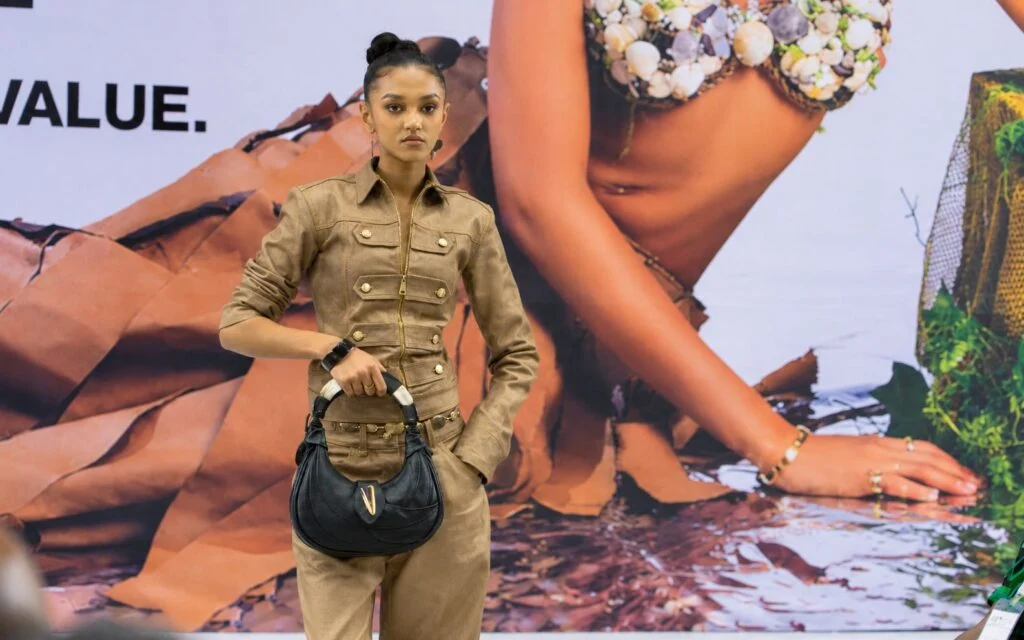
The Challenge: Turning Design Into Business
For Africa’s leather industry, the challenge is no longer simply to demonstrate creative potential. It is to convert that potential into commercially viable products and businesses.
That message featured prominently during the Addis Ababa gathering.
Sarah K. Gilleski, Agricultural Counselor at the United States Embassy in Addis Ababa and Guest of Honour, pointed to the importance of human creativity in developing a competitive African leather sector.
“Africa’s greatest resource is not its livestock or its hides. It’s the creativity and industrious people in this room,” she said.
Gilleski also highlighted opportunities for cooperation between American leather suppliers and African designers and manufacturers, particularly in material sourcing, technical expertise, value addition and access to international markets.
Nicholus Mudungwe, Executive Director of the Africa Leather and Leather Products Institute (ALLPI), delivered a similarly direct message on the need to connect design with commercial realities.
“We have seen the designers. We have seen their designs. And we cannot eat design. We need to commercialise the design,” he said.
His remarks reflected a persistent challenge for Africa’s creative industries: ensuring that promising ideas do not remain at the exhibition stage but progress into production, distribution and sustainable enterprises.
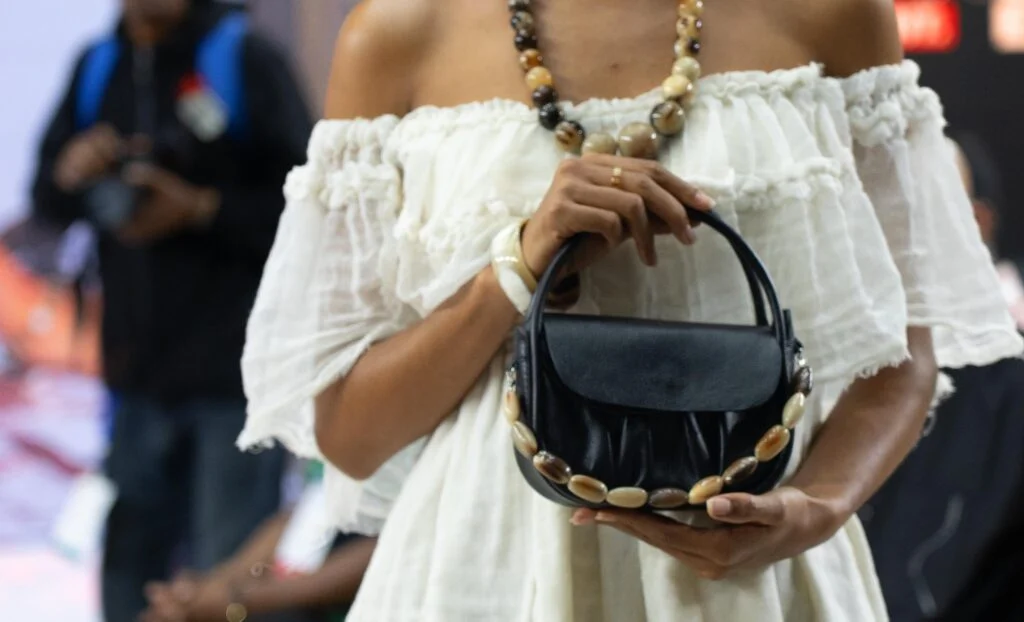
That transition requires more than talented designers. It depends on access to finance, appropriate technology, skilled manufacturers, reliable supply chains and markets capable of supporting African-made products.
The choice of Addis Ababa as the host city placed the showcase within one of the continent’s important centres for regional economic cooperation and industrial development.
Staged alongside Africa Sourcing and Fashion Week, the competition connected emerging designers with a broader gathering of industry stakeholders, creating opportunities to consider how design, manufacturing and trade can reinforce one another.
The 2026 showcase operated under the theme, “Real Leather. Enduring Value. Reimagined by Africa.” It promoted responsible material use, innovation and Slow Style, emphasising durability and a more considered approach to fashion and product development.
The African programme has recorded more than 2.4 million in digital reach across over 20 countries. It forms part of the wider Real Leather. Stay Different. campaign, which reached approximately 750 million people globally in 2025.
The competition is powered by the Leather and Hide Council of America (LHCA), in partnership with ALLPI, and coordinated in Africa by the Center for Business Innovation & Training (CBiT).
Now in its fourth African edition and sixth year globally, RLSD combines competition with education, mentorship, product development and international exposure for emerging designers.
Its ambitions reflect a wider economic opportunity. Africa has substantial potential across the leather value chain, but capturing more of that value will require investment in processing, design, manufacturing, market access and the development of competitive African brands.
The achievements in Addis Ababa offered a reminder of what is possible when creative talent is given a platform.
For Jean Luc , the two awards for INGABOmarked an important personal and national achievement. For Nigeria’s Ogunjimi and Zimbabwe’s Samambgwa, the recognition offered further opportunities to bring their work to wider audiences.
And for the African leather industry, the showcase presented a broader proposition: that the continent can aspire to be recognised not only for the materials it produces, but also for the products, designs and brands it creates.
In Addis Ababa, that ambition was on display.