
By Senior Editor, China Africa
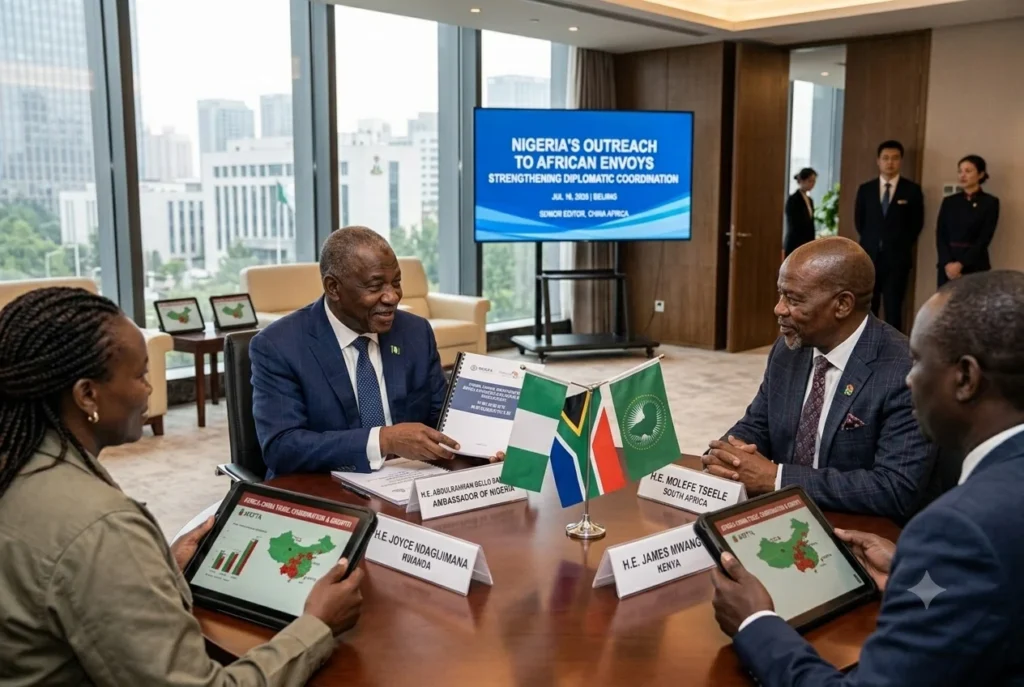
Beijing, July 16, 2026 — Nigeria’s newly appointed Ambassador to China, AbdulRahman Bello Dambazzau, has begun a series of high-level consultations with fellow African ambassadors in Beijing, signaling a renewed effort to strengthen diplomatic coordination among African nations as they deepen engagement with China.
The meetings, held shortly after Ambassador Dambazzau assumed his post, are aimed at fostering greater collaboration among African diplomatic missions in China while exploring new opportunities to advance trade, investment, education, technology transfer, and broader development partnerships.
As China remains Africa’s largest bilateral trading partner, the consultations reflect a growing recognition that closer cooperation among African countries can enhance the continent’s ability to engage with Beijing on issues of shared economic and strategic importance. By coordinating positions and exchanging experiences, African diplomats hope to identify common priorities that can deliver tangible benefits to their respective countries.
Speaking during the consultations, Ambassador Dambazzau emphasized the importance of unity among African diplomatic missions in promoting the continent’s interests. He noted that stronger cooperation would help unlock new opportunities in sectors such as infrastructure development, industrialization, agriculture, digital technology, renewable energy, and human capital development.
The discussions also focused on expanding educational exchanges between China and African countries. China continues to provide scholarships, technical training programmes, and research partnerships for thousands of African students each year, making education one of the fastest-growing pillars of China–Africa relations. Diplomats explored ways to increase academic cooperation, vocational training, and innovation partnerships that can contribute to sustainable development across the continent.
Trade and investment featured prominently during the meetings. African diplomats examined strategies to increase exports to the Chinese market, encourage greater value addition to African products, and attract investments into manufacturing, mining, agriculture, logistics, and emerging technologies. The consultations come at a time when several African countries are seeking to leverage China’s expanded market access policies and growing demand for agricultural and mineral products.
The meetings also underscored the importance of regional cooperation. By working more closely together in Beijing, African embassies aim to share best practices, coordinate responses to common challenges, and strengthen the continent’s collective voice on international issues. Observers note that such collaboration could improve Africa’s ability to negotiate partnerships that align with the objectives of the African Continental Free Trade Area (AfCFTA) and the African Union’s Agenda 2063 development framework.
Nigeria, Africa’s largest economy by GDP and one of China’s key partners on the continent, has maintained strong diplomatic and economic ties with Beijing for more than five decades. Cooperation spans infrastructure development, energy, telecommunications, healthcare, manufacturing, education, and cultural exchanges. The appointment of Ambassador Dambazzau is widely seen as part of Abuja’s broader strategy to deepen these relations while promoting greater collaboration among African nations operating in China.
Analysts say the ambassador’s outreach to fellow African envoys reflects an evolving approach to diplomacy, where collective engagement is becoming increasingly important in addressing global economic challenges. As Africa and China continue to expand their partnership through initiatives such as the Forum on China–Africa Cooperation (FOCAC), stronger coordination among African diplomatic missions could help maximize opportunities for investment, trade, skills development, and sustainable growth.
The consultations are expected to continue in the coming weeks, with diplomats exploring practical mechanisms for enhancing cooperation across sectors that are critical to Africa’s long-term development agenda.