
By Cyubahiro Bonaventure
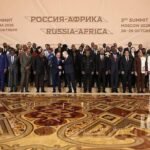
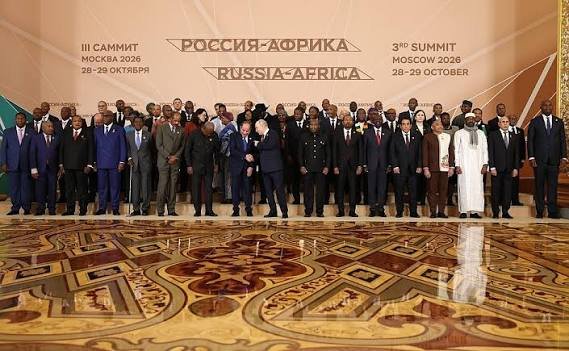
Moscow, Russia | 28–29 October 2026 — The timing of the Third Russia–Africa Summit in Moscow, held on 28–29 October 2026, could hardly be more significant. At a time when the international order is facing profound uncertainty, with geopolitical rivalries intensifying, conflicts reshaping global alliances and economic relationships becoming increasingly unpredictable, Russia and Africa are exploring new grounds for cooperation. The summit is therefore more than a diplomatic gathering; it reflects a changing world in which nations are increasingly looking beyond traditional alliances to secure their economic and strategic interests.
For Russia, the stakes are considerable. With its relations with Western countries deeply strained by the war in Ukraine and the resulting sanctions, Africa represents an important diplomatic, economic and strategic opportunity. Moscow is seeking to expand its international influence, access new markets, strengthen security partnerships and secure greater support for its vision of a multipolar world.
The participation of representatives from 48 African countries, including 22 heads of state, demonstrates the importance attached to this relationship. The summit also adopted a new cooperation framework for 2027–2029, covering areas including trade, energy, agriculture, security, technology and education.
But beyond the diplomatic statements, what does Africa stand to gain?
For African countries, Russia’s renewed interest presents an opportunity to diversify international partnerships. For too long, the continent’s economic relationships have been heavily concentrated around established powers, particularly Europe, the United States and China. Engaging Moscow provides another avenue through which African governments can negotiate investment, technology, infrastructure and economic cooperation.
There are practical opportunities. Russia has expertise in nuclear energy, agriculture, scientific research and military technology. Africa, on the other hand, possesses enormous natural resources, critical minerals, agricultural potential and a growing consumer market. Properly structured partnerships could benefit both sides.
Food security is particularly important. Russia remains a major supplier of wheat and fertiliser to African markets. Cooperation in agricultural technology, energy production and industrial development could also help address some of the continent’s longstanding economic challenges.
However, Africa must approach this relationship with clear eyes.
Russia’s economic engagement with the continent remains relatively modest. Bilateral trade exceeded $27 billion in 2025, significantly below the scale of Africa’s commercial relationships with China and the European Union. Furthermore, previous Russia–Africa summits have generated ambitious declarations, but translating these commitments into completed projects remains a challenge.
Security cooperation also deserves scrutiny. While Russia has expanded its military partnerships, particularly in the Sahel, the region continues to experience serious instability. Military assistance alone cannot address the deeper challenges of governance, unemployment, poverty and institutional weaknesses.
There is also the wider geopolitical question. Russia wants greater diplomatic support and influence in Africa, just as Western powers and China seek to protect and expand their own interests. African governments must therefore resist becoming instruments in the competition between global powers.
Perhaps the most important opportunity emerging from the Moscow summit is the possibility of strengthening Africa’s bargaining position in international affairs. The call for greater African representation in global institutions, including the United Nations Security Council, reflects a longstanding demand for a more equitable international system.
But multipolarity must mean more than having several powerful countries competing for Africa’s attention. It must also mean giving African countries greater economic independence and the capacity to determine their own development priorities.
Ultimately, Russia stands to gain diplomatic influence, access to markets, strategic partnerships and economic opportunities. Africa stands to gain alternative investment, technology, energy cooperation, agricultural support and greater diplomatic leverage.
The real measure of this summit, however, will not be the number of leaders who attended or agreements signed. It will be factories built, jobs created, electricity generated, technology transferred and trade expanded.
In an increasingly uncertain world, Africa cannot afford to remain merely an arena for geopolitical competition. It must become an active player in shaping the partnerships that will determine its future.
The Moscow summit has created another opportunity. The challenge for African leaders is to ensure that this opportunity translates into tangible benefits for the continent and its people.