
By Senior Editor, China Africa News
Beijing,Johannesburg-As the world marks World AIDS Day a global moment of solidarity, grief and renewed resolve the urgency behind today’s observance has perhaps never been clearer. A sweeping collapse in international HIV funding has shaken prevention and treatment efforts across dozens of countries; but for one of the hardest‑hit nations, a new lifeline from Beijing offers a glimmer of hope.
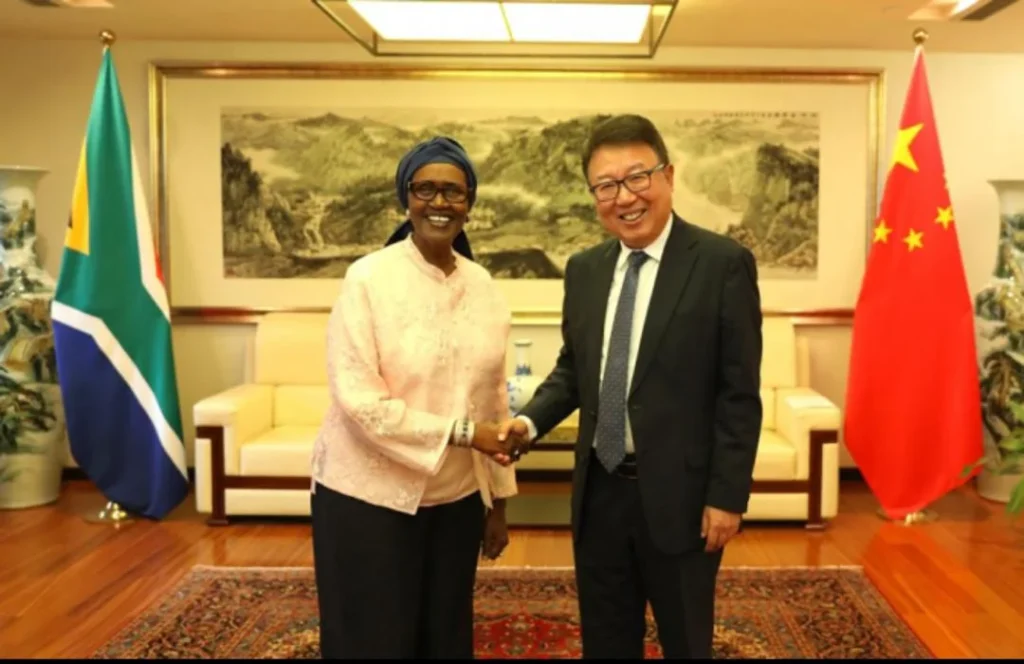
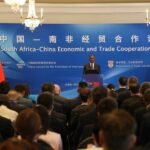
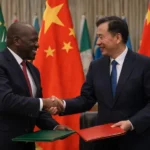
In November, China via the China Global Development and South-South Cooperation Fund pledged US $3.49 million to support HIV‑prevention services in South Africa, in partnership with UNAIDS.
The aid targets young people and people who inject drugs delivering prevention kits, harm-reduction services, self-testing tools, and support for vulnerable communities.
That infusion comes on the heels of a dramatic contraction in global aid for HIV/AIDS.
According to the latest UNAIDS report, international assistance historically the backbone of prevention in many low‑ and middle‑income countries could be 30 – 40 % lower in 2025 compared with 2023.
The fallout has been swift: clinics closing or scaling back services, stock‑outs of test kits and medicines, and prevention programmes for young women, sex workers, and other key populations left in shambles.
In many countries across sub‑Saharan Africa, these cuts are not just numbers they translate into reduced access to prevention and care, rising stigma, and growing risk for vulnerable populations. UNAIDS warns that, without urgent intervention, the world could see millions more HIV infections and AIDS‑related deaths over the coming years.
That makes China’s pledge to South Africa far more than symbolic charity. For a nation that once relied in part on large‑scale foreign funding (including from long‑standing donors), the loss of aid places enormous strain on its domestic capacity to respond especially for prevention and outreach programmes.
In this context, Beijing’s intervention can be read as part of a shifting global health geography: where traditional donor patterns are fraying, emerging powers step in. The $3.5 million may not patch the entire gap but it does offer a tangible example of how alternative financing and “South–South cooperation” can help stave off the worst consequences of aid collapse.
On World AIDS Day, as millions around the world wear red ribbons and reaffirm their commitment to ending AIDS, South Africa’s renewed partnership with China highlights a critical point: when global solidarity slips, new alliances may define the future of health security. And for some, that future may depend not just on compassion but on strategic shifts in global aid.