
By Cremilda Macuácua, China Africa News
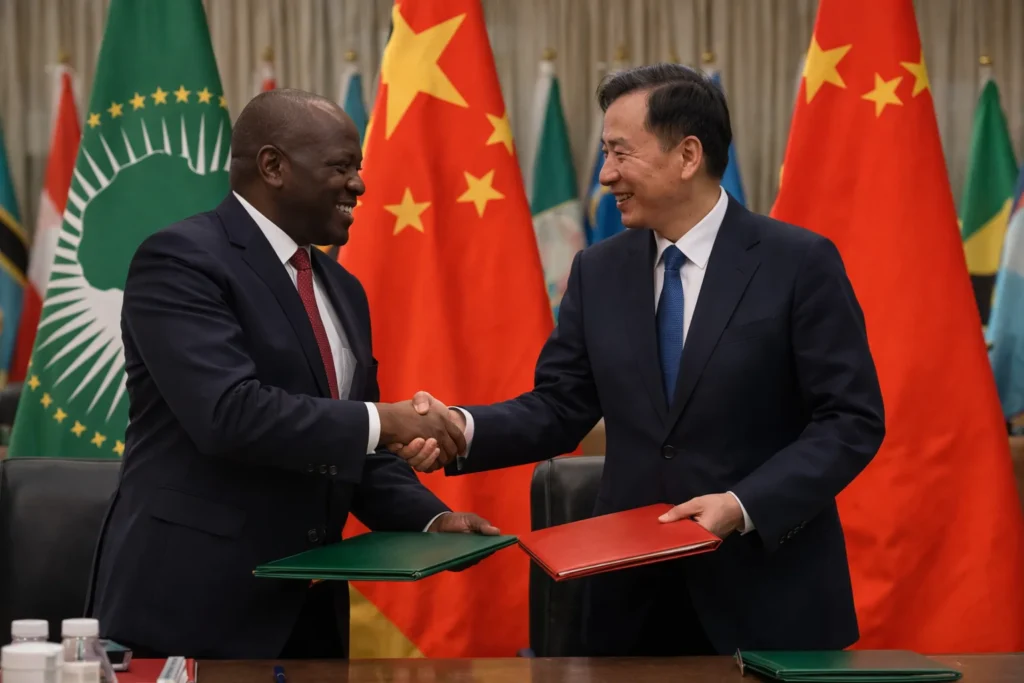
Addis Ababa, March 26 — The African Union’s representative to China, Ambassador Sarjoh Bah, has called for a strengthened and more strategic partnership between Africa and China, highlighting emerging opportunities in trade, technology, and critical sectors ahead of a major policy shift expected in 2026.
His remarks come as African diplomats prepare for an April 2026 retreat in China, where the African Diplomatic Corps will convene to align priorities and strategies in anticipation of China’s planned zero-tariff policy for African exports an initiative widely seen as a potential turning point in Africa-China economic relations.
The forthcoming zero-tariff policy is expected to significantly expand duty-free access for African goods into Chinese markets, offering new momentum for trade growth. Ambassador Bah emphasized that while the policy presents clear opportunities, African countries must also strengthen production capacity, improve standards, and enhance coordination to fully benefit from increased market access.
The planned retreat in Beijing reflects a broader shift toward collective diplomacy, with African nations seeking to engage China from a more unified and strategic position. Through alignment and shared priorities, the continent aims to ensure that partnerships translate into tangible development gains and long-term economic resilience, in line with the vision of the African Union.
Ambassador Bah highlighted that China-Africa cooperation is evolving beyond its traditional focus on infrastructure financing to include deeper collaboration in technology and innovation. Investments in digital infrastructure, e-commerce, and skills development are expected to play a central role in accelerating Africa’s economic transformation and global competitiveness.
He further pointed to critical sectors such as energy, agriculture, healthcare, and mineral processing as key pillars for future engagement. Strengthening these sectors, he noted, will be essential for enabling value addition within Africa and reducing dependence on raw material exports.
Analysts view China’s zero-tariff initiative as part of a broader transition toward a more balanced partnership one that emphasizes trade, industrialization, and mutual economic growth. However, they caution that success will depend on Africa’s readiness to scale production, meet international quality standards, and leverage continental frameworks such as the African Continental Free Trade Area.
As global competition for influence in Africa intensifies, the anticipated policy and the diplomatic efforts surrounding it mark a critical juncture. Ambassador Bah’s remarks underscore the importance of strategic preparation and unified action in ensuring that this moment translates into meaningful and sustained economic advancement for the continent.