

By Cremilda Macuácua, China Africa News
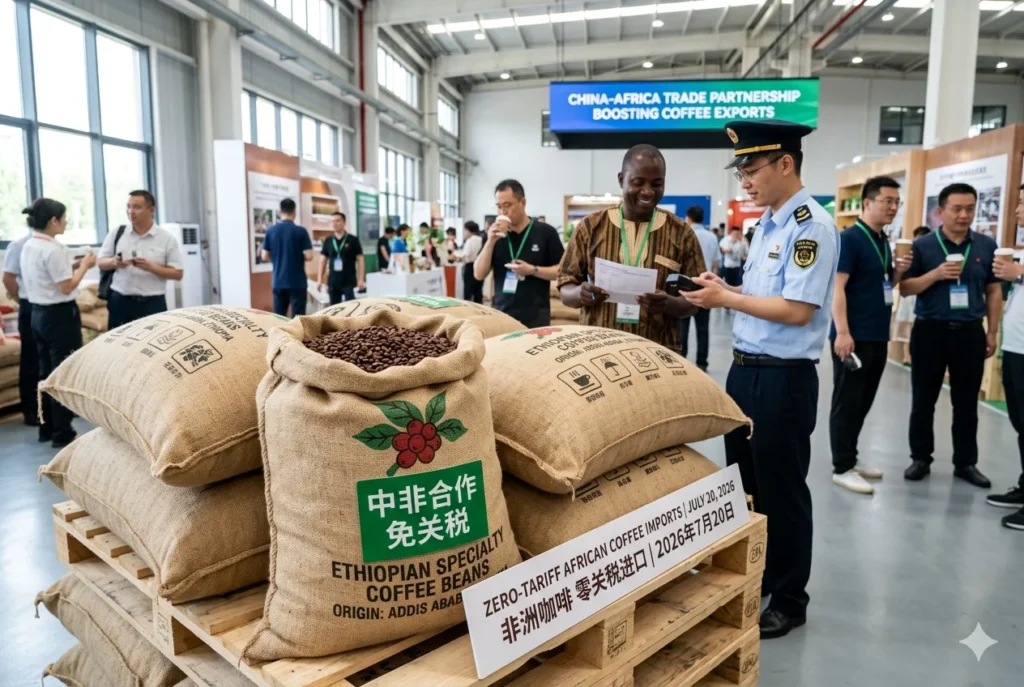
Beijing, May 24,2026 — China will begin allowing imports of African coffee beans under a new zero-tariff arrangement starting July 20, 2026, in a move expected to deepen trade ties with African producers and expand access to one of the world’s fastest-growing coffee markets.
The policy, announced by China’s General Administration of Customs, applies to African countries that maintain diplomatic relations with Beijing and meet China’s import, phytosanitary, and traceability standards.
The decision follows China’s broader rollout of zero-tariff treatment for imports from 53 African countries, a trade measure aimed at increasing African exports to the Chinese market and strengthening economic cooperation between China and the continent.
Under the new coffee import framework, exporters will be required to register production and processing facilities with Chinese customs authorities, establish product traceability systems, and provide phytosanitary certificates to verify compliance with safety and agricultural standards.
Chinese officials say the initiative could reduce the retail cost of African coffee products in China by more than 20 percent in some cases, potentially making African-origin beans more competitive against established suppliers from Latin America and Southeast Asia.
Countries such as Ethiopia and Burundi already have quarantine access approval for coffee exports to China, positioning them among the early beneficiaries of the expanded market access. Ethiopia, widely recognized as the birthplace of coffee, is expected to see renewed opportunities as Chinese consumer demand for specialty and premium coffee continues to rise.
The announcement comes as China’s coffee culture experiences rapid growth, particularly in major cities where independent cafés, specialty roasters, and premium imported beans have gained popularity among younger consumers.
Trade analysts say the policy could help diversify China’s coffee supply chain while creating new export opportunities for African producers seeking alternatives to traditional European and North American markets.
African coffee exporters, however, will still need to navigate logistical, certification, and scaling challenges to fully capitalize on the opportunity. Industry observers note that compliance with China’s customs and quality requirements will be critical for long-term market access.
The move also reflects Beijing’s broader strategy of strengthening economic partnerships across Africa through trade incentives, infrastructure investment, and expanded agricultural imports.
If fully implemented, the zero-tariff coffee arrangement could become a significant boost for African coffee-producing nations looking to increase value-added exports and expand their presence in Asia’s largest consumer markets.