
By Senior Editor, China Africa News
Addis Ababa, June 18, 2026 – For decades, discussions about China–Africa relations have largely revolved around trade figures, infrastructure projects, and investment agreements. Today, however, a quieter but potentially more transformative dimension of the partnership is gaining momentum: direct engagement between people.
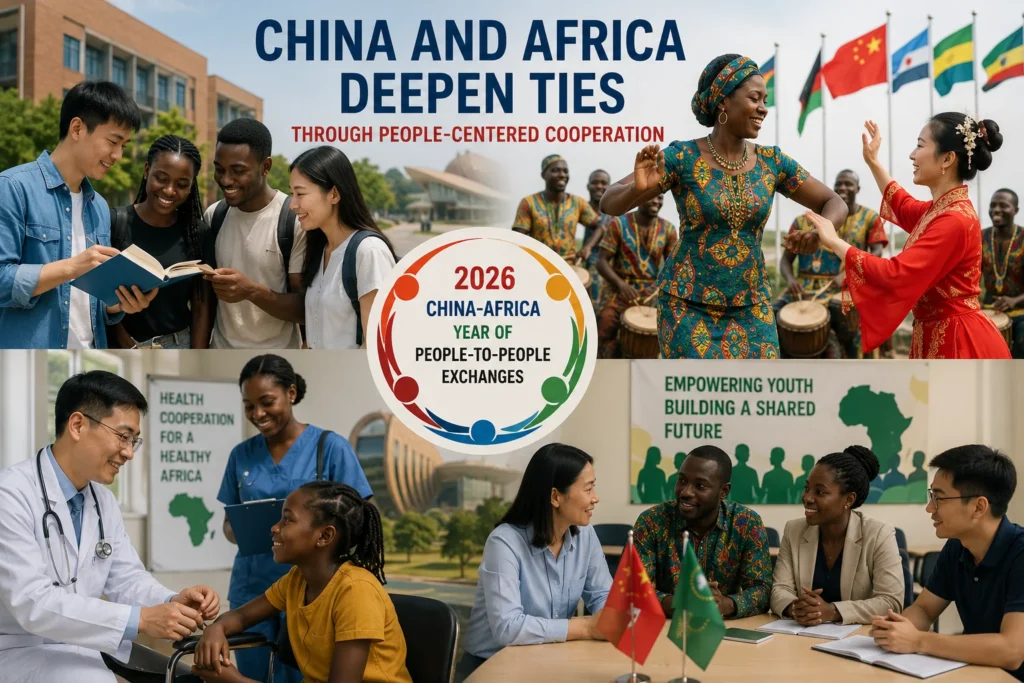
A new wave of educational, cultural, medical, and youth-focused initiatives launched under the 2026 China–Africa Year of People-to-People Exchanges signals a growing recognition that sustainable international partnerships are built not only through economic cooperation but also through human connections.
The programs are designed to bring together students, researchers, entrepreneurs, healthcare professionals, artists, and young leaders from both regions. While such exchanges have existed for years, the scale and visibility of the latest initiatives suggest a strategic effort to broaden the foundations of China–Africa relations beyond government institutions and business interests.
At a time when Africa is home to the world’s youngest population, opportunities for education, innovation, and skills development are increasingly viewed as critical drivers of long-term growth. Exchange programs that expose African students and professionals to new technologies, research networks, and industrial practices could contribute to building a more competitive workforce capable of supporting the continent’s development ambitions.
For China, the initiative also serves a broader diplomatic purpose. As geopolitical competition intensifies globally, Beijing is seeking to strengthen relationships through soft power, cultural understanding, and long-term partnerships with future generations of African leaders. Educational scholarships, academic collaborations, and cultural exchanges offer avenues for engagement that often leave a lasting impact long after formal agreements have been signed.
Health cooperation has emerged as another important pillar of the initiative. Joint medical programs, training opportunities, and knowledge-sharing platforms are expected to expand collaboration between healthcare institutions across both regions. Such efforts reflect lessons learned from recent global health challenges, which demonstrated the importance of international cooperation in strengthening healthcare systems and improving preparedness.
Yet the success of these initiatives will ultimately depend on their ability to deliver tangible outcomes. Critics of international exchange programs often argue that their impact can be difficult to measure unless they result in concrete opportunities, employment pathways, research partnerships, or community-level benefits. For participants, the value of these exchanges will be judged not by the number of events held but by the lasting relationships and opportunities they create.
Nevertheless, the growing emphasis on people-centered cooperation marks an important evolution in China–Africa engagement. While infrastructure projects can connect cities and trade agreements can connect economies, exchanges between students, innovators, healthcare workers, and cultural leaders have the potential to connect societies.
As China and African countries navigate an increasingly complex global landscape, many policymakers believe that these human connections may prove to be among the most enduring investments either side can make. The future of the partnership, they argue, will be shaped not only by roads, railways, and trade corridors, but also by the ideas, skills, and relationships forged between the people who will lead the next generation.