

By Senior Editor, China Africa News
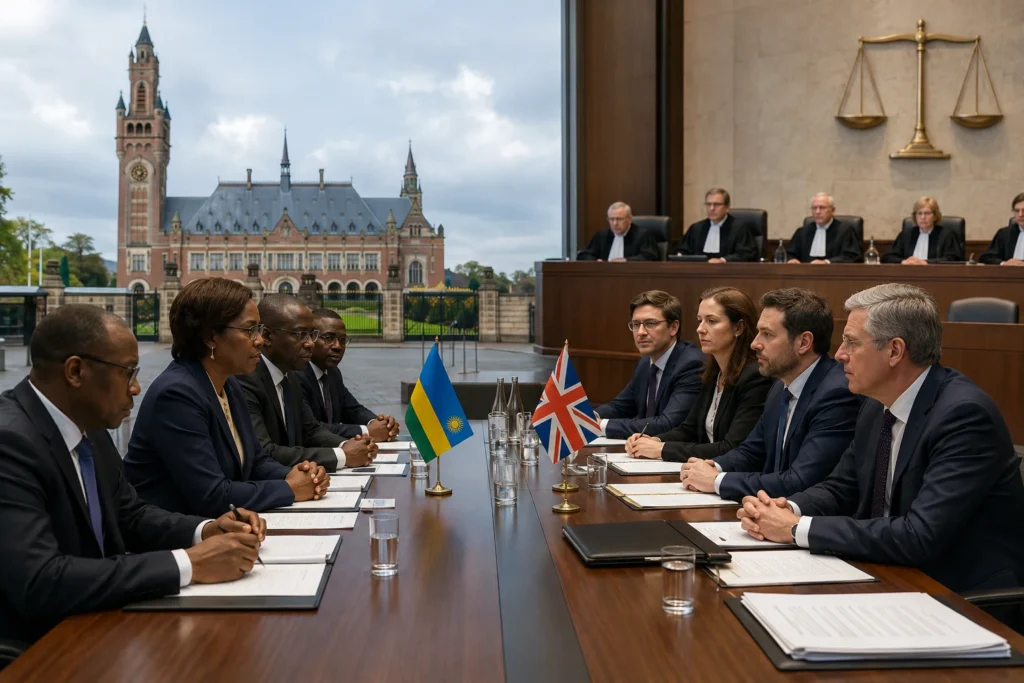
KIGALI / THE HAGUE, June 2, 2026 — Rwanda has lost its legal bid to compel the United Kingdom to pay more than £100 million under the now-defunct UK-Rwanda asylum partnership, after an international arbitration tribunal in The Hague ruled in favour of London.
The decision by the Permanent Court of Arbitration marks the latest chapter in a controversial migration agreement that once stood at the centre of Britain’s efforts to curb irregular migration across the English Channel. The ruling also highlights the political and diplomatic fallout that followed the Labour government’s decision to abandon the scheme shortly after taking office in 2024.
What the Tribunal Decided
The arbitration panel rejected Rwanda’s financial claims, ruling that the UK was not obligated to make two additional payments that Kigali argued remained due under the migration partnership.
Rwanda had sought approximately £100 million in scheduled payments, along with compensation, arguing that Britain had failed to honour its commitments after Prime Minister Keir Starmer’s government scrapped the relocation programme. However, the tribunal concluded that subsequent diplomatic exchanges between the two governments effectively removed the UK’s obligation to make those future payments.
The ruling represents a major legal victory for the UK government, which maintained throughout the proceedings that the change of administration and policy direction justified terminating the arrangement without additional financial liability.
The UK-Rwanda migration partnership was launched in 2022 by the Conservative government as a flagship deterrence policy aimed at reducing irregular Channel crossings. Under the arrangement, some asylum seekers arriving in Britain would be relocated to Rwanda, where their asylum claims would be processed.
The policy quickly became one of the most contested immigration initiatives in modern British politics. Legal challenges, human rights concerns and court battles delayed implementation. Ultimately, only four individuals were voluntarily relocated before the programme was abandoned.
When Labour came to power in July 2024, Prime Minister Keir Starmer declared the scheme “dead and buried” and formally ended the policy. Rwanda subsequently argued that while the programme had been cancelled politically, the UK had not fully discharged its contractual obligations under the agreement.
Why Rwanda Lost
The central legal question revolved around diplomatic communications exchanged between London and Kigali in November 2024.
The majority of the arbitration panel concluded that Rwanda had effectively agreed to forgo future payments through those exchanges. As a result, the tribunal found that Britain was not liable for the additional £100 million sought by Kigali.
From a legal standpoint, the ruling suggests that the tribunal placed greater weight on subsequent conduct and diplomatic correspondence than on Rwanda’s interpretation of the original financial commitments embedded in the migration partnership.
For the UK, the judgment reinforces the principle that governments may alter policy priorities following democratic elections, provided they act within the bounds of their legal obligations. For Rwanda, however, the outcome underscores the risks associated with long-term international agreements that become vulnerable to changes in political leadership.
Although Rwanda lost the case, Kigali has highlighted an important aspect of the ruling: one member of the tribunal disagreed with the majority.
Professor Mohamed Abdel Wahab issued a dissenting and separate opinion arguing that Rwanda’s position had legal merit and that the November 2024 exchanges relied upon by the UK did not validly alter the financial arrangements between the two countries. While the dissent did not affect the final outcome, it provided Rwanda with a basis to argue that the dispute was neither straightforward nor legally settled from every perspective.
Rwanda Government Response
Following the ruling, the Rwandan government adopted a measured tone, accepting the tribunal’s decision while underscoring the significance of the dissenting opinion.
In a statement posted on X, government spokesperson Yolande Makolo said:
“While Rwanda respects the Tribunal’s award and considers the matter concluded, we note that the dissenting and separate opinion by Professor Mohamed Abdel Wahab shows that the issues before the Tribunal were complex and open to different legal conclusions, including that the November 2024 exchanges relied on by the UK did not validly change the financial arrangements between the two countries. Rwanda will continue to work constructively with international partners, guided by international norms and mutually beneficial cooperation.”
The statement reflects Kigali’s effort to strike a careful balance between accepting the outcome and defending its legal position. By emphasizing Professor Abdel Wahab’s dissent, Rwanda is signalling that although it lost the arbitration, it does not view the ruling as a definitive rejection of its interpretation of the agreement.
Particularly notable is the government’s reference to the November 2024 diplomatic exchanges that formed the foundation of the tribunal majority’s decision. Rwanda’s position remains that those exchanges did not legally alter the financial obligations contained in the original agreement, a view echoed in the dissenting opinion but ultimately rejected by the majority of the panel.
Rather than escalating the dispute, Kigali has chosen to frame the ruling as the conclusion of a complex legal disagreement between two sovereign states. The government’s emphasis on continued cooperation and adherence to international norms suggests a desire to prevent the arbitration outcome from further straining relations with the United Kingdom.
The judgment arrives at a delicate moment in UK-Rwanda relations
Relations between the two countries have already been strained by disagreements over regional security issues in eastern Democratic Republic of Congo and Britain’s decision to reduce certain forms of assistance to Rwanda. The collapse of the migration partnership removed what had once been a major pillar of bilateral cooperation.
For Rwanda, the case was about more than money. Kigali sought to establish that international agreements should survive political transitions and that states must honour commitments even when governments change. For the UK, the ruling validates Labour’s decision to abandon a policy it regarded as ineffective, expensive and legally problematic.
The arbitration award closes one of the most contentious international disputes arising from the UK’s abandoned Rwanda asylum policy. While Rwanda failed to secure the additional payments it sought, Kigali’s emphasis on the dissenting opinion indicates that it views the outcome as a legal setback rather than a rejection of its broader arguments. The case also serves as a reminder that international agreements tied closely to domestic political agendas can become vulnerable when governments change, leaving long-term diplomatic and financial commitments open to reinterpretation and dispute.