
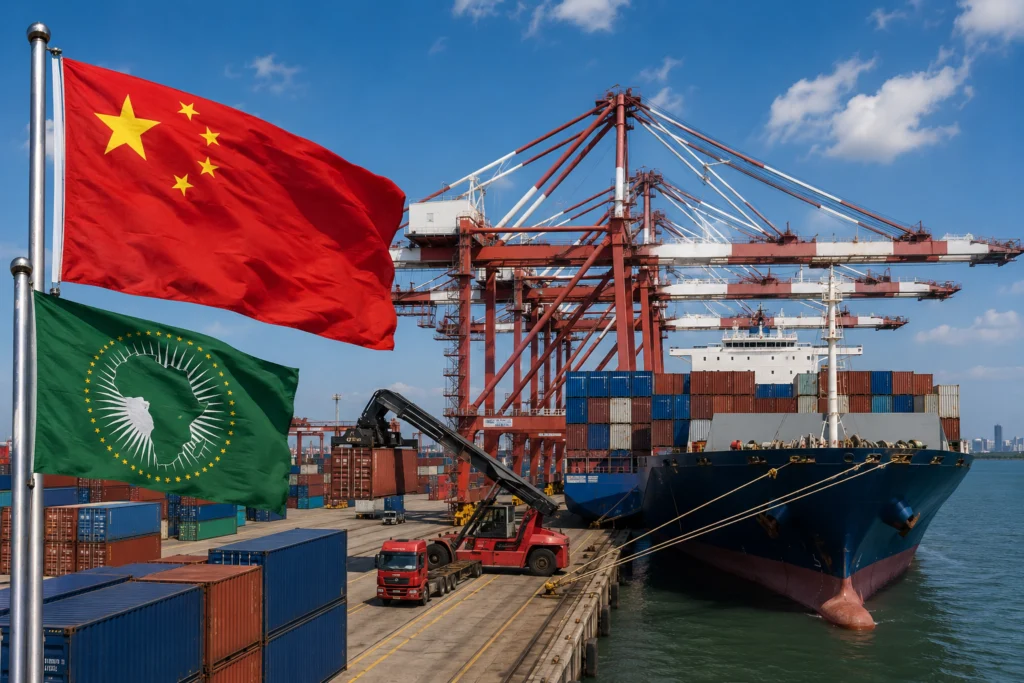

By Senior Editor, China Africa News
BEIJING, Aug. 5, 2026 — Trade between China and African countries reached a record level during the first half of 2026, according to figures released Tuesday by China’s customs authorities, underscoring Beijing’s expanding economic footprint across the continent at a time of intensifying global competition for markets and strategic resources.
Official data showed that bilateral trade climbed to its highest-ever level for the January-to-June period, driven by stronger Chinese exports of manufactured goods and increased imports of African commodities, agricultural products, and minerals.
Chinese officials attributed the growth to a combination of expanding commercial partnerships, infrastructure cooperation, and Beijing’s policy of granting tariff-free access to products from most African countries with diplomatic ties to China. The initiative is intended to encourage greater African exports while strengthening economic integration under the Forum on China-Africa Cooperation.
China has remained Africa’s largest trading partner for more than a decade, with economic relations extending well beyond trade. Chinese companies continue to finance and build roads, railways, ports, power projects, and telecommunications infrastructure across the continent, while African governments increasingly look to Beijing for investment in manufacturing and industrial development.
The latest figures come as many African economies seek to diversify export markets and attract foreign investment amid a challenging global economic environment. Officials in Beijing argue that closer economic cooperation offers mutual benefits by expanding opportunities for African producers while supporting China’s demand for raw materials and consumer markets.
However, economists note that the trade relationship remains uneven. African exports to China continue to be dominated by oil, minerals, and other primary commodities, while imports from China largely consist of higher-value manufactured products, contributing to persistent trade imbalances in several countries.
Despite these concerns, analysts say Beijing’s tariff-free market access for African goods could provide new opportunities for exporters of coffee, cocoa, tea, fresh produce, and other agricultural products seeking to expand beyond traditional markets.
The record trade figures reinforce China’s position as one of Africa’s most influential economic partners, even as Western nations intensify efforts to strengthen their own commercial and diplomatic engagement across the continent.
As competition for Africa’s rapidly growing markets and abundant natural resources continues, the latest trade data suggest that China’s economic presence remains firmly entrenched, with both sides expected to pursue deeper cooperation in the years ahead.