
By Senior Editor,China Africa News
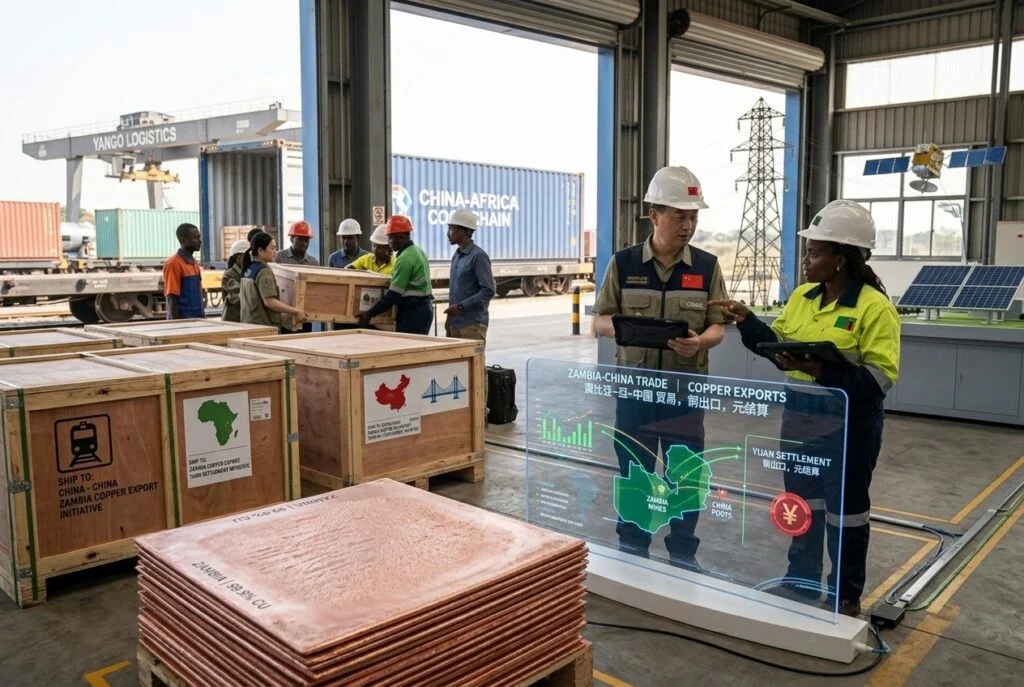
Lusaka, October 17, 2026 — Zambia is preparing to settle some of its copper exports to China in Chinese yuan from 2027, marking a potential shift in how the southern African country manages trade with one of its most important economic partners.
According to a report published by Lusaka Times on October 16, 2026, Bank of Zambia Governor Denny Kalyalya disclosed the plan during an interview in Bangkok, Thailand, on October 13, on the sidelines of the International Monetary Fund and World Bank annual meetings.
The Lusaka Times report says the proposed arrangement will initially involve Chinese mining companies operating in Zambia that already use the yuan to pay certain tax obligations.
The initiative is expected to expand the use of China’s currency beyond tax payments into the settlement of copper export transactions. Copper remains one of Zambia’s most important exports and a major source of foreign exchange.
Kalyalya described the proposed arrangement as an initial step, indicating that the authorities could consider broader implementation as yuan transactions become more established within the country’s financial system.
The development comes as Zambia seeks ways to reduce its dependence on the United States dollar in international transactions. Greater use of the yuan could allow businesses and government institutions to manage certain payments directly in Chinese currency, potentially reducing currency-conversion costs.
Zambia has already taken steps towards incorporating the yuan into its financial operations. The country’s central bank has accumulated yuan reserves, while Chinese mining companies have begun using the currency to settle selected tax obligations.
The proposed copper settlement arrangement could build on this foundation by allowing part of the revenue generated from mineral exports to be received in yuan.
This may be particularly relevant to Zambia’s financial relationship with China. The country has significant financial obligations to Chinese creditors, and receiving some export earnings in yuan could make it easier to meet payments denominated in the same currency.
According to the Lusaka Times report, Kalyalya also indicated that Zambia was discussing a possible currency-swap arrangement with China. He expressed interest in having future Chinese lending denominated in renminbi, the official name for China’s currency.
However, the proposal does not mean that copper prices will automatically be determined in yuan. International copper prices are still influenced by established commodity markets, and the immediate change would concern the currency used for payment rather than necessarily the currency used to establish prices.
The scale of implementation will also matter. The economic impact will depend on how much of Zambia’s copper exports eventually move to yuan settlement and whether other exporters adopt similar arrangements.
For China, the development would support its broader efforts to expand the international use of its currency. For Zambia, it offers another option for managing trade payments and financial obligations.
The proposed arrangement therefore represents a potential development in China–Africa economic cooperation, linking mineral exports, financial management and the growing use of alternative currencies in international trade.