
By Cyubahiro Bonaventure
WUHAN, China , November 12, 2026 — South Africa and China are seeking to deepen scientific and technological cooperation, as African governments increasingly look to innovation, research and technology transfer to support industrialisation and sustainable economic development.
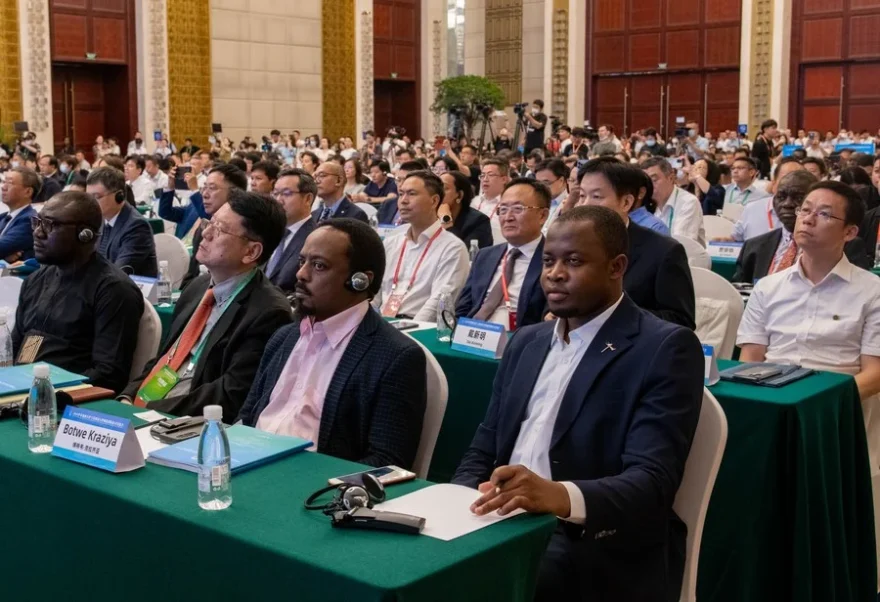
South Africa’s Deputy Minister of Science, Technology and Innovation, Dr Nomalungelo Gina, is leading a delegation to the 2026 China-Africa Innovation Cooperation and Development Forum in Wuhan, China, running from November 10 to 13.
The forum, held under the theme “Working Together to Advance Modernisation Through Innovation Cooperation”, brings together government officials, business representatives, researchers, innovators and international organisations to explore opportunities for practical cooperation between China and African countries.
A key engagement on November 11 involves discussions between Gina and China’s Vice Minister of Science and Technology, Zhang Guangjun, focusing on existing bilateral programmes and opportunities to expand scientific collaboration.
The discussions come as China and African countries seek to strengthen cooperation in strategic sectors, including artificial intelligence, space science, agriculture, renewable energy, mining and digital technologies.
Technology cooperation with practical benefits
One of the major areas of focus is the application of space technology and satellite-based information to address development challenges across Africa.
The China-Africa Space Information Technology and Applied Science Forum is expected to explore how satellite remote sensing and aerial observation technologies can support precision agriculture, natural resource monitoring and environmental protection.
For African countries, these technologies could strengthen agricultural productivity, improve land-use planning and support more effective management of natural resources.
For China, closer cooperation offers opportunities to expand scientific partnerships, share technological expertise and build long-term relationships with African research institutions, governments and businesses.
Building on decades of scientific cooperation
South Africa and China have maintained formal scientific and technological cooperation since signing an agreement in 1999.
According to South Africa’s Department of Science, Technology and Innovation, the partnership has supported more than 240 joint research and development projects through 16 joint calls for proposals.
In 2024, the two countries also agreed to double the number of jointly funded research projects from 15 to 30, covering areas such as information technology, agriculture, energy, mining, space science and life sciences.
Their cooperation has also expanded into aerospace research through a joint laboratory established by South Africa’s National Space Agency and the Chinese Academy of Sciences’ Aerospace Information Research Institute.
Beyond technology: The question of shared benefits
Despite the opportunities, the long-term success of China-Africa scientific cooperation will depend on how effectively technological partnerships translate into tangible benefits for African societies.
For African countries, priorities include developing local technical expertise, strengthening research institutions, creating employment opportunities and ensuring that technology partnerships contribute to domestic industrial capacity.
For China, successful cooperation could strengthen its scientific partnerships with African economies, create opportunities for joint research and investment, and contribute to broader South-South cooperation.
The challenge for both sides will be to move beyond agreements and declarations towards measurable outcomes, including locally developed technologies, skilled professionals, stronger industries and solutions to shared development challenges.
As Dr Gina noted ahead of the engagement, the success of cooperation should be measured not only by the technologies developed but also by the lives improved.
The Wuhan forum provides another opportunity for China and African countries to pursue a partnership in which scientific innovation serves as a foundation for shared economic progress.