

By staff writer, China Africa News
NAIROBI, June 23, 2026 — Across African capitals, a quieter but steadily expanding dimension of China’s engagement is taking shape: cultural festivals, academic partnerships, language programs, and youth exchanges designed to deepen long-term ties beyond economics and infrastructure.
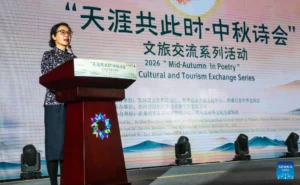
In Kenya and several other African countries, recent public events linked to Chinese cultural celebrations and exchange programs have been framed by officials as part of a broader effort to strengthen mutual understanding. These initiatives are increasingly tied to the 2026 China-Africa Year of People-to-People Exchanges, a coordinated diplomatic agenda focused on education, culture, and youth engagement.
While large-scale infrastructure projects and trade agreements often dominate headlines in China-Africa relations, this softer form of engagement is becoming more visible and strategically significant.
Chinese cultural centers, language institutes, and scholarship programs have expanded across Africa over the past decade, offering students opportunities to study in China or learn Mandarin locally. At the same time, African students, entrepreneurs, and professionals are increasingly participating in exchange programs that expose them to Chinese industries, universities, and urban development models.
The underlying strategy is long-term.
Rather than focusing solely on immediate economic returns, these initiatives aim to build generational familiarity between China and African societies. Education and cultural exchange programs are designed to create networks of professionals, policymakers, and students who have direct experience with China’s institutions and development model.
For African governments, participation in these programs offers access to educational opportunities, technical training, and scholarships for students who might otherwise lack international exposure. In countries where youth populations are growing rapidly, such opportunities are politically and economically significant.
For China, cultural diplomacy complements its broader economic engagement across Africa. As Chinese companies expand in sectors such as energy, manufacturing, telecommunications, and transport, long-term stability in relationships becomes increasingly important. People-to-people exchanges are seen as a way to reinforce trust and reduce cultural and political distance.
However, the expansion of China’s soft power presence has also generated debate among analysts.
Supporters argue that educational cooperation and cultural exchange are mutually beneficial, providing African students with access to global knowledge networks while strengthening South-South cooperation. Critics, however, caution that soft power initiatives can also shape narratives and influence perceptions in ways that extend beyond cultural exchange.
Despite these debates, the programs continue to expand, often with strong participation from African universities, government ministries, and youth organizations. Academic partnerships between Chinese and African institutions have also increased, particularly in fields such as engineering, medicine, agriculture, and public administration.
This growth reflects a broader shift in China-Africa relations. While earlier phases were dominated by infrastructure financing and resource-based trade, the current phase increasingly incorporates technology transfer, industrial cooperation, and now cultural integration.
The idea of a “win-win” partnership is frequently emphasized in official discourse from both sides. In practical terms, this is increasingly interpreted not only as economic cooperation but also as shared knowledge production and human capital development.
Yet the long-term impact of these initiatives will depend on how they are implemented. Access to opportunities must be matched with institutional capacity, transparency, and inclusive participation if they are to deliver broad-based benefits.
Still, the direction of travel is clear. China’s engagement in Africa is no longer limited to physical infrastructure or commodity trade. It is expanding into education systems, cultural spaces, and social networks that may shape the relationship for decades to come.
As these programs grow, they are quietly reshaping how a new generation of Africans engages with China not only as a trading partner, but as a destination for study, collaboration, and professional development.
In that sense, cultural diplomacy is becoming one of the most important, if least visible, pillars of China-Africa relations today.