
By Senior Editor, China Africa News
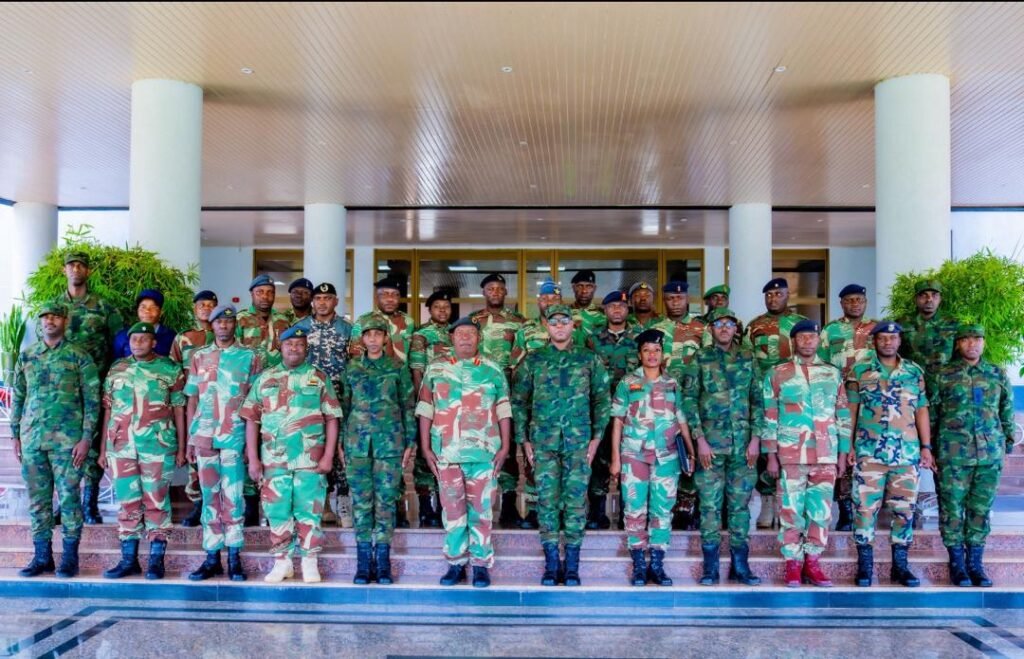
KIGALI, Rwanda,July 29,2026 — On a quiet morning at the headquarters of the Rwanda Defence Force, a delegation of senior Zimbabwean military officers gathered to study an institution whose evolution has become a point of interest for armed forces across Africa.
The officers, drawn from Zimbabwe’s Joint Command and Staff Course 39, are spending two weeks in Rwanda examining the country’s approach to defence, governance and post-conflict reconstruction. Their visit is part of a broader effort by Harare and Kigali to deepen military cooperation at a time when African nations are placing greater emphasis on professional military education, regional stability and collective security.
During a visit to the Ministry of Defence and RDF Headquarters, the delegation received a strategic briefing from Brig. Gen. Patrick Karuretwa, Director General of International Military Cooperation and Defence Spokesperson, who traced the transformation of the Rwanda Defence Force from a liberation movement into a modern military institution with responsibilities extending well beyond national defence.
The presentation focused not only on the RDF’s institutional reforms but also on the philosophy that has shaped its development: professionalisation, accountability and a commitment to supporting national development alongside traditional military responsibilities. It also examined Rwanda’s contributions to peace support operations across the continent, where its troops have earned a reputation for discipline and operational effectiveness.
For the visiting officers, the discussions offered more than a historical overview. They provided insight into how military institutions can adapt to changing security environments while contributing to broader state-building efforts.
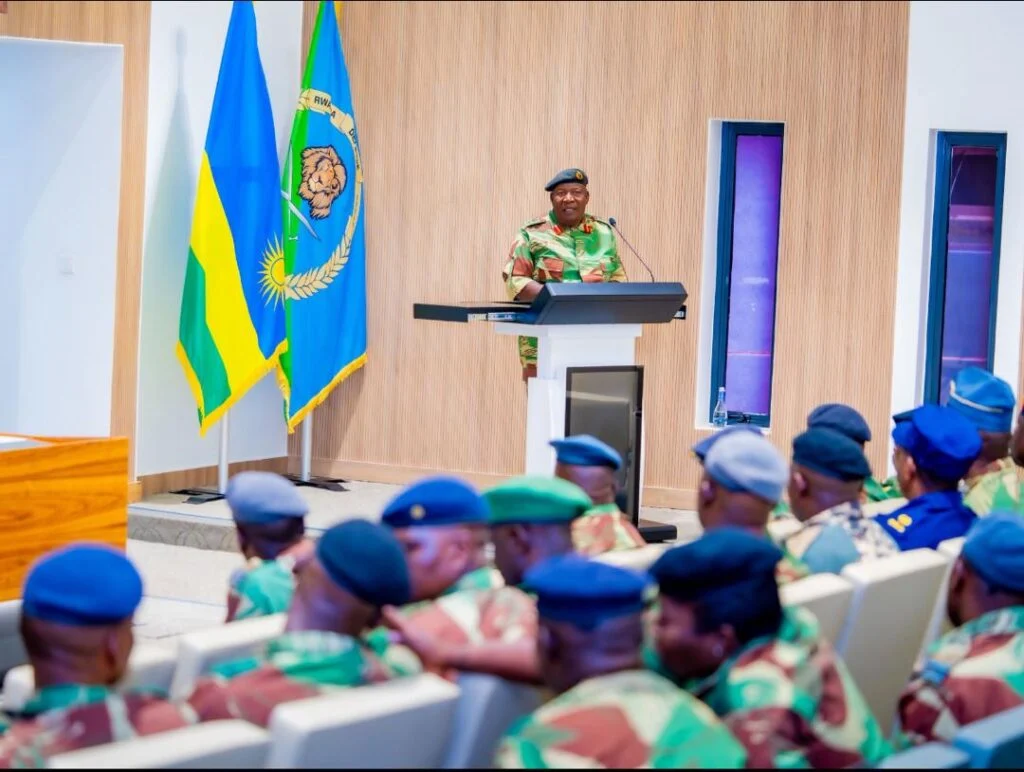
The study tour comes as relations between Rwanda and Zimbabwe continue to expand in the security sector. Although the two countries have followed different historical trajectories, they have increasingly found common ground through defence diplomacy, military education and regional security dialogue.
In recent years, senior military officials from both countries have participated in bilateral engagements designed to strengthen professional exchanges. Zimbabwe has regularly been represented at regional defence forums hosted in Kigali, where military leaders discuss emerging security threats ranging from terrorism and violent extremism to transnational organised crime and the evolving demands of peace support operations.
Military education has become one of the most significant pillars of that relationship. Rwanda’s Command and Staff College has increasingly positioned itself as a regional centre for strategic learning, attracting officers from across Africa for advanced professional military training. These programmes foster interoperability among African armed forces while encouraging the exchange of operational experience and strategic thinking.
Such engagements reflect a broader shift across the continent, where defence cooperation is increasingly built on shared learning rather than solely on joint exercises or procurement partnerships. Professional military education has emerged as a key instrument for building common approaches to leadership, crisis management and regional security.
For Rwanda, whose defence institutions have undergone profound reforms over the past three decades, these exchanges also serve as an opportunity to share lessons drawn from its own experience of reconstruction following the 1994 Genocide against the Tutsi. The country’s security model has attracted delegations from across Africa seeking to understand how institutional reform, civil-military relations and national development can reinforce one another.
As the Zimbabwean delegation continues its programme, the study tour underscores a relationship that extends beyond diplomatic goodwill. It reflects a growing recognition that many of Africa’s security challenges from peacekeeping to conflict prevention require stronger professional networks among the continent’s armed forces.
In Kigali, those conversations are unfolding not on the battlefield, but in classrooms, briefing rooms and strategic discussions where future military leaders are examining how cooperation, rather than competition, can contribute to a more stable region.