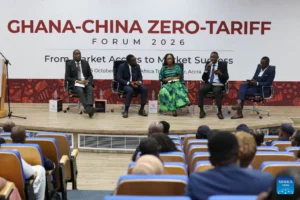
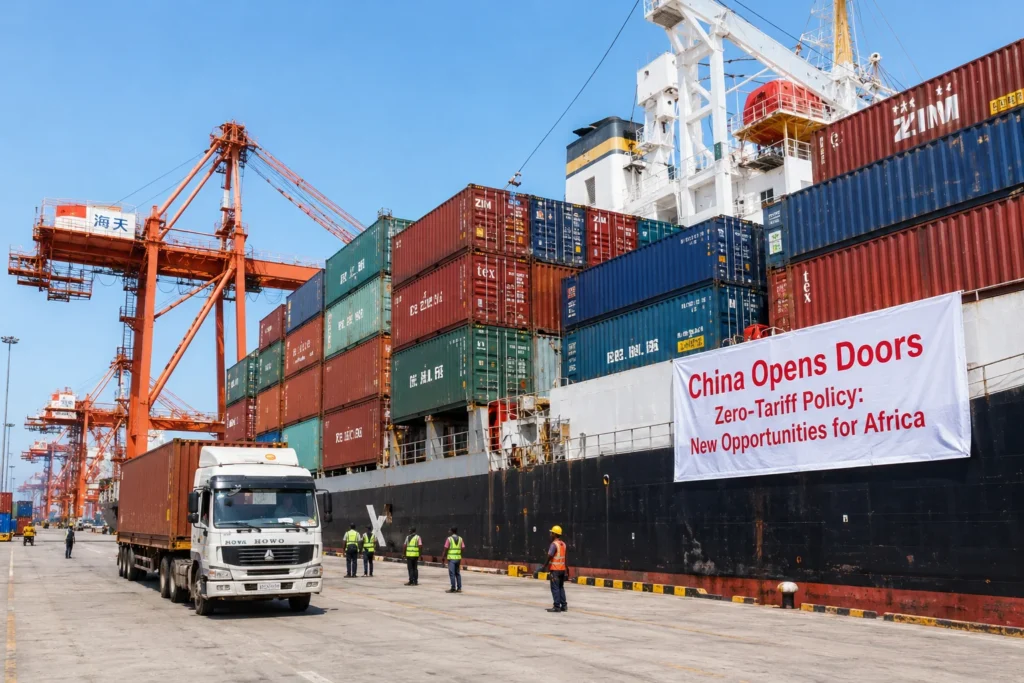

Antananarivo, May 6,2026 — China has implemented a zero-tariff policy on imports from 53 African countries, a move aimed at expanding trade and strengthening economic ties with the continent.
A newly expanded zero-tariff policy by China is being viewed as a potential turning point for trade and industrial growth across Africa, with economists pointing to its capacity to accelerate the continent’s economic modernization.
In an interview published by Xinhua News Agency, Malagasy economist Hugues Rajaonson said the policy would inject “new momentum” into African economies by significantly improving market access and competitiveness.
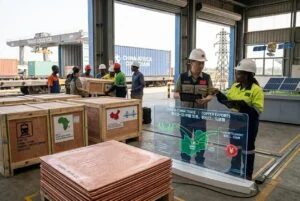
Effective May 1, 2026, China extended zero-tariff treatment to imports from 53 African countries with diplomatic ties. The move builds on earlier measures introduced in 2024 that focused on least-developed countries, signaling a broader commitment to economic engagement with the continent. By removing tariffs, African exporters— particularly in agriculture, fisheries, and textiles—can now enter one of the world’s largest consumer markets with fewer cost barriers, improving their global competitiveness and stabilizing trade flows.
Countries such as Madagascar are expected to benefit from increased exports of agricultural products and other commodities, with participation in trade expos in China helping producers secure new business opportunities. Economists say the policy could also encourage diversification, pushing African economies to move beyond raw material exports toward higher-value goods.
Beyond increasing trade volumes, the initiative is expected to drive structural changes. Greater exposure to international markets may push local industries to improve production standards, quality control, and branding, while also fostering innovation and technology cooperation between China and African countries.
The policy also carries broader implications for global trade dynamics. As protectionist trends persist in parts of the world, China’s move positions it as a key economic partner for Africa, potentially reshaping trade patterns and strengthening the continent’s bargaining power in global markets.
While challenges such as infrastructure gaps and supply chain limitations remain, the zero-tariff policy is widely seen as a significant step toward integrating Africa more deeply into global trade and advancing its economic modernization.