

By Sylivanus M.Karemera, China Africa News
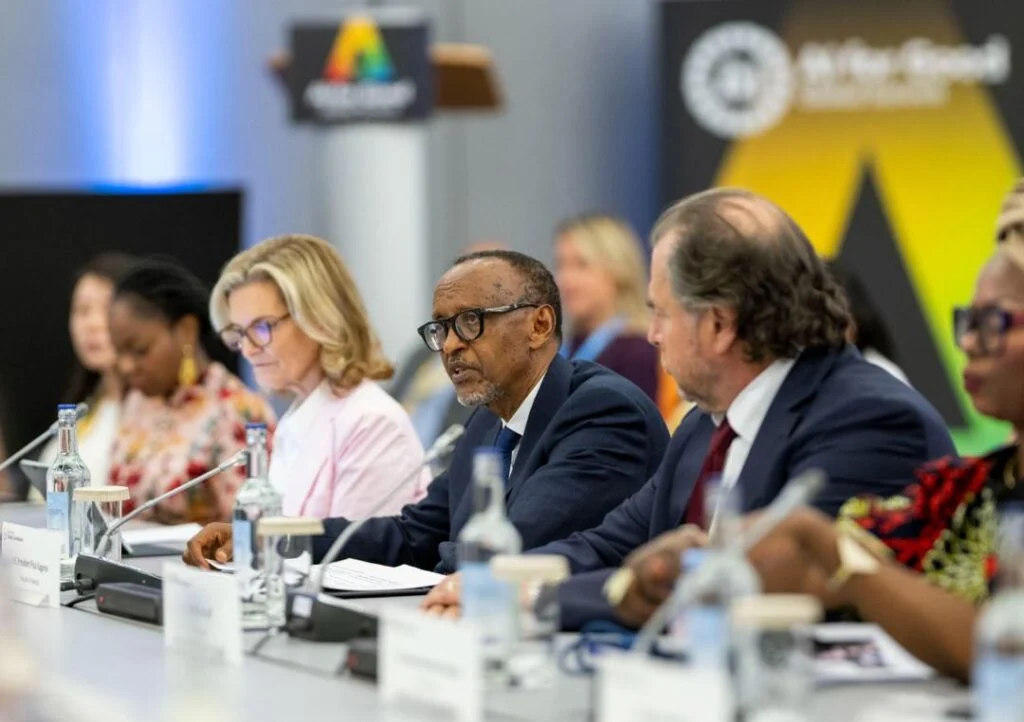
GENEVA, July 9, 2026 — As nations race to secure leadership in artificial intelligence, a different conversation emerged at the United Nations’ AI for Good Global Summit on Wednesday one less concerned with technological supremacy than with ensuring the benefits of AI are shared across every region of the world.
While governments are investing billions in AI infrastructure and frontier models, speakers throughout the summit argued that the technology’s greatest success will not be measured by who builds the most powerful systems, but by whether AI expands opportunity rather than deepens existing inequalities.
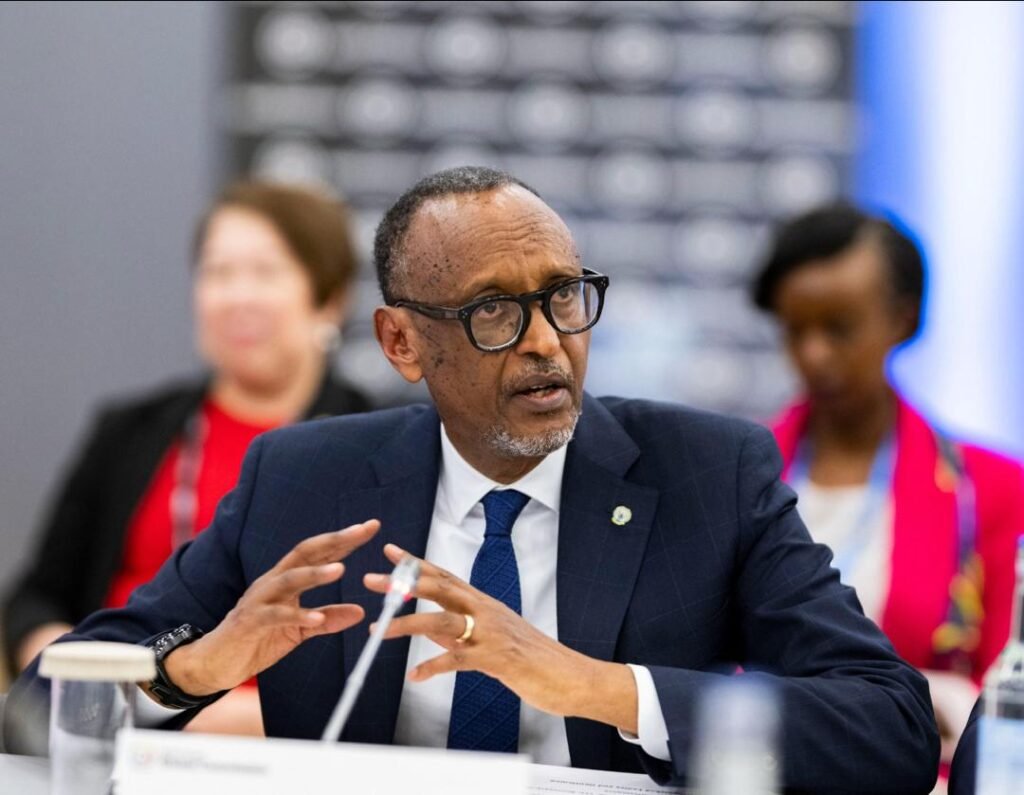
Among the strongest voices was President Paul Kagame of Rwanda, who challenged the prevailing narrative that often places developing countries on the margins of technological progress.
“The bottom line is that, if AI is to serve humanity as a whole, we must get it right in Africa and everywhere else.”
His message reflected a broader shift taking place across the continent. Rather than positioning Africa as a future market for technologies developed elsewhere, Kagame argued that the continent should become an active participant in designing, building and deploying AI solutions.
“In Africa, we are no longer satisfied with being passive consumers of technology,” he said. “We want to build it, deploy it, and scale it ourselves.”
The remarks resonated with one of the summit’s central themes: that the next phase of artificial intelligence must be defined not only by innovation, but by inclusion.
Opening the summit, ITU Secretary-General Doreen Bogdan-Martin emphasized that AI’s transformative potential depends on ensuring every country has the capacity to participate. She argued that the international community must move beyond discussions of possibility toward practical action, connecting policy with real-world solutions and ensuring digital transformation benefits people everywhere rather than a select few.
That vision extended beyond governments
Marc Benioff, Chair and CEO of Salesforce, described trust as the foundation upon which the future AI economy must be built, arguing that technological progress and public confidence must advance together. He said the promise of artificial intelligence depends not only on innovation and economic growth but also on building systems that people and institutions can trust.
Together, the three leaders painted a picture of AI as a shared global project—one requiring collaboration between governments, industry and international institutions rather than competition alone.
Kagame outlined three priorities he believes are essential if countries, particularly across Africa, are to participate meaningfully in that future.
The first is infrastructure
Artificial intelligence cannot flourish without reliable connectivity, computing capacity and affordable energy. Building those foundations, he argued, demands sustained partnerships between governments and the private sector.
The second is talent
“Talent exists everywhere,” Kagame observed, “but opportunities to develop and apply it do not.”
His remarks underscored one of AI’s defining paradoxes. Brilliant engineers and researchers emerge from every corner of the world, yet access to advanced computing resources, research funding and commercial opportunities remains concentrated in relatively few countries.
The third pillar is governance
As policymakers grapple with increasingly powerful AI systems, Kagame called for governance frameworks that build trust, strengthen transparency and encourage international cooperation instead of reinforcing geopolitical divisions.
Those themes echoed wider discussions taking place across Geneva, where policymakers repeatedly stressed that AI governance must evolve alongside technological capability. Participants warned that innovation without adequate safeguards risks undermining public confidence, while excessive fragmentation could leave many countries unable to benefit from the technology’s rapid advancement.
The summit also marked the launch of the AI for Good Global Commission, bringing together heads of state, technology executives and international organizations to develop practical approaches for expanding access to AI, strengthening trust and accelerating solutions to global challenges. The initiative is co-chaired by President Kagame and Marc Benioff, with Doreen Bogdan-Martin serving as vice-chair.
For Rwanda, the announcement reinforces the country’s growing role in global digital policy. Kagame highlighted Rwanda’s Health Intelligence Center, which uses real-time health data and artificial intelligence to anticipate disease outbreaks and support evidence-based public policy.
Yet the broader significance of the summit extended well beyond any single country.
At a time when conversations around artificial intelligence are increasingly dominated by strategic competition among major powers, speakers repeatedly returned to a common principle: AI’s long-term success will depend on whether developing economies are equipped not merely to adopt new technologies, but to help shape them.
The message from Geneva was clear. The future of artificial intelligence cannot be written by a handful of nations alone. Its greatest potential lies in expanding the circle of innovators, enabling more countries to contribute ideas, build solutions and influence the standards that will define the AI era.
If that vision gains momentum, Africa may no longer be viewed simply as the next market for artificial intelligence. It may become one of its next architects.