
By Senior Editor, China Africa News
Addis Ababa, Ethiopia,July 27, 2026 — Ethiopia is expanding its use of artificial intelligence to improve weather forecasting and disaster preparedness through a growing partnership with China, as officials seek to strengthen the country’s resilience to increasingly frequent climate-related hazards.
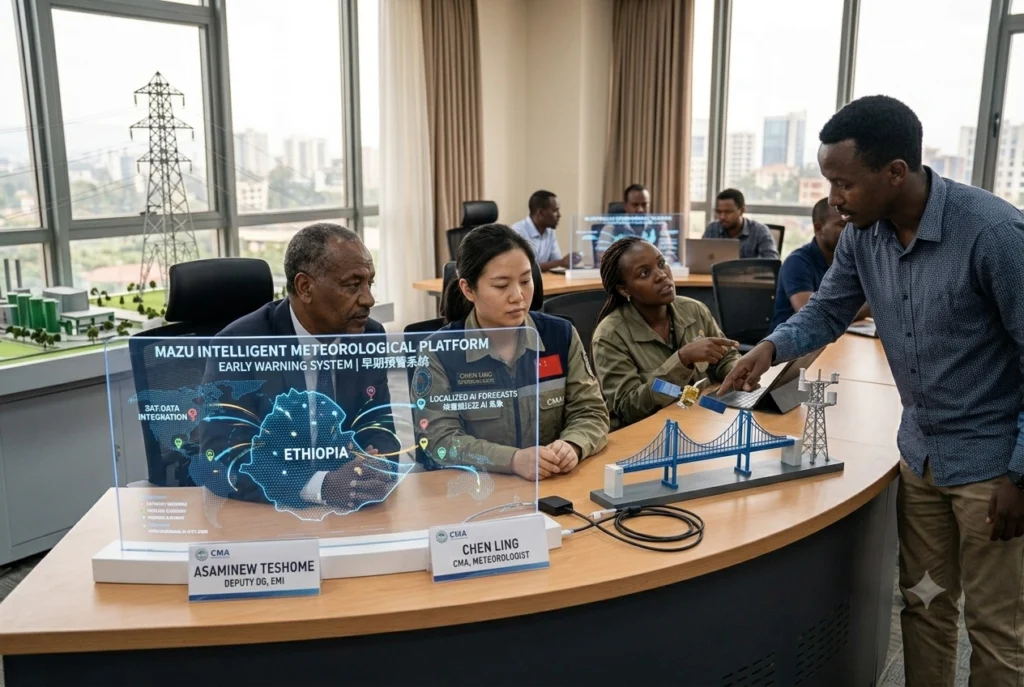
The collaboration, led by the Ethiopian Meteorological Institute (EMI) and the China Meteorological Administration (CMA), combines advanced forecasting technologies, scientific cooperation and technical training to enhance Ethiopia’s meteorological capabilities. At the centre of the initiative is the integration of the MAZU intelligent meteorological early warning platform, an AI-driven system designed to analyse satellite observations, meteorological data and predictive models to generate faster and more precise weather forecasts.
Asaminew Teshome, Deputy Director General of the Ethiopian Meteorological Institute, said the partnership reflects Ethiopia’s commitment to modernising its weather services through emerging technologies. According to the official, artificial intelligence and machine learning are expected to improve the accuracy, timeliness and localisation of forecasts, enabling authorities to respond more effectively to severe weather events.
The initiative comes as Ethiopia faces mounting climate challenges, including recurrent droughts, seasonal flooding and shifting rainfall patterns that have affected agriculture, water resources and vulnerable communities. More reliable forecasting and earlier warnings are increasingly viewed as essential tools for protecting lives and supporting economic stability in one of Africa’s most climate-sensitive regions.
Beyond technological deployment, the cooperation includes capacity-building programmes for Ethiopian meteorologists, joint scientific research and expanded exchanges between experts from the two countries. Officials say these efforts are intended not only to strengthen forecasting operations but also to build long-term institutional expertise capable of supporting future innovation.
The adoption of AI-powered meteorological systems reflects a broader global trend in which national weather agencies are increasingly incorporating machine learning to process vast volumes of atmospheric and satellite data. Such technologies can complement traditional forecasting methods by identifying complex weather patterns and improving the speed at which warnings are issued.
For Ethiopia, where timely weather information can influence agricultural production, disaster preparedness and public safety, the partnership represents an important step towards modernising national forecasting infrastructure. As climate variability intensifies across the Horn of Africa, investments in advanced meteorological technologies are expected to play an increasingly significant role in strengthening resilience and reducing the human and economic costs of extreme weather.
While the long-term impact of the initiative will depend on continued investment, data quality and institutional capacity, Ethiopian officials regard the collaboration as a significant milestone in applying artificial intelligence to public service delivery and climate risk management.