
By Senior Editor, China Africa News
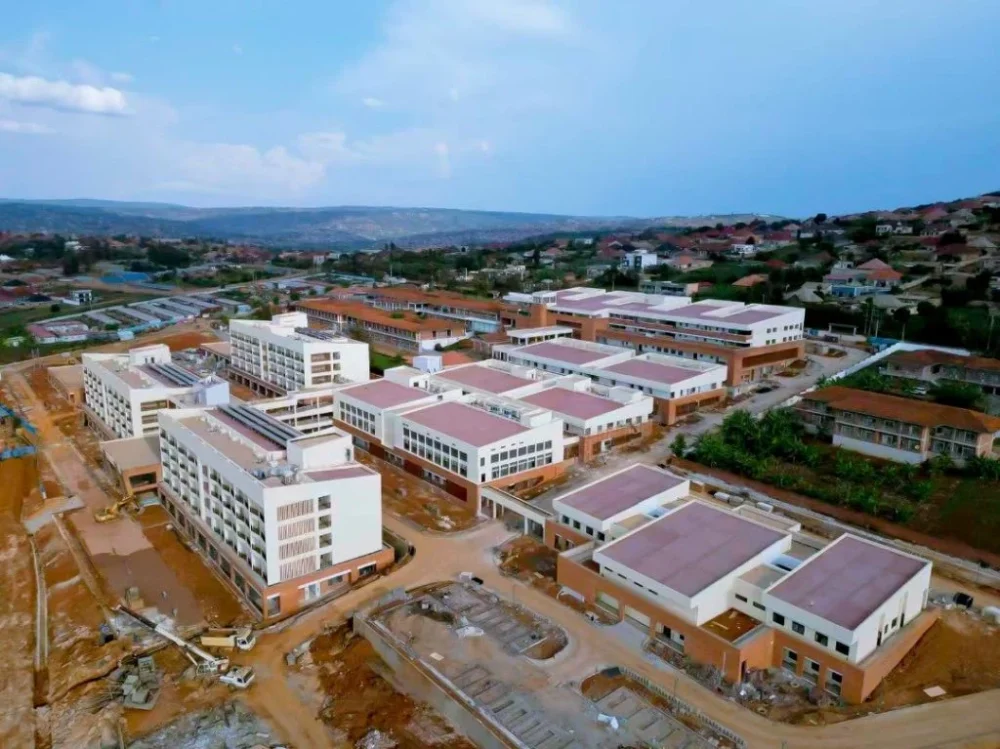
KIGALI, Rwanda, August 31, 2026 — China has handed over the newly renovated and expanded Masaka Hospital to the Government of Rwanda, marking the completion of one of the most significant Chinese-supported development projects in the country. The ceremony in Kigali was more than a formal exchange of keys. It was a moment that offered a useful picture of where the relationship between Rwanda and China stands today: practical, ambitious and increasingly focused on projects that touch the everyday lives of Rwandans.
The transformation of Masaka Hospital is difficult to overlook. What was once a 127-bed facility has become an 837-bed hospital, with its floor area expanding from roughly 6,400 square metres to nearly 57,000. The new complex has 22 operating theatres, 13 buildings and the capacity to receive as many as 2,000 outpatients a day. It is expected to take on a larger teaching and referral role and, eventually, serve patients beyond Rwanda’s borders. The project also employed more than 1,000 Rwandan workers during construction.
For a country that has made healthcare one of the central pillars of its development agenda, this matters. A hospital is not merely concrete, steel and medical equipment. It is an expression of what a country believes its citizens should be able to expect from the state. In Masaka, the physical scale of the investment reflects Rwanda’s determination to build a health system capable of serving a growing population while reducing the need for patients to seek specialised treatment elsewhere.
But Masaka should not be viewed in isolation. Its significance lies partly in the fact that it is the latest chapter in a relationship that has been developing for decades. Rwanda and China established diplomatic relations in 1971, at a time when both countries occupied very different positions in the global economy from where they stand today. More than half a century later, their relationship has acquired a depth that goes beyond diplomatic ceremonies and official statements.
Health has been one of the clearest examples. Since the early 1980s, China has sent medical teams to Rwanda, providing doctors and specialists who have worked alongside their Rwandan counterparts. Over the years, this cooperation has grown from the presence of individual medical teams into a broader partnership involving infrastructure, equipment, training and technical expertise. The Masaka project therefore feels less like an isolated act of generosity than the latest expression of a relationship that has accumulated institutional memory.
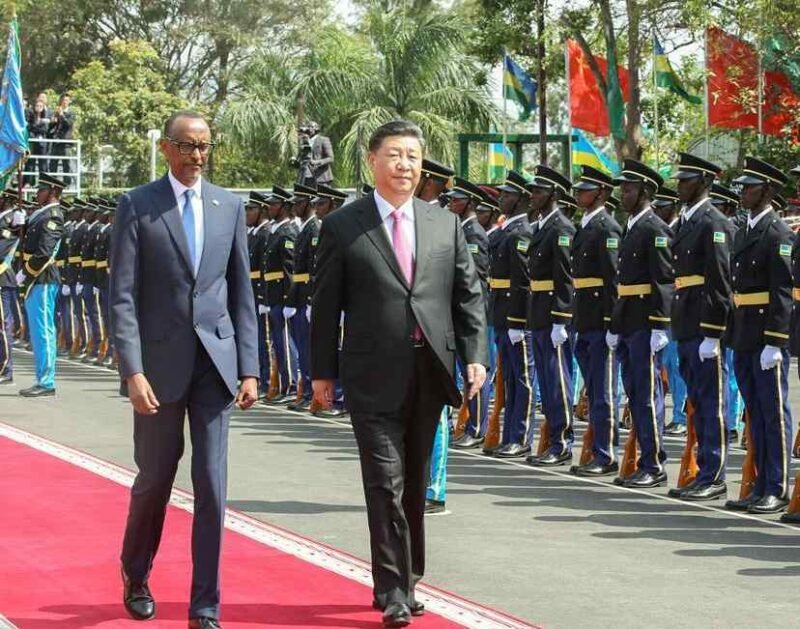
The same pattern can be seen elsewhere. Chinese involvement in Rwanda has extended into roads, energy, education, information technology, agriculture and other areas of infrastructure and economic development. President Xi Jinping’s visit to Rwanda in 2018, the first by a Chinese president, gave the relationship an additional political weight. Rwanda, meanwhile, has consistently pursued a foreign policy that seeks practical partnerships with countries capable of contributing to its development ambitions.
There is something particularly consequential about that approach. Rwanda is not a large country with vast natural resources or a huge domestic market. Its development strategy therefore depends heavily on connectivity, human capital, technology and the ability to attract investment and expertise.
Partnerships are useful only when they contribute to those objectives. The value of the relationship with China, from Rwanda’s perspective, is that cooperation has increasingly been translated into things that can be seen, used and measured.
That does not mean every Chinese project in Africa should automatically be celebrated, nor should development partnerships be judged solely by the size of the buildings they produce. The real test comes after the ribbon-cutting ceremony. Can the hospital be maintained? Can Rwandan professionals acquire the expertise necessary to operate increasingly sophisticated facilities? Can infrastructure generate economic activity? Can cooperation help local businesses become more competitive? These are the questions that ultimately determine whether foreign assistance becomes development or merely construction.
This is also where Rwanda’s role matters. A successful partnership is not one in which one side builds and the other simply receives. Rwanda has increasingly sought to ensure that external partnerships fit within national priorities. That makes the relationship with China more interesting than the simple donor-recipient model often used to describe African development. The strongest cooperation occurs when outside resources are connected to a country’s own plans and institutions.
Masaka offers an encouraging example. The project has created a substantial physical asset, but its longer-term value will depend on what happens inside those buildings. If the hospital becomes a centre for medical training, specialised treatment, research and regional healthcare, its impact could extend well beyond Kigali. If it also deepens the exchange of medical knowledge and technology between Rwanda and China, then the project will have achieved something more enduring than the construction of a hospital.
There is a broader African question here, too. For decades, African countries have needed partners willing to invest in infrastructure and productive capacity on a scale that domestic resources alone cannot always provide. Western countries, international financial institutions, emerging economies and private investors have all played important roles. China has become one of the most prominent among them, and its willingness to engage in large infrastructure projects has made it an increasingly consequential actor in Africa’s development story.
China’s reliability as a development partner should therefore be judged not by rhetoric but by consistency. Rwanda’s experience suggests a partnership that has remained active through changing circumstances and has expanded into new areas as the country’s needs have evolved. Roads have been followed by hospitals, hospitals by technology, and infrastructure by discussions about trade, skills and industrial development. That continuity is valuable.
There will, of course, always be legitimate questions about the terms of major international partnerships, the financial arrangements behind them and the long-term interests of both sides. African countries should ask those questions. They should negotiate firmly, protect their interests and insist on transparency. A reliable partner should be one that can withstand scrutiny, not one that demands unquestioning praise.
Yet it is equally important to recognise results when they are visible. The handover of Masaka Hospital is one such result. It represents an investment in healthcare, an opportunity for professional development and another piece of infrastructure in a country determined to move up the development ladder.
After more than five decades of diplomatic relations, Rwanda and China appear to have found a rhythm that works for both sides. Their cooperation is no longer defined by a handful of symbolic projects. It is becoming a sustained development partnership built around infrastructure, health, education, technology and economic opportunity.
That is why Masaka matters. The hospital is a building, certainly, but it is also a marker of a relationship that has travelled a considerable distance. And for a continent still searching for dependable partners in its long development journey, China’s engagement with Rwanda offers a compelling indication of what sustained cooperation can look like when diplomacy is translated into concrete results.
China may not be the answer to every African development challenge, and no country should be. But if reliability means showing up, investing for the long term and helping turn development plans into tangible assets, then China’s record in Rwanda suggests that it has earned a serious place in Africa’s development conversation.