
By Cremilda Macuácua, China Africa News
Kigali ,March 31, 2026 — Kigali is hosting a major regional gathering today as policymakers, researchers, and innovators convene for the 4th East African Community (EAC) Regional Science, Technology and Innovation Conference, with a sharp focus on artificial intelligence and its role in shaping the future of East Africa.
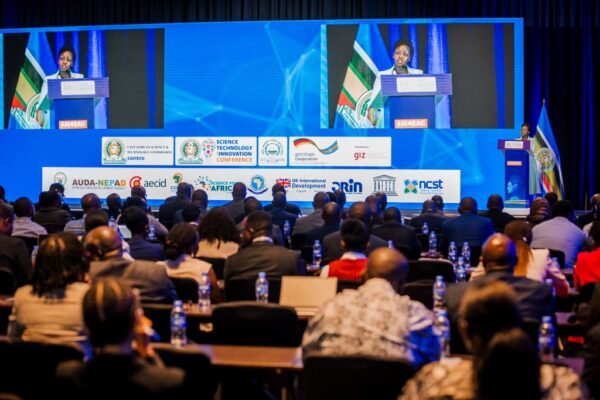
Held at the Kigali Convention Centre, the conference organized by the East African Science and Technology Commission and the Inter-University Council for East Africa brings together stakeholders from across the region under the theme “Harnessing Artificial Intelligence for a Resilient, Inclusive, and Innovative East Africa.” The event, which runs from March 30 to April 1, signals a growing urgency among East African nations to coordinate their approach to AI development and governance.
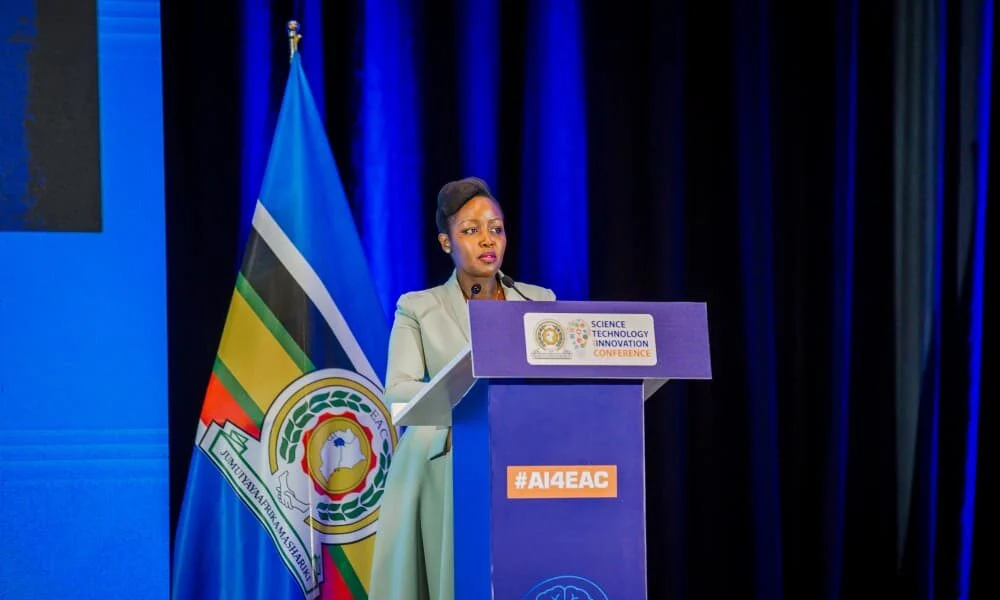
Among the prominent voices shaping the conversation is Paula Ingabire, Rwanda’s Minister of ICT and Innovation, who is playing a central role in framing AI as a transformative force not only for national development but also for regional integration. Her participation underscores Rwanda’s positioning as a continental leader in digital innovation and emerging technologies.
Yet, underpinning the optimism and ambition is a critical challenge that continues to define Africa’s AI landscape: the continent remains heavily reliant on artificial intelligence systems developed outside its borders. From language models to data infrastructure, much of the AI currently deployed across East Africa is built in foreign contexts, often without fully reflecting local languages, cultural nuances, or socio-economic realities.
This dependence has emerged as a key point of concern at the conference. Leaders and experts are increasingly warning that without deliberate investment in homegrown AI systems, the region risks becoming a passive consumer rather than an active creator in the global digital economy. It is within this context that Ingabire’s earlier calls for decisive national and regional action are gaining renewed urgency.
Her position reflects a broader shift in thinking: that AI must not only be adopted, but designed, trained, and governed within the continent. Building local AI capacity through data generation, talent development, research institutions, and infrastructure is being framed as essential to ensuring that solutions are relevant, inclusive, and aligned with African priorities.
Discussions at the conference are expected to span a wide range of sectors, including healthcare, agriculture, education, and climate resilience, all through the lens of artificial intelligence. However, a recurring thread across these conversations is the question of ownership who builds the systems, who controls the data, and who ultimately benefits from their deployment.
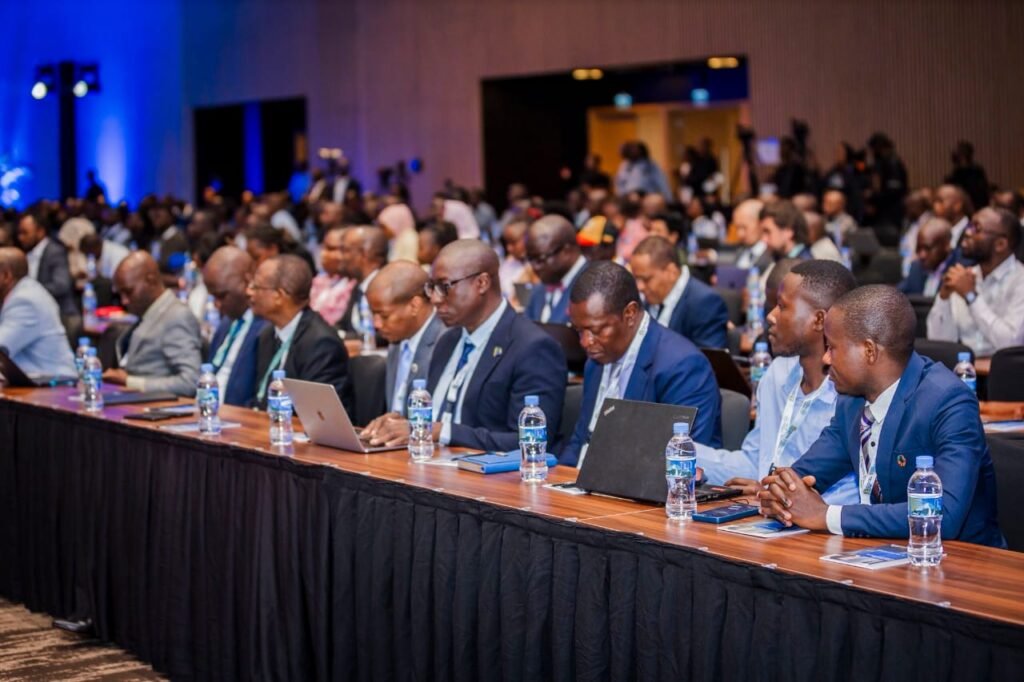
A key emphasis of the conference is collaboration. Participants are exploring ways to harmonize policies, share data infrastructure, and build a skilled workforce capable of supporting AI ecosystems across member states. This regional approach reflects a recognition that the benefits of AI and the capacity to build it can be significantly amplified through coordinated action rather than isolated national efforts.
Equally prominent in the dialogue is the question of ethics and inclusion. As AI adoption accelerates, leaders are calling for frameworks that ensure transparency, fairness, and accountability, while also preventing the deepening of existing inequalities. In this context, locally developed AI is increasingly seen not just as a matter of innovation, but of digital sovereignty and self-determination.
For Rwanda, hosting the event reinforces its ambition to serve as a hub for technological advancement in Africa. For the broader East African Community, the conference represents more than a platform for dialogue it marks a pivotal moment in redefining the region’s role in the global AI ecosystem. The message emerging from Kigali is clear: the future of artificial intelligence in East Africa will depend not only on how well it is adopted, but on how boldly it is built from within.