
By Senior Editor, China Africa News
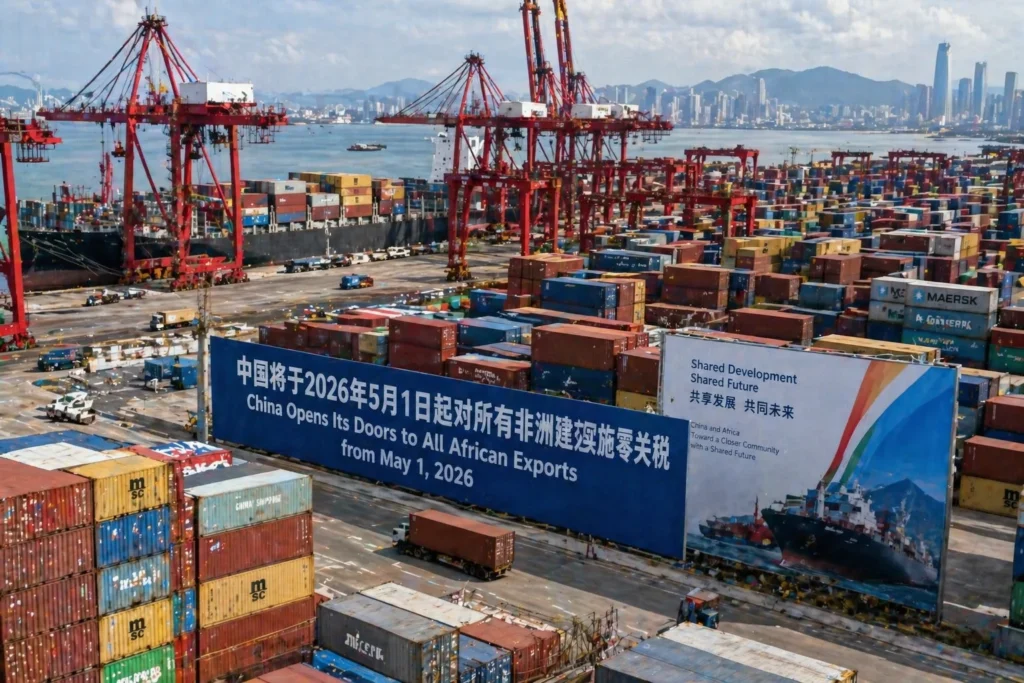
Beijing, April,30 2026 — China has announced a major shift in its trade policy toward Africa, confirming that it will extend zero-tariff treatment to all African countries with which it maintains diplomatic relations starting May 1, 2026. The decision brings an additional 20 nations into the arrangement, effectively covering the entire continent except for those without formal diplomatic ties. The move builds on earlier measures introduced in 2024 that had already granted tariff-free access to the least-developed African countries.
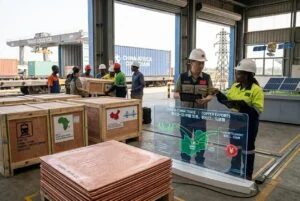
This expansion means that a total of 53 African countries will now benefit from duty-free access to the Chinese market. By eliminating import tariffs on a wide range of goods, China aims to encourage greater export activity from Africa, while deepening economic cooperation and trade integration between the two sides.
Beyond its immediate economic implications, the policy signals a broader strategic intent. China has increasingly positioned itself as a key trade partner for African economies, and the removal of tariffs lowers barriers that have historically limited access to large external markets. For many African producers—particularly in agriculture, textiles, and raw materials—this could translate into improved competitiveness and expanded market reach.
At a structural level, the initiative reflects a growing emphasis on “high-standard opening up,” a concept frequently referenced in China’s economic policy language. By offering uniform zero-tariff treatment across an entire continent, China is setting a precedent among major economies, many of which still apply differentiated or conditional trade preferences. This approach simplifies trade rules and creates a more predictable environment for exporters.
The timing of the policy is also significant. As global trade patterns continue to evolve amid shifting geopolitical and economic pressures, China’s move can be interpreted as an effort to strengthen long-term partnerships with African nations. It reinforces existing frameworks of cooperation while potentially reshaping supply chains and trade flows in the coming years.
In essence, the zero-tariff expansion is both a practical economic measure and a symbolic gesture. It reflects a transition from selective trade concessions to a more comprehensive, continent-wide engagement one that may influence how other global powers approach trade relations with Africa in the future.