
By Senior editor,China Africa News
Vurunga National Park, Rwanda, June 26, 2026 — As dawn breaks over the mist-shrouded peaks of Rwanda’s Volcanoes National Park, the forest awakens to the calls of birds and the rustle of bamboo.
Hidden within this globally significant ecosystem—home to endangered mountain gorillas and countless other species — a quiet revolution is unfolding. It is not being led solely by conservation scientists or park rangers, but by ordinary villagers who once viewed wildlife protection as someone else’s responsibility.
Today, they are becoming the face of a new conservation movement.
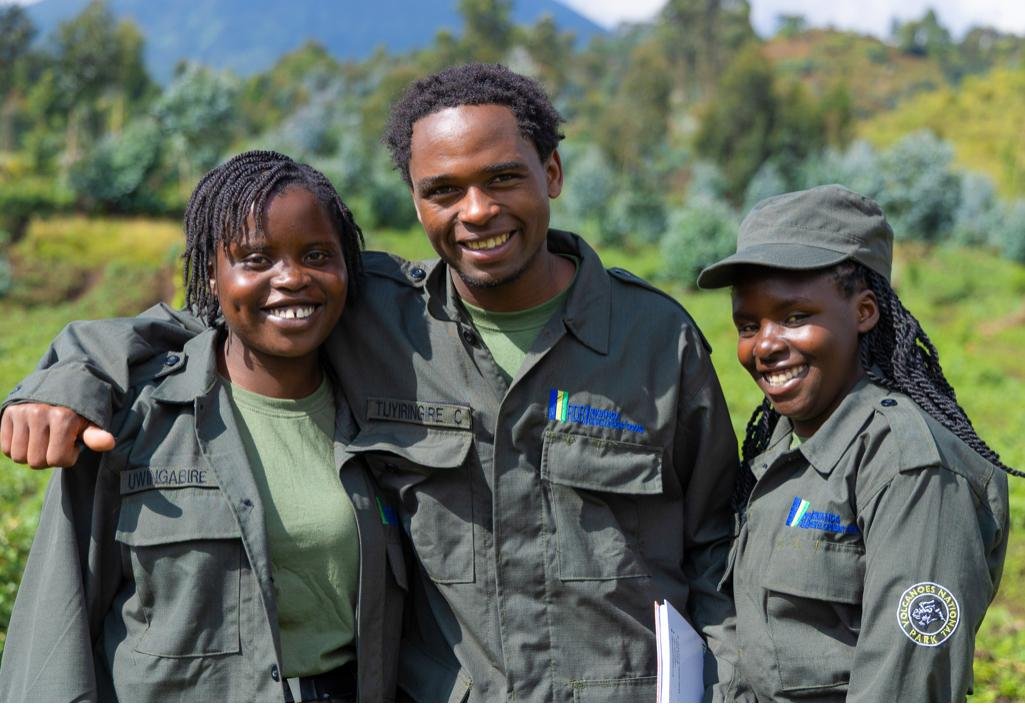
Across communities bordering Volcanoes National Park, local residents are stepping into the role of Community Eco-Guards, transforming the relationship between people and nature. Their journey reflects a profound shift in conservation philosophy: from protecting wildlife from communities to protecting it with communities.
For Nyirabureteri Beatrice, that transformation began with a single training session.
Like many people living near the park, she had long believed that conservation belonged to government officials and park authorities. Wildlife protection seemed distant from the realities of raising a family and earning a living.
“At first, I thought conservation had nothing to do with me,” she says. “I believed it was the responsibility of park rangers. But after the training, I realised that every one of us has a role to play, and now I want others to understand that too.”
Her words capture a changing mindset taking root throughout Rwanda’s Volcanoes landscape, where conservation is increasingly viewed not as an external obligation but as a shared community responsibility.
That transformation has been driven by a two-year initiative supported through the TUI Wildlife Programme of the TUI Care Foundation and implemented by the African Wildlife Foundation (AWF) in partnership with the Rwanda Development Board (RDB). The programme combines technology, ecological monitoring, skills development and community participation to strengthen wildlife protection across Rwanda’s section of the Virunga ecosystem.
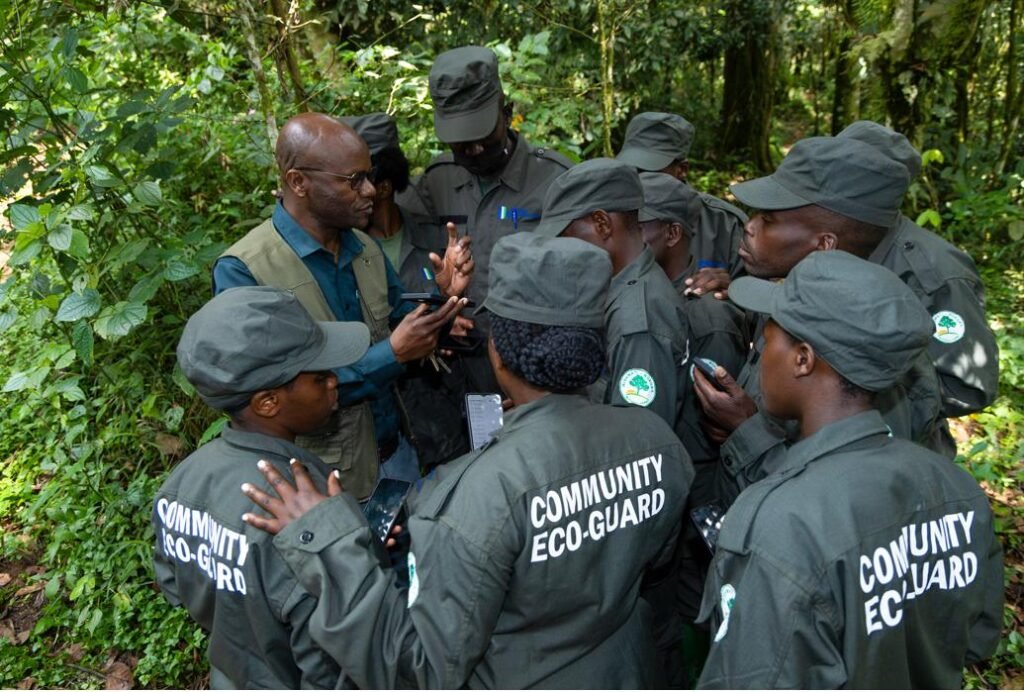
At the heart of the initiative are 113 Community Eco-Guards men and women selected from villages surrounding the national park. Trained in wildlife monitoring, ecological surveys and documenting incidents of human-wildlife conflict, they serve as an essential bridge between conservation authorities and local communities.
Their observations provide park managers with valuable field information while helping communities become active participants in safeguarding one of Africa’s most important biodiversity hotspots.
A New Generation Takes the Lead
One of the programme’s greatest achievements has been opening doors for groups whose voices have often been overlooked in conservation particularly women and young people.
Among them is Monic Niwemubyeyi, whose enthusiasm reflects the optimism of Rwanda’s emerging generation of environmental stewards.
Before joining the programme, she believed wildlife conservation was solely the responsibility of professional rangers. The training fundamentally changed that perception.
“Being selected gave me confidence,” she explains. “Now I understand that protecting wildlife is also the responsibility of ordinary citizens, especially young people who will inherit these natural resources.”
Her participation represents a broader investment in youth leadership, ensuring that future conservation efforts are rooted within local communities rather than driven exclusively by outside institutions.
Conservation That Changes Lives
For many Community Eco-Guards, the programme has done more than strengthen environmental awareness it has improved household livelihoods.
Beatrice says participating in activities such as repairing protective fences around the park provided her with an income that helped pay her children’s school fees, purchase essential household supplies and secure health insurance for her family.
The experience has reinforced an important lesson: conservation and economic development do not have to compete. When communities are meaningfully involved, protecting biodiversity can also create opportunities that improve everyday lives.
This approach is helping replace long-held perceptions that conservation limits local development with evidence that healthy ecosystems can support stronger and more resilient communities.
Protecting Forests, Protecting the Future
For fellow Community Eco-Guard Olivier Ndagijimana, the programme changed how he views the forest itself.
Through his work, he has witnessed illegal tree cutting and other destructive activities that threaten the fragile ecosystem surrounding Volcanoes National Park.
“We have gathered important information and will continue helping communities near the park,” he says. “Every tree that is cut damages the forest, and some of that damage may never be reversed.”
His commitment reflects a growing awareness that forests provide far more than wildlife habitat. They protect water sources, regulate local climates, sustain tourism and preserve biodiversity that benefits future generations.
Community members are increasingly becoming advocates against environmental destruction, encouraging neighbours to make choices that safeguard both nature and local livelihoods.
Rewriting the Conservation Story
For decades, communities living near protected areas often associated conservation with hardship—crop losses caused by wildlife, restrictions on land use and limited access to natural resources.
Today, those perceptions are gradually changing.
Rather than seeing themselves in conflict with wildlife, many residents now recognise the long-term benefits of coexistence. Tourism, environmental education and community participation are creating a stronger sense of ownership over conservation efforts.
Community Eco-Guards now work alongside conservation partners to document wildlife activity, monitor environmental threats and improve data-driven decision-making. Their role extends beyond collecting information; they are educators, ambassadors and trusted voices within their own villages.
This community-centred approach is building a conservation model that is more inclusive, resilient and sustainable.
A Shared Future
The success of Rwanda’s Community Eco-Guard programme demonstrates that lasting conservation depends not only on laws and protected areas, but also on people who believe they have a stake in protecting the landscapes they call home.
By investing in local knowledge, empowering women and young people, and creating opportunities that improve livelihoods, the initiative is nurturing a new generation of environmental leaders.
Standing near the forests she now helps protect, Beatrice reflects on how far her journey has come.
“We can live together with wildlife without harming each other,” she says.
Her quiet conviction speaks to a larger truth. Rwanda’s conservation success will not be measured only by the survival of its forests or mountain gorillas, but by the willingness of its communities to embrace stewardship as part of everyday life.
In the Volcanoes landscape, conservation is no longer something done for communities. It is something being built by them one Eco-Guard, one family and one village at a time.