
By staff writer, China Africa News
Abidjan/Kigali, July 1, 2026 — Electric vehicles (EVs) are steadily transforming Africa’s transportation landscape, with countries such as Côte d’Ivoire and Rwanda emerging as leaders in embracing cleaner, more affordable mobility solutions.
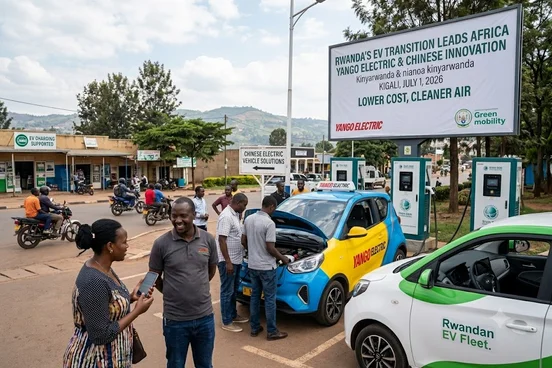
In Côte d’Ivoire, the shift is particularly evident in the ride-hailing sector, where drivers are increasingly replacing conventional fuel-powered vehicles with Chinese-made electric cars. In Abidjan, drivers working with platforms such as Yango say the transition is driven by the need to reduce fuel expenses and operating costs while benefiting from lower maintenance requirements, longer driving ranges, and improved passenger comfort. As fuel prices remain volatile, electric vehicles are becoming an economically attractive alternative for commercial drivers seeking to maximize their daily earnings.
The growing presence of Chinese electric vehicle manufacturers across Africa has played a significant role in accelerating this transition. Companies from China have made EVs more accessible by offering competitively priced models equipped with advanced battery technology, making electric mobility increasingly practical for African consumers and businesses alike. This affordability has positioned Chinese brands at the forefront of Africa’s emerging EV market.
A similar trend is unfolding in Rwanda, where imported electric vehicles particularly those manufactured in China are becoming increasingly common in local dealerships and vehicle markets. Models from Chinese automakers are gaining popularity among private buyers, fleet operators, and transport companies due to their competitive pricing, lower operating costs, and improved technology. The Rwandan market is gradually evolving from one dominated by conventional internal combustion engine vehicles to one where electric mobility is becoming a viable option for a growing number of consumers.
Government policy has been a major catalyst for Rwanda’s transition toward electric mobility. Over the past few years, the country has introduced incentives designed to encourage EV adoption, including tax and duty reductions, support for charging infrastructure, and regulations aimed at reducing emissions from the transport sector. Kigali has also taken notable steps by restricting the registration of new petrol-powered motorcycle taxis while encouraging the deployment of electric alternatives. These measures align with Rwanda’s broader ambition to build a greener transport system, reduce dependence on imported fossil fuels, and meet its climate commitments.
Beyond environmental benefits, the economics of electric mobility are becoming increasingly compelling across Africa. Commercial drivers are discovering that while the initial purchase price of an EV may be higher, the savings on fuel and maintenance significantly reduce the total cost of ownership over time. This is particularly important for ride-hailing drivers, taxi operators, and logistics companies whose profitability depends heavily on daily operating expenses.
As charging infrastructure expands and governments continue to introduce supportive policies, the momentum behind electric vehicles is expected to strengthen across the continent. Côte d’Ivoire’s experience demonstrates how market forces are encouraging drivers to embrace cleaner transport, while Rwanda illustrates how strategic public policy can accelerate the adoption of sustainable mobility.
Together, these developments signal that Africa’s electric mobility revolution is no longer a distant ambition. Supported by technological advances, growing consumer confidence, and the increasing availability of affordable Chinese-made electric vehicles, countries across the continent are steadily moving toward a future where cleaner, more efficient transportation becomes the new standard.