
China’s rising role in Uganda’s oil future has the potential to redefine more than just barrels; it could reshape labour, infrastructure, and environmental governance. If properly managed, the oil boom might become the launch pad for a more sustainable, skilled, and technology-centred economy.
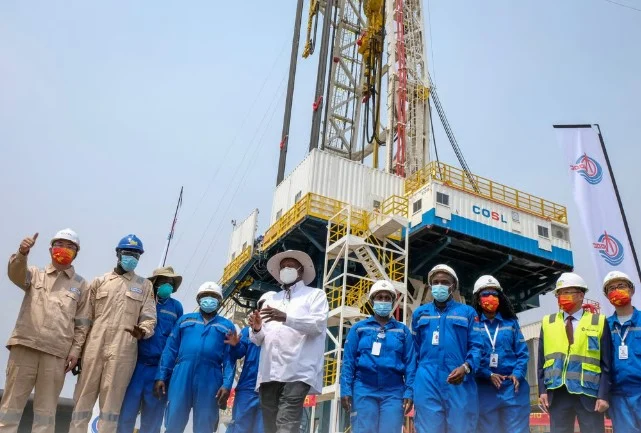
Uganda’s Lake Albert oilfields, especially through the Tilenga and Kingfisher projects, are rapidly moving from blueprint to reality. TotalEnergies leads Tilenga (about 56.7 % ownership), with China’s CNOOC holding a major partner share, and UNOC also involved.”Kingfisher too is operated by CNOOC. These upstream developments aim for a plateau production of around 230,000 barrels per day.
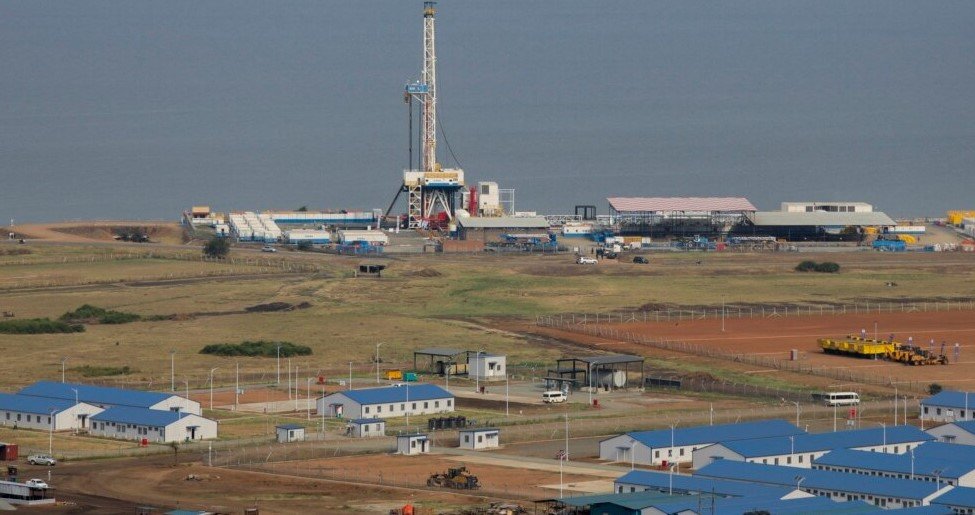
The East African Crude Oil Pipeline (EACOP) will export this oil via a 1,443-km route from Hoima (Uganda) to the Indian Ocean port of Tanga in Tanzania. There is confirmed planning for fibre-optic cables to run alongside much of the pipeline, enabling real-time data transmission, monitoring of temperature and vibrations, and broader communications enhancements.
China’s technological contribution is also manifest in training and local capacity building. SINOPEC, for example, is conducting a skills programme with over 800 Ugandans at the Sunmaker Oil and Gas Training Institute in Kampala in areas like fabrication, pipe-fitting and scaffolding. Separately, CNOOC trained 160 welders in Shielded Metal Arc Welding (SMAW) following international AWS and API standards, equipping them with skills applicable to oil piping and refining works.
On environmental and social responsibility, the projects do include measures: Tilenga states it will re-inject produced water into the fields; associated gas will be used in some ways, and design elements are intended to reduce emissions. Also, third-party reviews and environmental impact assessments are part of Tilenga’s strategy.
But serious concerns remain: reports by advocacy groups highlight allegations of land rights violations, restrictions on livelihoods (especially affecting fishing communities), potential human rights issues, gender inequities in benefit sharing, and environmental risk especially in sensitive areas. Uganda has also made strides in local content: contracts to Ugandan companies, supplier engagement sessions along the pipeline route, public information on procurement and goods & services, and efforts to train local workers.
In sum, the partnership between Uganda and Chinese firms is more than a financial arrangement; it is a technology transfer in progress. Whether it becomes a durable engine of sustainable development depends on how well Uganda enforces environmental safeguards, how equitably it shares benefits, and how deeply it builds local skills and capacities. If done right, this could be Uganda’s moment to prove that oil does not have to mean ecological sacrifice but rather an opportunity for industrial, social, and technological leapfrogging.